What happened
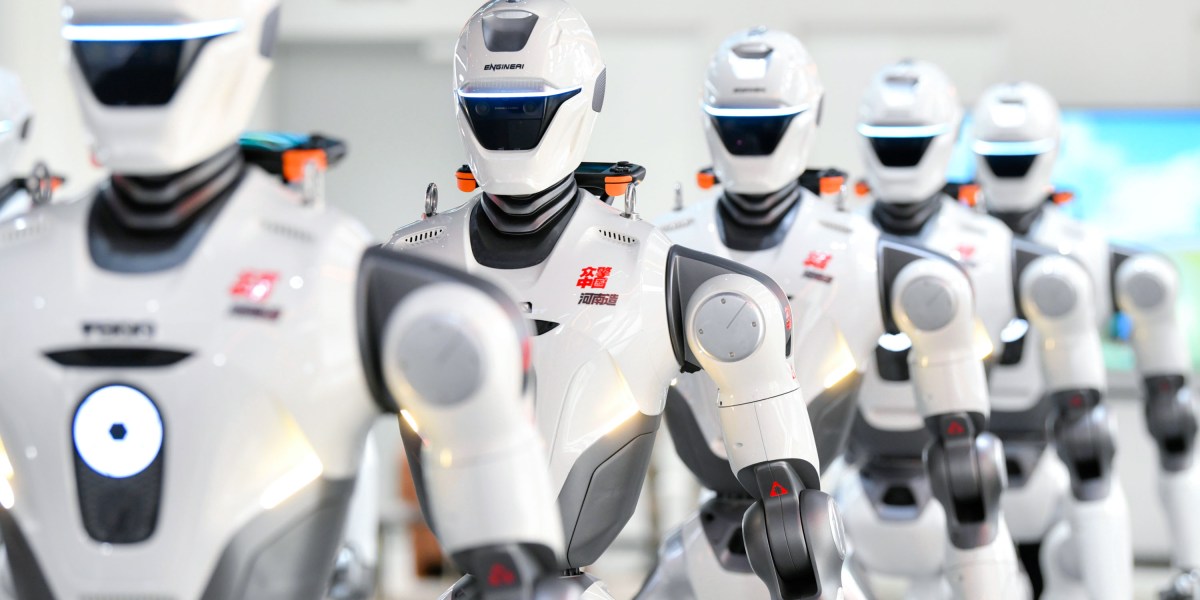
The Federal Trade Commission issued a sweeping ban on foreign imports of advanced robots, including humanoids, quadrupeds, and wheeled robots, citing national security concerns about data collection and the need to protect US robotics companies from Chinese competition.
Why it matters
US robotics researchers and companies rely heavily on cheap Chinese robots—particularly from Unitree—to build and test AI systems; a four-legged Unitree robot costs around $4,600 compared to $278,000 for a comparable Boston Dynamics model. The ban may undercut the very domestic research the administration claims to protect: 90% of recent robotics research papers from US universities relied on robots from Unitree, according to the Association for Advancing Automation.
What to watch
Unitree, China's top humanoid robotics company, plans to go public this week targeting a nearly $6 billion valuation. US competitors like Figure and 1X have not yet shipped humanoids at scale, making the timing of the import ban significant for which companies shape the industry's future.
Summaries like this, in your inbox every morning.
The robotics import ban represents a shift in Trump administration trade strategy. Historically, US trade protections against China have targeted mature, commoditized technologies—solar panels, electric vehicles, drones—where tariffs or purchasing rules aimed to prevent market flooding. Robotics, however, is now being treated as part of the AI industry's cutting edge, warranting preemptive protection for an emerging sector that has not yet achieved commercial scale or dominance. This signals a broader agenda: the administration is reportedly considering additional measures, including a ban on open-source Chinese AI models that rival offerings from OpenAI and Anthropic while costing less—a move that would block an estimated $25 billion in annual business savings.
The paradox lies in the ban's immediate consequence. US robotics companies—Figure, 1X, and academic labs—have built their research pipelines and proof-of-concept work around inexpensive Chinese robots, particularly Unitree humanoids. By restricting access to these tools, the ruling may hamstring the very domestic innovation it claims to nurture. Aaron Prather, director of market intelligence for the Association for Advancing Automation, notes that the price-to-capability ratio of Chinese models is unmatched; without them, US researchers may face delays in advancing AI systems that learn new tasks. The FTC document justified the ban partly by citing a cybersecurity incident in which a man gained control of 7,000 robot vacuum cleaners—a real concern, but one that applies to domestic robots as well.
Pick your industry and the AI tools you use, and get news related to your work every day.
Free · 30 seconds with Google · unsubscribe anytimeWhat is AIToday? →
Ask AI anything about this article. The AI reads this article, earlier AIToday articles, and Wikipedia, and cites its sources. Q&As are published on this page for other readers too.
Supermicro Computer appointed Mark Long as chief financial officer, bringing an experienced technology finance…

Holtek Semiconductor unveiled its 2026 product roadmap on October 15, focusing on four core areas: smart prote…
TSMC reported about NT$763.1b in Q3 net profit and confirmed that demand for advanced processors is running ah…
Taiwan is considering much stricter export controls on AI chip sales to China, part of a greater alignment wit…

Nvidia-backed CoreWeave steadied Thursday after a sharp slump, as investors worried about the debt financing b…

Weathernews said on October 15 it implemented its own AI weather-forecasting model, AI-Nowcast, in its Weather…