What happened
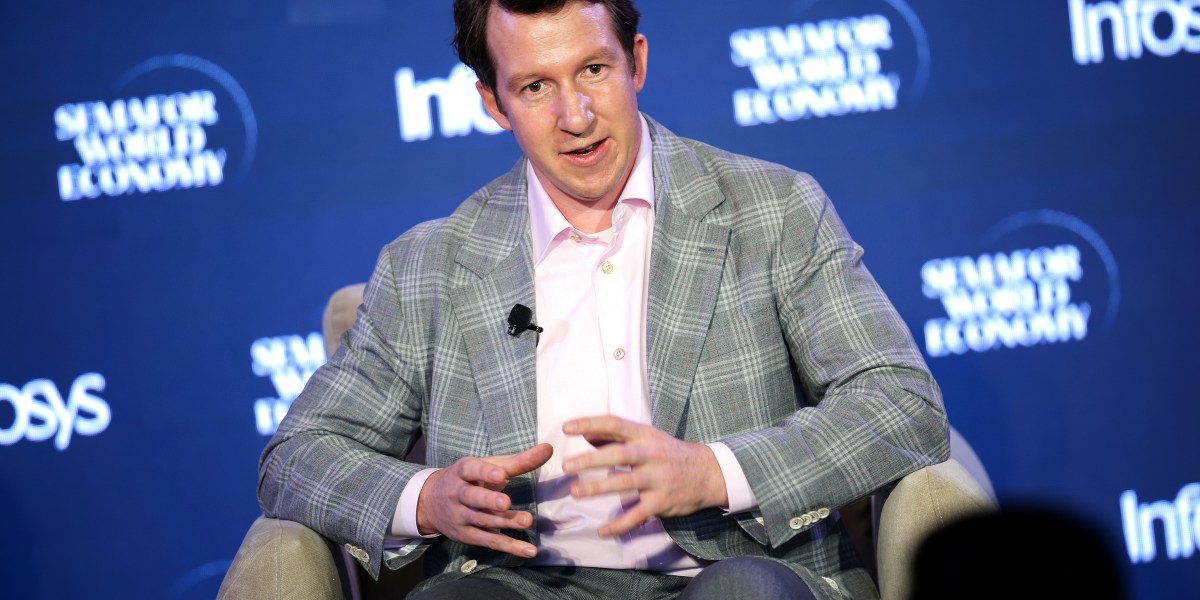
Anthropic cofounder Jack Clark, an English literature and creative writing graduate, said his literary education taught him history and the stories we tell about the future, calling it "extremely relevant" for AI.
Why it matters
Clark argues students should learn to ask the right questions across disciplines and avoid "rote programming," suggesting a shift in which skills the job market rewards.
What to watch
His view hinges on whether AI truly absorbs routine coding work without eliminating the entry-level roles that graduates need. Watch for signs of weakness in early graduate employment, which he said he sees in some industries.
WHO IT HITSYoung people deciding what to study, and the universities and employers that shape those choices, face a shifting signal: Clark says synthesis and analytical thinking across subjects matter more, while basic programming is best avoided. Recruiters and hiring managers may need to reassess which degrees they prioritize. Any broader labor-market conclusion remains an inference, since Clark said he hasn't seen anything beyond potential weakness in early graduate employment.
Summaries like this, in your inbox every morning.
Clark's argument carries unusual weight because he is not a critic on the sidelines: he is a billionaire cofounder of Anthropic, one of the companies building frontier AI models. He credits his own path — English literature and creative writing, followed by journalism — with giving him the historical grounding and narrative instincts that he says turned out to be highly relevant to AI work.
The context is a job market sending mixed signals. STEM enrollment and hiring surged for decades, with science and engineering graduate enrollment up more than a third between 2000 and 2015. But Anthropic's own researchers, Maxim Massenkoff and Peter McCrory, found that AI can theoretically take over 94% of computer and math tasks, and the creator of Anthropic's Claude Code, Boris Cherny, said "coding is practically solved." Meanwhile, the unemployment rate for recent college graduates stood at 5.7% in June, above the 4.1% for all workers, and some students are turning to the trades or part-time work instead.
Even so, the liberal arts case is being made inside Big Tech, not just outside it. Microsoft chief scientist Jaime Teevan cites critical thinking and adaptability; Case Western Reserve's Michael Oakes describes a premium shifting toward "rigorous critical reasoning"; Alphabet's DeepMind has hired philosophers, as has Anthropic. The open question, which Clark himself hedges, is whether that demand materializes widely enough to offset AI-driven displacement for entry-level graduates. For students and employers, the signal is less about one degree than about the skills — synthesis, judgment, asking good questions — that the body suggests are hardest to automate.
For example, today's edition would include:
AI-summarized, only the topics you pick — one digest a day via Email, Slack, or Discord.
Free · 30 seconds with Google · unsubscribe anytimeWhat is AIToday? →
Ask AI anything about this article. Q&As are published on this page for other readers too.
SpaceX raised nearly $86 billion and reached a $2.7 trillion valuation at its IPO, then fell below its $150 op…

The article concludes Micron is the better 2027 stock, citing its 6.25 times fiscal 2027 earnings and expected…

Nathan Lambert argued his "lossy self-improvement" scenario remains his baseline, where agents make models che…

Unity released official plugins for Claude Code and OpenAI's Codex, giving agents skills its own teams write a…

Anthropic said Claude now leads 26% of its model research and development, completing most tasks "end-to-end f…

Jonathan Kanter, the former DOJ antitrust chief under Biden, said the big AI labs — including Anthropic and Go…