What happened
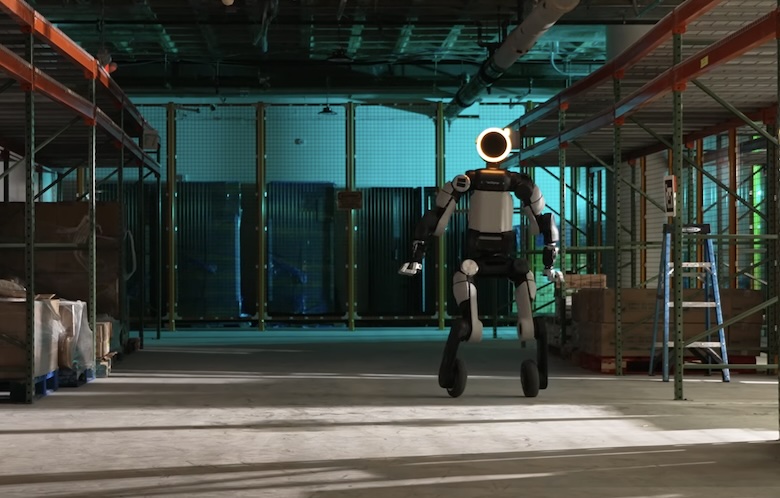
Boston Dynamics released a video showing its Atlas humanoid rolling on wheels mounted to its feet, an experiment controls engineer Andy Wu said combined classical motor control with whole-body reinforcement learning. Boston Dynamics called it "a research testbed," not a product.
Why it matters
The experiment suggests merging classical motor control with a learned whole-body policy yields better real-world agility than either method alone, according to Wu, and the retrofit was as simple as swapping a bicycle wheel, pointing to faster, cheaper robot experimentation.
WHO IT HITSControls and robotics engineers evaluating how to make humanoids handle unstructured terrain now have a concrete data point: a wheel retrofit that Wu says took one new part and a baseline model swap, and that switched between rolling and legged motion. Teams at wheeled-humanoid developers such as Agility Robotics may also weigh it in the wheels-versus-legs debate.
Summaries like this, every morning.
Boston Dynamics frames the wheeled Atlas as an experiment rather than a product line, and the build details explain why it was cheap to try. Wu describes a single custom adapter that mounts an off-the-shelf scooter rim onto Atlas's existing ankle actuator, the only new part, and a retrofit about as involved as swapping a bicycle wheel. On the software side, each wheel is modeled as an "ankle" that can spin continuously, so Wu took the baseline robot model and swapped the feet for wheels.
The experiment sits between two schools of robot control. Wu addresses the limits of purely model-based control in unpredictable, real-world conditions that are hard to model or simulate, and the video shows Atlas processing real-time proprioceptive feedback and velocity commands while adjusting pose and force to handle unmodeled disturbances. Wu's stated takeaway is control synergy: classical motor controls for baseline stability plus whole-body RL for reactive adaptation beat either method alone on real-world agility.
The timing connects to Boston Dynamics' broader Atlas work. The company is preparing to ramp up Atlas testing at Hyundai facilities and continues developing capabilities including a new four-fingered gripper. The wheeled experiment also lands in the ongoing wheels-versus-legs debate; Agility Robotics recently said it is exploring wheeled robots, though co-founder Jonathan Hurst said Digit likely won't get wheels.
Pick your industry and the AI tools you use, and get news related to your work every day.
Free · 30 seconds with Google · unsubscribe anytimeWhat is AIToday? →
Ask AI anything about this article. The AI reads this article, earlier AIToday articles, and Wikipedia, and cites its sources. Q&As are published on this page for other readers too.
Aeon, Aeon Global SCM and Mujin began full operations at Aeon Kawaguchi-Higashi XD on October 29, the first Ae…

RobotBank said on November 9, 2026 it will build physical-AI robots under its own brand, beginning with a quad…

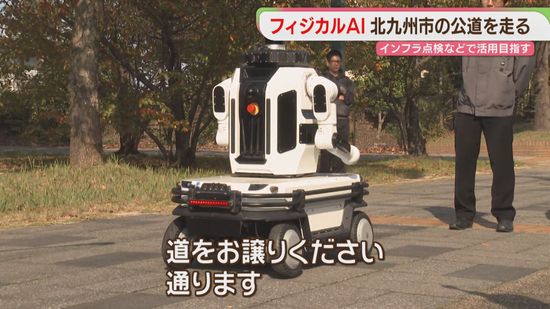
The city's demonstration, running since October 26 in Yahatahigashi Ward's Tobata district, checks whether GAM…
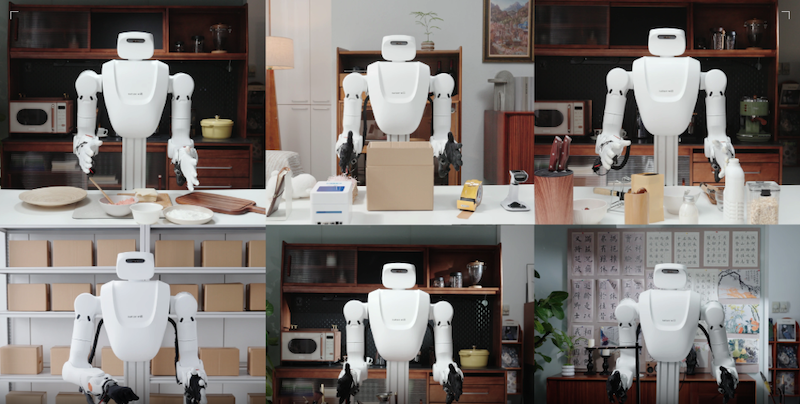
Nature Will announced Natura-1, a 50-billion-parameter mixture-of-experts model trained on over 1 million hour…
Xinhua News Agency unveiled two bionic humanoid robot news anchors, Xinyu and Xinyan, developed with UBTECH, o…

EDGE Sound Research secured an additional $2 million in funding led by Stormbreaker Ventures, taking its total…