What happened
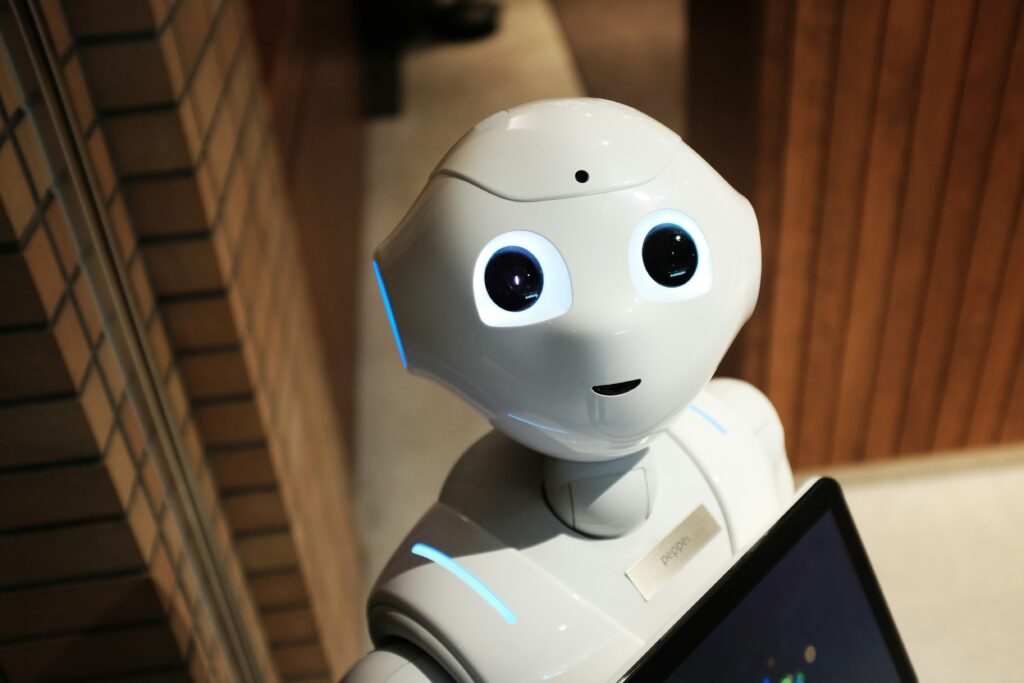
In a study published in Science Robotics, 50 people held conversations and made joint decisions with the commercial humanoid robot Pepper. When the robot was animated and made conversational mistakes, participants' oxytocin levels rose, but this was linked to suspicion, not affection, and they trusted the robot less and took its advice less often.
Why it matters
The findings challenge the common design assumption that lifelike, socially expressive robots earn more trust. Expressive cues appear to shift how people perceive a mistake from a technical malfunction to a social violation, engaging the brain machinery used to judge people.
What to watch
The study involved only young men and one robot design. Researchers want to test whether the same oxytocin-linked vigilance appears in women, mixed groups, other cultures, and other robot designs, and whether robots can repair trust by acknowledging errors or apologizing.
Summaries like this, in your inbox every morning.
The study's findings highlight a critical nuance in human-robot interaction. While the popular understanding of oxytocin links it to bonding and affection, the researchers observed that in the context of an expressive robot's errors, higher oxytocin levels were associated with decreased trust and reduced influence. This suggests the hormone was tracking suspicion, not affection, during the social violation of norms.
This research is part of a broader trend in studying trust as a multilevel phenomenon, extending beyond individual attitudes to relationships and societal networks. The use of wearable brain imaging systems like functional near-infrared spectroscopy allows researchers to study social cognition in natural encounters, which is not possible with conventional MRI scanners.
The study also opens avenues for future research, including testing whether the observed vigilance appears in diverse populations and whether robots can repair trust by acknowledging errors or apologizing, similar to human interactions.
Pick your industry and the AI tools you use, and get news related to your work every day.
Free · 30 seconds with Google · unsubscribe anytimeWhat is AIToday? →
Ask AI anything about this article. The AI reads this article, earlier AIToday articles, and Wikipedia, and cites its sources. Q&As are published on this page for other readers too.
A Zenn contributor sorted AI use into three modes — AI as an assistant, AI running alongside people, and AI th…

A developer released agent-guardrails, a one-script Python standard-library plugin that guards Bash, Write, Ed…
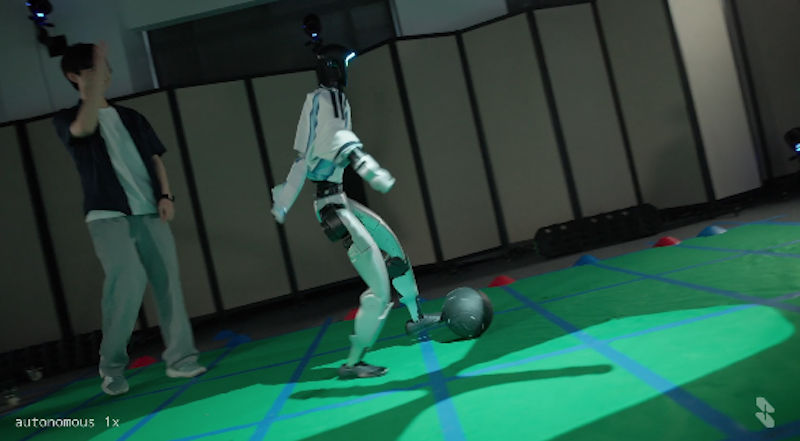
Skild AI used Nvidia Isaac Sim to give its S1 model one objective — score a goal — and let it compete against…
A Qiita article compared automated red-teaming methods for LLM apps — GCG, PAIR, and TAP — using mock implemen…

In a webinar hosted by French Mathematical Society president Isabelle Gallagher, Fields Medal winner Hugo Dumi…
Yamazaki Mazak and ABEJA said on the 16th they will start joint development of physical AI, using ABEJA's ABEJ…