TSMC has been doubling its advanced chip-packaging capacity (CoWoS and SoIC) year-over-year for several years to support AI chip demand, and is now achieving yields better than 98%—sometimes 99%—on multiple AI customer products in high-volume production.
The company's long run of capacity expansion appears to be reaching physical or operational limits, which could constrain future AI chip supply.
What happened
TSMC has roughly doubled its CoWoS and SoIC packaging capacity annually for several years and is now running CoWoS at better than 98% yield—sometimes 99%—on multiple AI customer products already in high-volume manufacturing.
Why it matters
CoWoS (advanced chip-stacking technology) is essential for high-performance AI processors. As TSMC approaches capacity limits after years of rapid scaling, the company faces constraints on how much further it can expand to meet ongoing AI demand from major customers.
What to watch
The trajectory of TSMC's CoWoS yield rates and whether the company can sustain its historical doubling pace, given that capacity is tightening and yield is already at near-maximum levels (98–99%).
TSMC has pursued an aggressive capacity expansion strategy for its CoWoS and SoIC advanced packaging lines, the technologies used to stack and interconnect chips for high-performance AI processors. Over the past several years, the company has roughly doubled capacity in these segments annually, a cadence that reflects the intensity of demand from major AI chip customers. The manufacturing process has matured significantly: TSMC is now operating CoWoS at yields better than 98%, and on some products reaching 99%, across multiple customers already running high-volume production. These yield levels indicate that the manufacturing process has reached a plateau of efficiency where most wafers are being converted to usable product. As TSMC nears these physical and operational limits—doubling capacity every year becomes mathematically harder at larger scales, and yields cannot sustainably exceed 100%—the company faces a fundamental challenge: continuing to meet AI demand growth may require not just more capacity, but fundamentally new packaging architectures or manufacturing approaches. The current trajectory suggests TSMC's annual doubling era may be ending, with implications for how the broader AI chip supply chain can continue to expand.
TSMC's CoWoS and SoIC packaging operations have been the backbone of its AI chip supply strategy, with the company committing to near-exponential capacity growth (annual doubling) to meet surging demand from AI chip makers. The current yield rates—consistently above 98% and sometimes reaching 99% on multiple customer products in high-volume manufacturing—signal that the manufacturing process is mature and reliable. However, the combination of two trends suggests a potential constraint: annual doubling is a compounding growth rate that becomes unsustainable at scale, and when yield is already near maximum (99%), there is little room for further process improvement to offset capacity limits. This indicates TSMC may be approaching a ceiling where the company can no longer meet all demand growth through its historical strategy of simply expanding capacity each year.
AI-summarized, only the topics you pick — one digest a day via Email, Slack, or Discord.
Free · takes 30 seconds · unsubscribe anytime
Ask AI anything about this article. Q&As are published on this page for other readers too.
Broadcom CEO Hock Tan reaffirmed in early June that the company expects fiscal 2027 AI semiconductor revenue o…
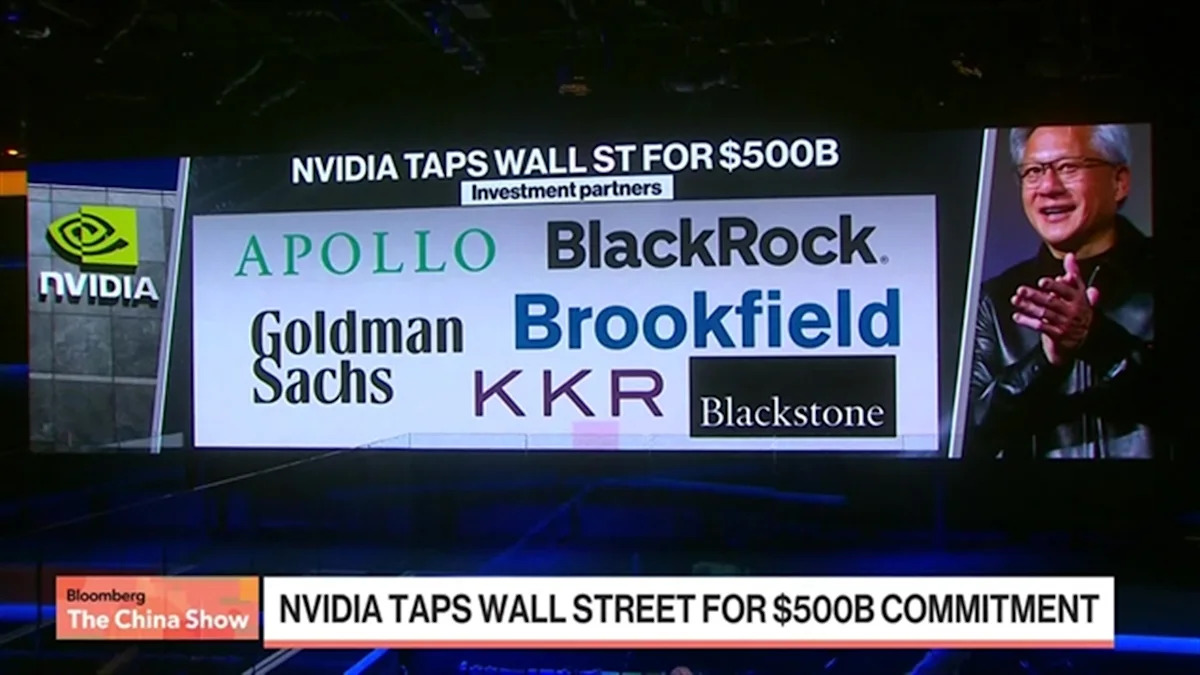
Nvidia has signed letters of intent with Apollo, BlackRock, Blackstone, Brookfield, Goldman Sachs, and KKR to…

Nvidia has partnered with six major investment and financial groups to mobilize more than US$500 billion in th…
CoreWeave earnings are expected to show another quarter of triple-digit sales growth as the AI cloud company c…
Nvidia has secured $500 billion in commitments from Wall Street firms, cementing its position as what Bloomber…
Palantir Technologies reported Q2 2026 revenue of $1.935 billion, a 93% year-over-year increase, with U.S
The AI news that matters, in one minute each morning.
Sign up free