What happened
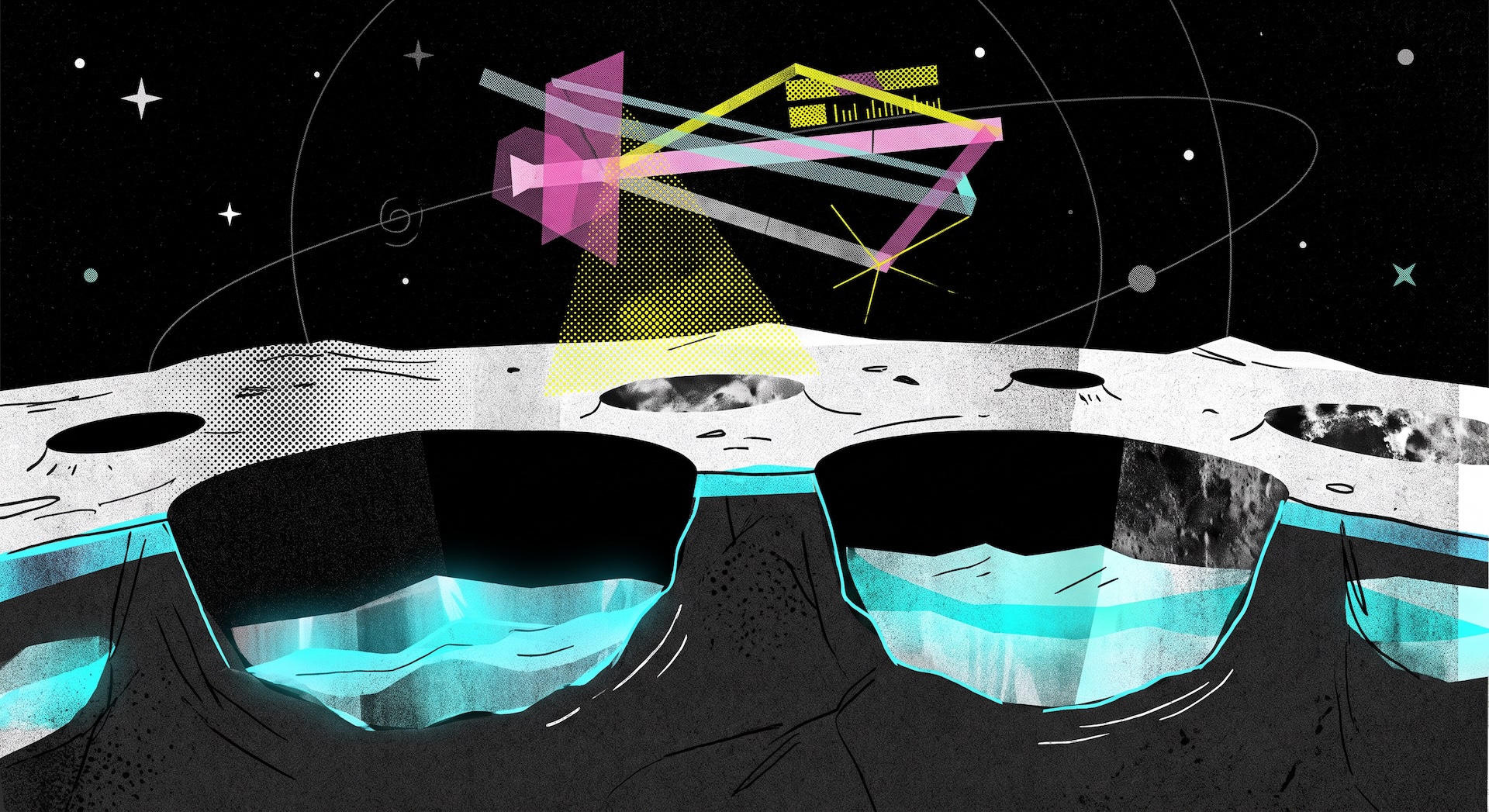
NASA and IBM Research released the NASA-IBM Lunar Foundation Model, trained from scratch on nearly 2 million tile bundles, mostly 17 years of Lunar Reconnaissance Orbiter data, and it cut ice-deposit prediction error by up to 22 percent versus SwinV2-B.
Why it matters
The model is positioned as a reusable base for lunar research, where observation data is plentiful but labels are scarce, so scientists may need far less labeled data to get usable results.
What to watch
The report says the model is not suited for absolute geodetic positioning, since generation tests showed latitude and longitude off by dozens of degrees in some cases, so its value hinges on downstream tasks rather than replacing physical measurements.
WHO IT HITSPlanetary scientists and lunar researchers stand to gain a pretrained, ML-ready base they can adapt with few labeled examples, especially for polar ice and crater mapping. Teams doing geodetic positioning work, by contrast, still need physical measurements, since the model is not suited for that.
Summaries like this, in your inbox every morning.
The release sits inside the NASA-IBM "AI for Science" collaboration, which has run under a Space Act Agreement since early 2022. The two organizations put out their first Prithvi model on Hugging Face in August 2023, trained on Landsat and Sentinel-2 imagery of the contiguous US and adapted for flood and wildfire mapping. The lunar model follows that pattern, and its base, TerraMind, was developed by IBM in 2025 with ESA and Forschungszentrum Jülich for Earth observation, so the underlying architecture was not built for the Moon specifically.
The training corpus is unusually broad for lunar work. It brings together more than 30 spatially aligned data layers from nine instruments and four missions, including NASA's GRAIL gravity data and Lunar Prospector hydrogen readings plus JAXA's Kaguya/SELENE mineralogy data. The team split the corpus geographically by map zones rather than randomly distributing tiles, a choice aimed at preventing leakage between training, validation, and test data. One design decision stands out: rather than asking the model to infer lighting from raw pixels, the team feeds illumination angles, sun position, and tile extent as explicit context, since lighting geometry shapes how the lunar surface looks far more than its actual properties do.
The results are mixed by task. The largest gains appeared in polar ice prediction, while on meter-scale crater detection and Irregular Mare Patches the model roughly ties the strongest baselines, with differences falling within the variance between training runs; IBM claims a 3 percent lead on IMPs, but the reported results look more comparable. The authors present the model as a reusable foundation for downstream work, not a substitute for physical measurement instruments, and controlled experiments isolating each innovation are still pending. How much of the edge comes from the lunar pretraining versus the architecture is accordingly an open question, and it likely matters most to researchers deciding whether to build on this model or on their own task-specific pipelines.
Pick your industry and the AI tools you use, and get news related to your work every day.
Free · 30 seconds with Google · unsubscribe anytimeWhat is AIToday? →
Ask AI anything about this article. The AI reads this article, earlier AIToday articles, and Wikipedia, and cites its sources. Q&As are published on this page for other readers too.
The MIT-licensed moodboard viewer, installable on macOS with bun, places generated images, video, and audio in…

A developer released lossless-compaction, a Claude Code plugin that writes no model summary and instead moves…
SuperLocalMemory 4.0 appeared on Hacker News under the title "Governed Memory Operating System for AI Agents"…

Engineer Takashiba, who works on business systems, built a shogi AI on a single RTX 3060 using the dlshogi app…

A developer published Rai, a small Rust engine that runs language models on an ordinary PC's CPU, using only t…

The developer published fk2000/minecraft-ai-bot, which uses Jev to assemble instructions, Gemini to pick from…

