
What happened
Anthropic researchers used Claude Mythos, a reasoning model, to discover mathematical weaknesses in the HAWK encryption algorithm and a reduced version of AES (a widely used encryption standard). The model worked for 60 hours in total, with an estimated API cost of ~$100,000, guided by researchers through prompts that emphasized finding novel, publishable results rather than obvious vulnerabilities.
Why it matters
The research demonstrates that AI reasoning models can assist in cryptographic analysis—a task typically requiring expert human mathematicians. The article notes that "neither of these results has a practical impact on today's computer systems", but the work shows how large language models can be prompted to persist through difficult problems when instructed not to give up and to seek genuinely hard findings rather than easy targets.
What to watch
The shared prompts reveal the iterative nature of guiding Claude Mythos through research: researchers had to repeatedly redirect the model away from giving up, clarify that the goal was novel attacks (not minor tweaks to existing methods), and stress the need for publishable-quality findings. The work is documented in a public repository, allowing others to study how AI can be steered toward rigorous research outcomes.
Summaries like this, in your inbox every morning.
The work by Anthropic researchers illustrates a practical application of large language models beyond text generation: using them as tools for specialized mathematical research. Cryptographic analysis typically demands deep expertise and persistence through difficult problem spaces—both qualities the researchers found they had to actively encourage in Claude Mythos through repeated prompts. The model's tendency to "think it is impossible to solve so they don't try" required constant human intervention to redirect effort toward harder targets rather than quick wins. This interplay between human guidance and AI reasoning suggests a model for knowledge work where the AI handles sustained reasoning and exploration while humans provide judgment about research direction and quality standards.
Pick your industry and the AI tools you use, and get news related to your work every day.
Free · 30 seconds with Google · unsubscribe anytimeWhat is AIToday? →
Ask AI anything about this article. The AI reads this article, earlier AIToday articles, and Wikipedia, and cites its sources. Q&As are published on this page for other readers too.
Circlia started a proof-of-concept for TASTE SIGNAL: visitors to Holland Village Cafe FUKUOKA taste cookies an…

In a webinar hosted by French Mathematical Society president Isabelle Gallagher, Fields Medal winner Hugo Dumi…

NVIDIA released Nemotron 3.5 Super VL, an open-weight model with 120 billion parameters that handles text, ima…

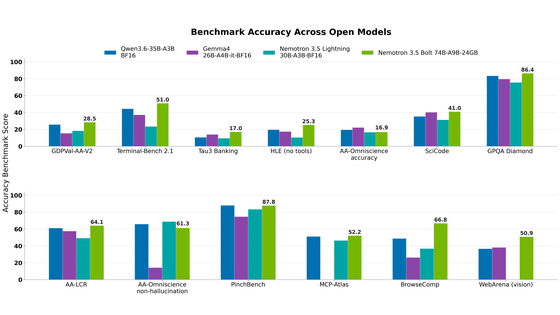
NVIDIA released Nemotron 3.5 Bolt 74B-A9B 24GB, an AI model for local agents that hits over 80 tokens per seco…
Anthropic said on October 15 it has started giving METR's six staff company devices, office space and access t…
NVIDIA published a blog post titled "AI Security Is an Engineering Problem - How to Solve It at Every Layer of…