What happened
Tarini Padmanabhuni founded DetectifAI after a deepfake of her grandfather's brother's voice tricked him into paying a ransom; the startup says it designs compact AI models for a smartphone's operating system.
Why it matters
Because DetectifAI's models are designed to run on a phone rather than in the cloud, phone makers could ship deepfake voice detection as a built-in operating-system feature, which Padmanabhuni argues today's cloud-based products do not allow.
What to watch
Whether a phone maker signs on; DetectifAI already handles more than 100,000 calls a month for financial institutions in India and is competing at Startup Battlefield at TechCrunch Disrupt October 13 to 15 in San Francisco.
WHO IT HITSThis lands on phone makers deciding what ships inside their operating systems, and on fraud-prevention teams at banks and lenders that need to check whether a caller's voice is real.
Summaries like this, in your inbox every morning.
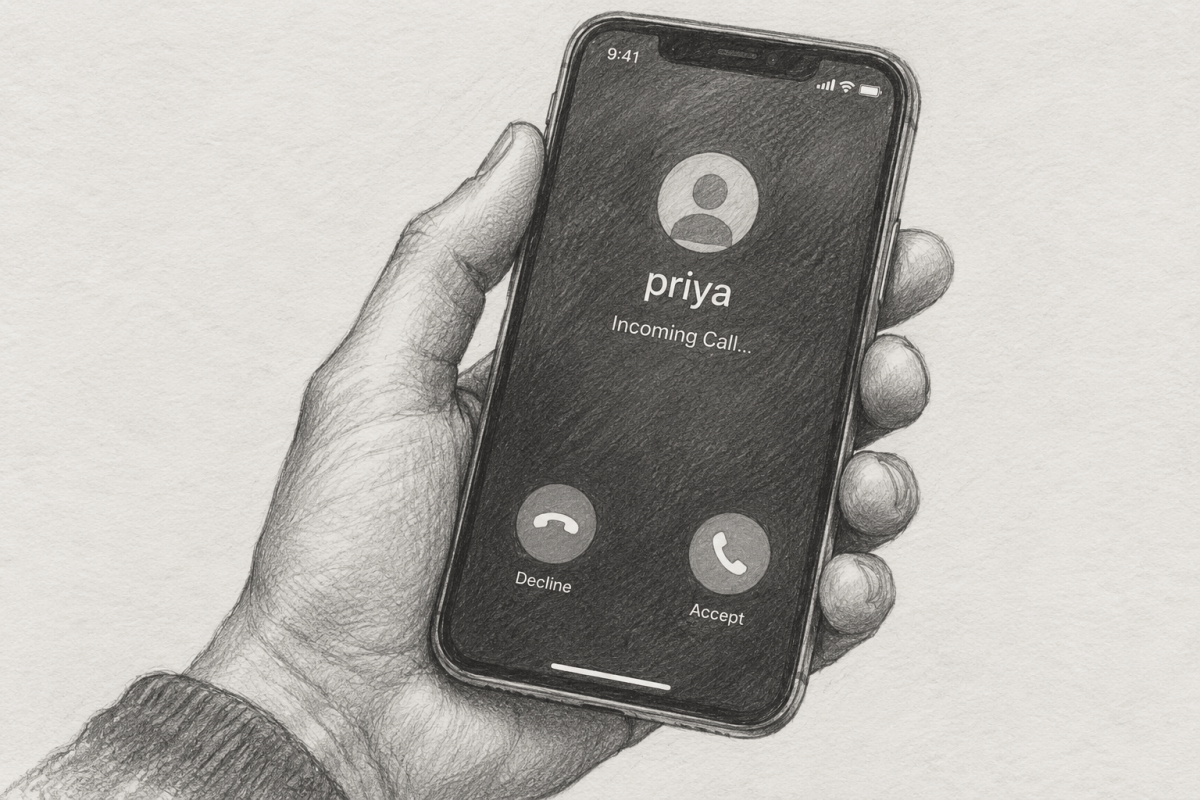
DetectifAI's pitch is rooted in a personal failure of detection. About two years ago, Tarini Padmanabhuni's grandfather believed a caller was his brother, who the voice claimed had been kidnapped and required a ransom. He paid, and later learned his brother had been elsewhere the entire time. Padmanabhuni says what stayed with her was not the money but that he had no way of telling.
Her company's answer is to move detection onto the phone itself. Padmanabhuni argues today's detection products run in the cloud on remote servers, which she says means phone makers cannot build them directly into their devices. DetectifAI says it designs compact AI models from the start, rather than shrinking large cloud models, so they can run inside a smartphone's operating system and deliver a verdict without the audio ever leaving the device. The core of the product is a software development kit that other companies can build into their products and license through existing channels, with a secondary revenue stream planned from licensing to businesses and fraud-prevention firms. The company already has early revenue, and handles more than 100,000 calls a month for financial institutions in India, where AI voice agents handle debt collections and loan document follow-ups.
The stakes likely hinge on whether a phone maker adopts the software as a built-in operating-system feature. Padmanabhuni compares the first mover's advantage to AT&T's exclusive deal at the original iPhone launch, and argues deepfake detection could become a standard spec like camera resolution. DetectifAI has so far raised a small seed amount from investors Josh Constine and Manohar Kamath, and is one of the startups vetted by TechCrunch's editorial team to compete in Startup Battlefield at TechCrunch Disrupt October 13 to 15 in downtown San Francisco.
For example, today's edition would include:
AI-summarized, only the topics you pick: one digest a day via Email, LINE, or Slack.
Free · 30 seconds with Google · unsubscribe anytimeWhat is AIToday? →
Ask AI anything about this article. The AI reads this article, earlier AIToday articles, and Wikipedia, and cites its sources. Q&As are published on this page for other readers too.
Instinct, officially Spear Street Technology Inc., announced a $1 billion Series C joined by Sequoia Capital…

Modulate raised $25 million, led by Future Ventures with returning investors Hyperplane and Lakestar, bringing…

At Okta's Oktane event, Charlotte Wylie, Okta's senior vice president and deputy chief security officer, said…

On theCUBE Pod, Dave Vellante said CoreWeave disclosed that 70% of its revenue came from its top three custome…

Google Cloud revenue hit $24.77 billion, up 82%
MGX, an Abu Dhabi-backed technology investor, is looking for data center assets in the Asia Pacific