What happened
Google is adding AI image generation to Search's AI Overviews feature. When no matching image exists on the web, users can generate one by typing a text prompt into the search bar. The feature uses Google's "Nano Banana 2 Lite" image model and rolls out in the coming weeks in English across all regions that support image generation in AI mode.
Why it matters
AI-generated results reduce clicks to outside image sources, as image search currently drives traffic to external sites. This is another step in Google transforming search into an AI-first experience that keeps users within Google rather than sending them elsewhere.
What to watch
Google Images is also rolling out a redesigned homepage with a dynamic gallery pulling live web content, tailored to each user's interests, starting in the coming weeks on desktop in the U.S. A Google account will be required.
Summaries like this, in your inbox every morning.
Google's move to embed AI image generation directly into Search reflects a broader strategic shift toward keeping users within its ecosystem. Historically, image search has driven meaningful traffic to external websites; by generating images on-demand when the web has no match, Google reduces user incentive to click through to outside sources. The choice of the "Nano Banana 2 Lite" model—explicitly optimized for speed and cost rather than visual fidelity—suggests Google is prioritizing deployment velocity and operational efficiency over competing on image quality, a pragmatic trade-off for a feature designed to handle edge cases (searches with no existing web results) rather than replace traditional image search.
The simultaneous redesign of Google Images' homepage, with its real-time dynamic gallery and personalized collections, positions the service as more of a browsing and curation tool than a search tool—a shift that could change how users discover and save images. Both moves align with Google's stated goal of making search "AI-first," effectively narrowing the gap between searching for content and generating it within a single interface.
Pick your industry and the AI tools you use, and get news related to your work every day.
Free · 30 seconds with Google · unsubscribe anytimeWhat is AIToday? →
Ask AI anything about this article. The AI reads this article, earlier AIToday articles, and Wikipedia, and cites its sources. Q&As are published on this page for other readers too.
TOPPAN Holdings and Keio University ran a quantum-computer and generative-AI proof-of-concept from February 1…
Black Forest Labs released FLUX 3 Image Klein as open weights on October 15, 2026 — a 5.6B-parameter model for…
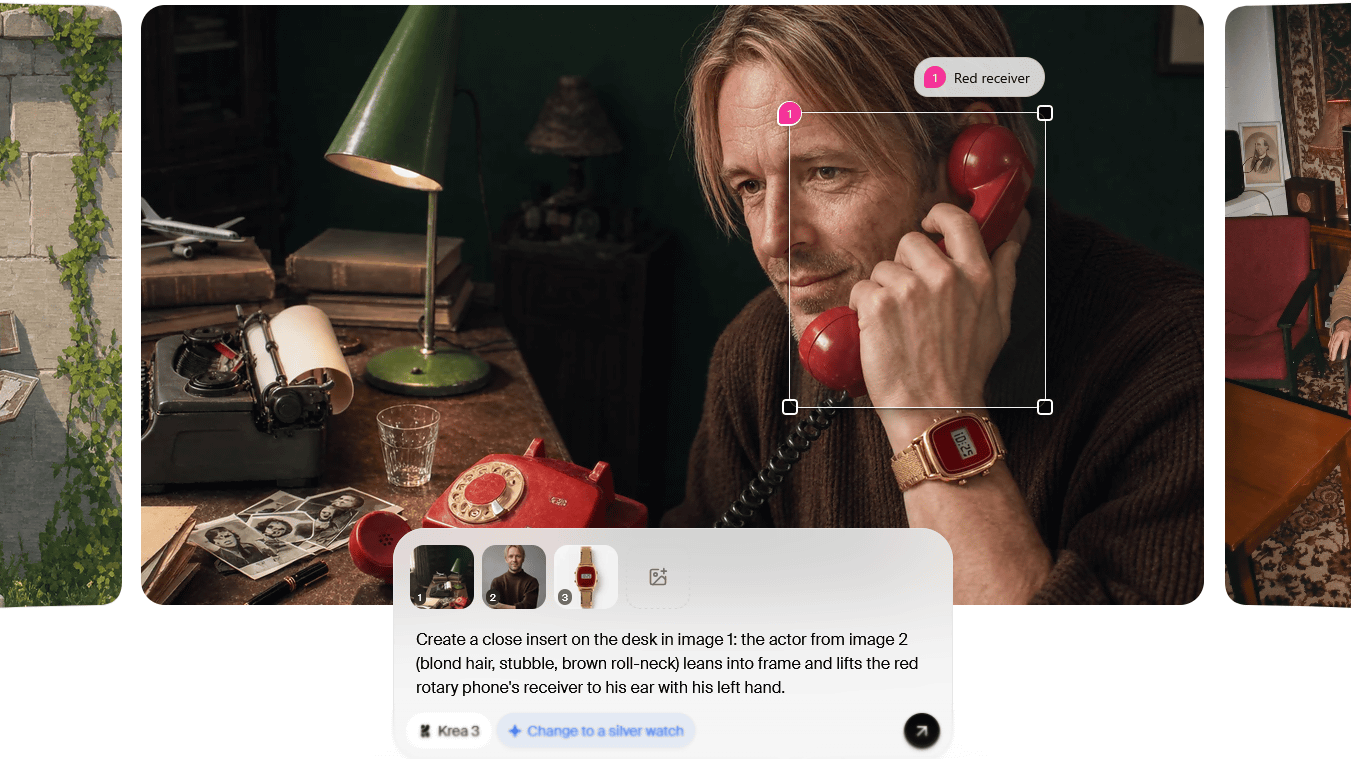
Krea opened the beta for Krea 3, which does end-to-end 2K edits in under 8 seconds, accepts up to 8 reference…
President Donald Trump posted photos on Truth Social showing White House renovations, but one comparing an old…
Universidad de Córdoba (UCO) has published a guide titled "AI NSFW 2026: reference tools, reusable workflows a…
Black Forest Labs released FLUX 3 Image Klein, a 5.6-billion-parameter open-weights model for text-to-image ge…