What happened
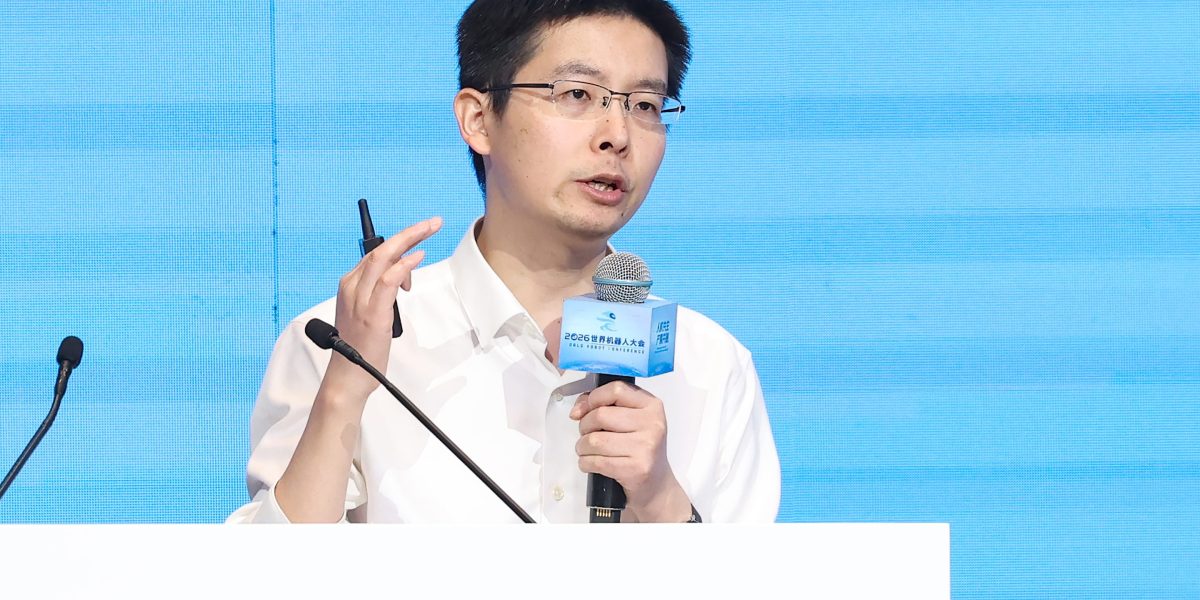
Unitree, a Chinese robotics company whose stock surged 460% on its Shanghai listing this week, raised $900 million at a $9 billion valuation. CEO Wang Xingxing said Thursday that humanoid robots' "ChatGPT moment"—when they can handle about 80% of household tasks via voice or text commands in unfamiliar settings—could take "2 to 3 years at the fastest, and 5 or even 10 years at the slowest."
Why it matters
Wang's timeline represents a shift from his claim last year that the breakthrough would come within five years. His more cautious forecast reveals a gap between investor enthusiasm and technical reality: despite Unitree's viral videos of backflipping robots, the company's own units remain less efficient than human workers and must be retrained for each new task, limiting their readiness for mainstream deployment.
What to watch
Unitree is developing a self-evolving system where AI tests robot "control code" and scores results in human collaboration to improve precision—a process the CEO said matters in "the last few centimeters or millimeters." The stock fell 19% on Thursday and another 2% Friday after its opening surge.
Summaries like this, in your inbox every morning.
Wang's revised forecast reflects the gap between spectacle and substance in the robotics industry. Last year, a viral video of Unitree's humanoid robots dancing at China's Spring Festival Gala catapulted the startup into the mainstream; this year, backflips and platform leaps drew even more attention. Yet the CEO's Thursday speech—delivered as investors were driving the stock up 460%—admits a hard truth: impressive choreography does not equal practical utility. His shift from a five-year timeline to a 2–10-year range is not a technical refinement but an acknowledgment that the industry faces structural challenges ChatGPT did not. Language models reached their breakthrough partly because text generation scales; robots must adapt physically to novel spaces and tasks, a problem Wang says requires continuous retraining. The company's answer—an AI-driven "self-evolving development loop" that tests and scores control code with human feedback—points to a longer, harder path than the market's 460% surge suggests.
Pick your industry and the AI tools you use, and get news related to your work every day.
Free · 30 seconds with Google · unsubscribe anytimeWhat is AIToday? →
Ask AI anything about this article. The AI reads this article, earlier AIToday articles, and Wikipedia, and cites its sources. Q&As are published on this page for other readers too.
Hewlett Packard Enterprise stock is down 5% at $55.87

The Motley Fool argues Amazon is the AI company of the two, since AWS was just 21% of first-half 2026 revenue…

Vercel data published Thursday shows TypeSafe AI's Jev, a lightweight decision model for choosing among predet…

Chunghwa Telecom president Rong-shy Lin said the shift from conversational AI to autonomous AI agents is resha…
CoreWeave fell 5% in premarket trading Friday and was on track to finish the week down 15%, after rebounding f…
Apple and Meta said they would jointly release a new open-weight AI model designed to run on high-end Macs, ai…