
What happened
Target appointed Chandhu Nair as its first chief artificial intelligence officer and senior vice president on Tuesday, alongside Purvi Shah as senior vice president of user experience. Nair previously led stores, data, AI and innovation at Lowe's and has also worked at Staples and Gap.
Why it matters
Target is betting on AI to win back shoppers and investors by improving inventory management, speeding up business decisions, and capitalizing on generative AI tools it has already built—including Target Trend Brain, which identifies upcoming customer search trends, and a conversational gift-finding tool launched last holiday season. The move reflects broader pressure on major retailers to keep pace with competitors like Walmart, Gap, and Best Buy, all of which have rolled out or partnered on AI capabilities.
What to watch
Nair stated his focus is on a "more coordinated approach" to AI across Target's operations. Former Walmart CEO Douglas McMillon has signaled that AI's potential—particularly "agentic commerce" and "AI shopping"—was a key factor in his decision to step down in February, suggesting the retail industry sees this technology as transformative over the coming years.
Summaries like this, in your inbox every morning.
Target's appointment of its first chief AI officer reflects a strategic inflection point in retail. The company is operating in a competitive environment where major rivals—Walmart, Gap, Best Buy—are all moving aggressively to embed AI into customer-facing and operational processes. Target's existing generative AI efforts (Target Trend Brain and the gift-finding tool) show the company has already begun experimenting; the appointment of Nair signals a shift toward more coordinated, enterprise-wide deployment. Nair's statement that "the most meaningful AI stories won't be about what happens in a lab" but rather "on the front line" suggests Target intends to prioritize practical applications that affect shopping experience and employee productivity, not pure research.
The timing is significant. Former Walmart CEO Douglas McMillon's public statement in December—that he stepped down to bring in someone "faster" who could capitalize on AI's potential—frames AI adoption as a make-or-break competitive move. McMillon specifically cited "agentic commerce" and "AI shopping" as the vision he saw emerging, and noted that recognizing this shift "really caused me to think that now was the right time [to step down]." Target's move suggests the broader retail industry views the next few years as a critical window to lock in AI capabilities or risk falling behind.
Pick your industry and the AI tools you use, and get news related to your work every day.
Free · 30 seconds with Google · unsubscribe anytimeWhat is AIToday? →
Ask AI anything about this article. The AI reads this article, earlier AIToday articles, and Wikipedia, and cites its sources. Q&As are published on this page for other readers too.
Supermicro Computer appointed Mark Long as chief financial officer, bringing an experienced technology finance…
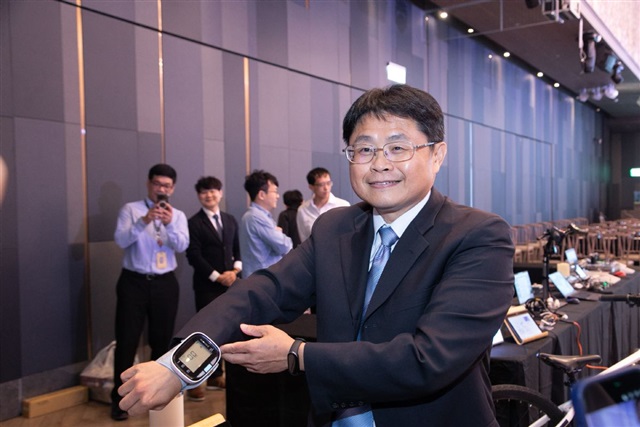
Holtek Semiconductor unveiled its 2026 product roadmap on October 15, focusing on four core areas: smart prote…
TSMC reported about NT$763.1b in Q3 net profit and confirmed that demand for advanced processors is running ah…

Nvidia-backed CoreWeave steadied Thursday after a sharp slump, as investors worried about the debt financing b…
Circlia started a proof-of-concept for TASTE SIGNAL: visitors to Holland Village Cafe FUKUOKA taste cookies an…

Weathernews said on October 15 it implemented its own AI weather-forecasting model, AI-Nowcast, in its Weather…