What happened
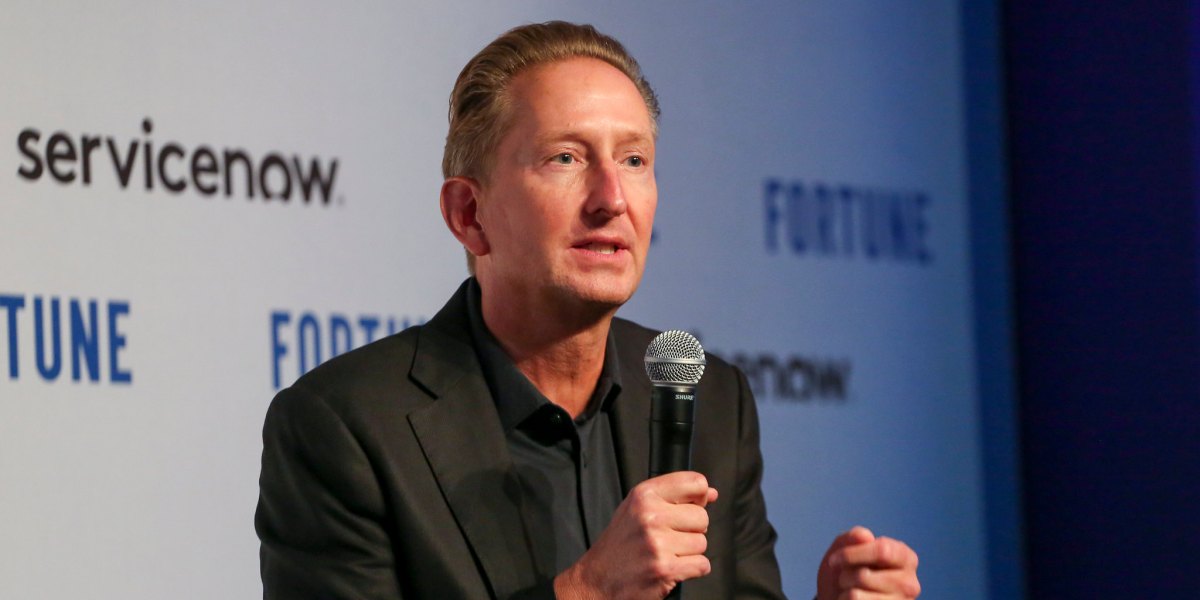
At the Fortune AIQ Summit, Booking Holdings CFO Ewout Steenbergen said hyperscalers spending hundreds of billions on large language models don't really know what their ROI will be.
Why it matters
For companies that use these models rather than build them, the payoffs come only when processes are redesigned end to end and costs stay controlled, Steenbergen said.
What to watch
Booking's early AI gains are modest and mostly internal, so the outcome hinges on whether token spending keeps falling per merge request as more processes are rebuilt.
WHO IT HITSThis lands on CFOs and IT budget owners at companies that buy AI models rather than build them, who face the same ROI question Steenbergen raised. It also matters to engineering leaders tracking cost per unit of code produced.
Summaries like this, in your inbox every morning.
Steenbergen's remarks came at the Fortune AIQ Summit at the New York Stock Exchange, in a conversation with Fortune senior writer Sheryl Estrada. He framed the past two years as a period of experimentation and said the next phase means rebuilding processes from a white sheet. Customer service went first, and the company has since pointed to early signs in its Q2 numbers: connected trip transactions grew at a low-double-digit rate at Booking.com, merchant bookings reached about 73% of gross bookings, and Level 2 and Level 3 Genius members made up more than 30% of active customers. On the customer side, he said on the company's Q2 call in August that referrals from large language models, paid and unpaid, were under 1% of total room nights.
The company's public pitch is that AI will make travel easier for customers and its marketing cheaper. Steenbergen said AI won't change how travel fundamentally happens, only the experience, calling it the connected trip. Travelers visit about five platforms on average before booking, and about one-third of Booking's customers arrive through paid channels that cost the company $8 billion to $9 billion a year. He said the bigger opportunity is growth rather than cost, with AI potentially making Booking a much more high-frequency business through proactive suggestions when plans change.
Steenbergen also described his own setup: an AI coach, plus two agents, one a strategic thought partner for board presentations and one a critical equity research agent for earnings prep. The reading here is that Booking's AI story is still mostly about internal efficiency, and the customer-facing gains he cited remain modest, with limited data. Whether the growth case materializes may depend on how quickly the connected trip moves from early signals to a larger share of transactions.
Pick your industry and the AI tools you use, and get news related to your work every day.
Free · 30 seconds with Google · unsubscribe anytimeWhat is AIToday? →
Ask AI anything about this article. The AI reads this article, earlier AIToday articles, and Wikipedia, and cites its sources. Q&As are published on this page for other readers too.
The Motley Fool argues Amazon is the AI company of the two, since AWS was just 21% of first-half 2026 revenue…

Hewlett Packard Enterprise stock is down 5% at $55.87

Cammarata reinterprets InceptionV1's cat-car neuron as a V-shape detector, not two unrelated concepts

Google Deepmind's Gemini 4 Argon scored 97.5 percent on ARC-AGI-3 at a cost of $4,800, second only to GPT-6 As…

Microsoft's Surface Laptop Ultra, using Nvidia's RTX Spark platform, starts at $2,599 (up to $5,899)

Meta's new commercial terms, effective October 30th, appear to let it crawl and train AI on content from websi…


