
Researchers at Worcester Polytechnic Institute developed an ultrasound-based perception system for aerial robots that uses sonar (sound-based sensing) inspired by bat echolocation. The system includes a physical acoustic shield that reduces propeller noise and a neural network called Saranga that recovers weak echo signals from noisy measurements.
The drones can estimate obstacle locations in 3D and navigate safely in low-visibility environments—smoke, fog, dust, snow, or complete darkness—where cameras and lidar (light detection and ranging) sensors fail. The system operates using milliwatt-level sensing power.
According to the researchers, the work reduces power by 1,000 times, weight by 10 times, and cost by 100 times compared to current solutions. The drones are intended for search and rescue, cave exploration, environmental monitoring, and other humanitarian applications in environments where human or larger helicopter access is limited.
Summaries like this, in your inbox every morning.
Pick your industry and the AI tools you use, and get news related to your work every day.
Free · 30 seconds with Google · unsubscribe anytimeWhat is AIToday? →
Ask AI anything about this article. The AI reads this article, earlier AIToday articles, and Wikipedia, and cites its sources. Q&As are published on this page for other readers too.
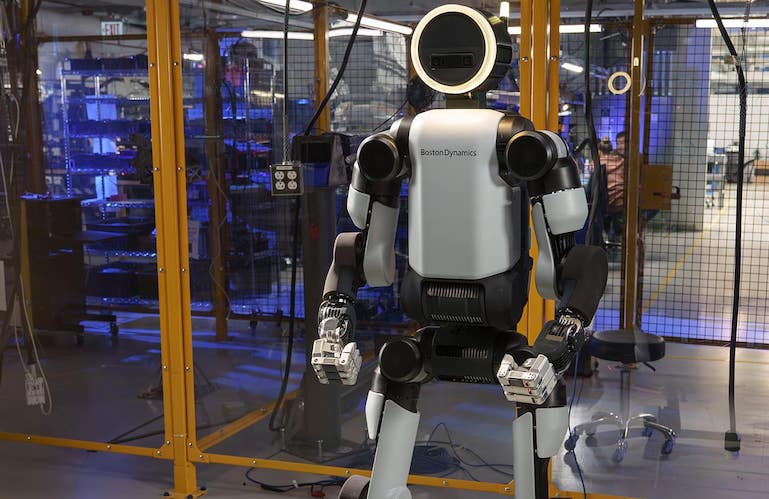
Boston Dynamics' Atlas, now all-electric and running on NVIDIA chips, autonomously sorts roof racks at Hyundai…
XPeng appeared at the Paris Automotive Summit, presenting not only automotive expertise but a broader technolo…

AIBotics completed its acquisition of NovaCore Labs' operating assets from PlayJamaica Limited, gaining 10 ser…

In an internal test, Google DeepMind robotics researchers instructed Gemini 4 Argon to watch a video of a huma…
Amulya Vishwanath, who spent seven years leading product marketing for Nvidia's robotics platforms, says robot…

Claire interviewed Rika Antonova of the University of Cambridge on the Robot Talk podcast about using AI to de…