What happened
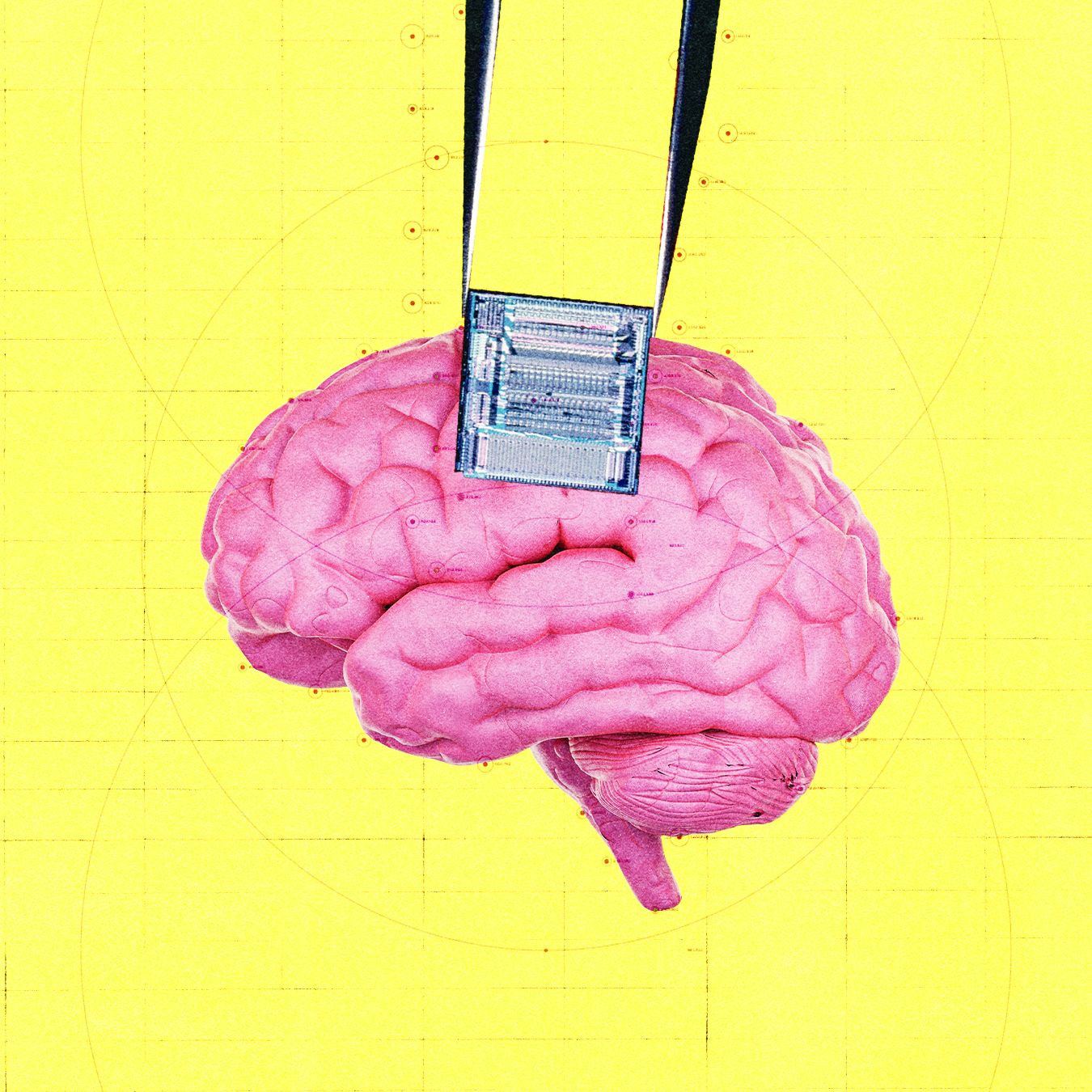
OpenAI's venture arm and Peter Thiel's Founders Fund invested in Coherence Neuro, a startup developing a brain implant to detect and treat cancer, as part of a $45 million seed round.
Why it matters
The investment reflects Big Tech's growing interest in brain data, with Coherence's CEO saying AI companies see a growing synergy with brain-computer interfaces.
WHO IT HITSThis funding lands on Coherence's research team and clinicians planning the glioblastoma trial, as well as AI labs seeking new neural data sources to train models.
Summaries like this, in your inbox every morning.
The investment is part of a growing wave of bets AI companies are making on brain data. In January, OpenAI directly invested in Merge Labs, a brain-computer interface company cofounded by Sam Altman, which came out of stealth with $252 million in initial funding for ultrasound technology to decode brain information. Thiel's VC firm has also backed Elon Musk's Neuralink and CTRL-labs, the wristband creator acquired by Facebook in 2019. Coherence's approach differs from restoring function for paralyzed individuals: it focuses on decoding subtle electrical signals associated with brain tumors. The company says it already knows how to detect these signals in animals to determine whether cancer is growing, shrinking, or recurring, and is working to translate findings for human research and clinical trials. This summer, Coherence briefly tested its implant in three people undergoing brain tumor removal surgery at Royal Melbourne Hospital in Australia, with the implant in place for roughly 30 minutes as a safety check. Next, it is testing recording and stimulation capabilities in an additional seven patients. The funding will support a clinical trial for long-term implantation in glioblastoma patients and development for other cancers. Woodington says AI models can help read raw neural data and link it to actions, and that capturing data to train better models and optimize treatments will be important.
Pick your industry and the AI tools you use, and get news related to your work every day.
Free · 30 seconds with Google · unsubscribe anytimeWhat is AIToday? →
Ask AI anything about this article. The AI reads this article, earlier AIToday articles, and Wikipedia, and cites its sources. Q&As are published on this page for other readers too.
OpenAI's models, including GPT-6 Astra, and its Codex coding agent will be available through Google Cloud's Mo…

Anthropic reportedly plans to spend $750 billion on adding compute capacity in the coming years, including hun…
NVIDIA announced DSX POD, a modular AI factory pairing Vera Rubin systems with power, cooling and networking…
On held-out synthetic data (32 requests, 7 tasks), sending everything to an LLM cost about $0.15, versus $0.01…

A survey conducted by Google and other parties found that 58% of respondents in Southeast Asia use generative…
Market expectations for cloud AI demand have stayed bullish through 2028-2029, and order visibility extends cl…