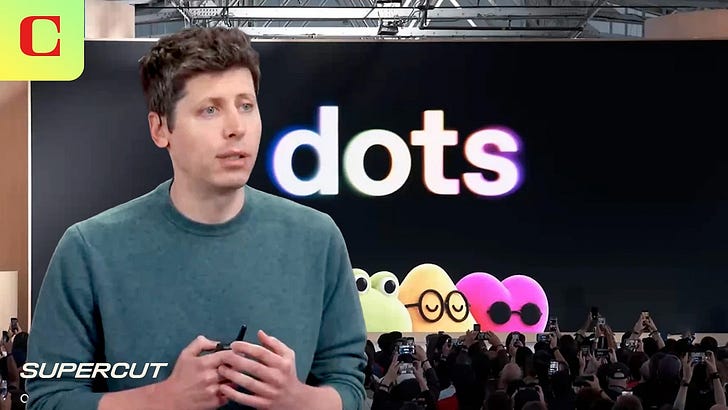
What happened
OpenAI launched Dots — agents on GPT-6 Astra, each running on its own cloud computer and connecting to 4,000+ apps plus Slack/Teams — shipping to Pro, Business Premium and Enterprise. GPT-6.1 Sol also arrived at $2/$10 per M tokens.
Why it matters
Users set boundaries for what each dot may do alone, what needs approval, and what it must never do, so OpenAI is pushing agent oversight into a per-user policy setting rather than a prompt.
What to watch
Tibo clarified that a primary dot's direct work does not draw on plan usage, but the Codex tasks it spawns do — so the real cost depends on how many spawned tasks a team runs. The re-tiered plans, including a Pro 500 at 25x, drew heavy backlash.
WHO IT HITSEnterprise IT and security teams evaluating always-on agents now face a concrete policy decision: which actions a dot may take autonomously, which need approval, and which are forbidden, since the primary dot's direct work does not draw on plan usage but spawned Codex tasks do.
Summaries like this, in your inbox every morning.
DevDay 2026 arrived on the 20-year anniversary of Sam Altman's first startup, and OpenAI used it to stretch from a consumer chat app into several adjacent businesses at once. Dots are its voice-enabled answer to Instinct and Muse, and ChatGPT Spaces with Dots is its answer to Notion and the office productivity suite; GPT-6.1 Sol is its answer to Opus 5.5. Alongside those, OpenAI shipped the Decisions API, which it frames as an answer to what the Jev podcast covered, though the article notes that for now it is a light shim over Luna, giving it vision without calibration or RLCD.
The platform moves extend the same push. Sign in with ChatGPT lets users spend their plan quota in partner apps such as Devin, Nous Portal/Hermes and T3 Code, while a B2B Marketplace lets enterprises apply OpenAI commits to open models via Baseten — framed as OpenAI competing to own the enterprise AI budget. The plan re-tiering to Plus 1x / Pro 100 5x / Pro 200 10x, plus a new Pro 500 at 25x, roughly halved the old Pro 200's value and drew heavy backlash.
Independent evals give a mixed picture. Artificial Analysis places GPT-6.1 Sol 1 pt below Astra on its Intelligence Index at $0.72 vs $3.26 per task, with a hallucination rate falling from 60% to 54%, though it uses 10–30% more output tokens than 6 Sol. A planted-bug test found 44 of 105 bugs for $6.56, versus Astra's 45 for $33. Whether those numbers hold across different harnesses is the open question — the outcome for buyers weighing Sol against Astra, Opus 5.5 and Sonnet 5.5 hinges on whether the claimed near-Astra quality survives real workloads at the advertised price.
Pick your industry and the AI tools you use, and get news related to your work every day.
Free · 30 seconds with Google · unsubscribe anytimeWhat is AIToday? →
Ask AI anything about this article. The AI reads this article, earlier AIToday articles, and Wikipedia, and cites its sources. Q&As are published on this page for other readers too.
HBM is approaching half the cost of a GPU-HBM CoWoS package, prompting the question of whether memory remains…
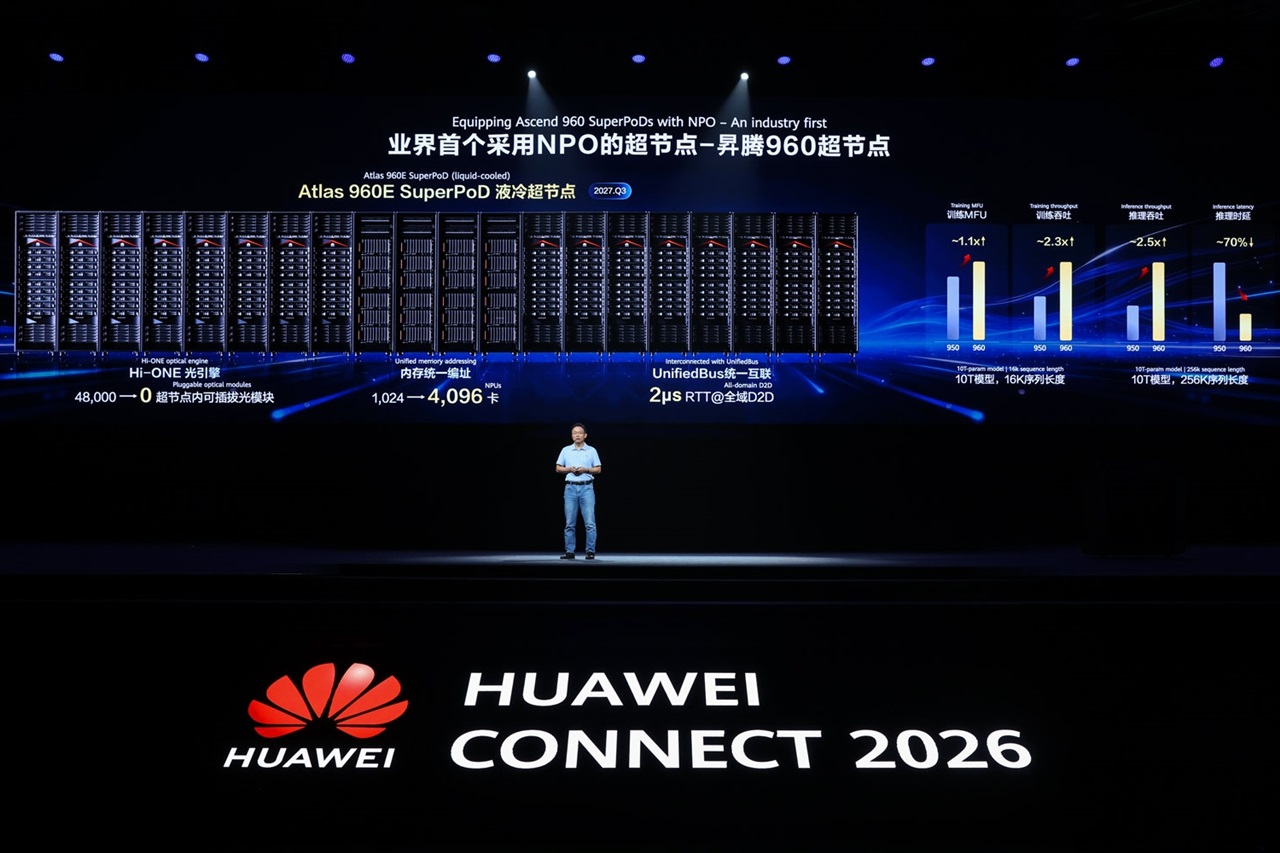
DeepSeek is bringing more of the software it uses to develop its AI models to Huawei Technologies' Ascend 950…
Among respondents at companies with 1,001+ employees, 50.0% said AI is used company-wide, and 46.0% flagged AI…

Nvidia released the Open Agent Safety Platform on September 28, days after CEO Jensen Huang called warnings fr…
Oracle invoked "force majeure" to delay payment on its Project Jupiter data center, and its 2056 bonds then tr…

McDonald’s is increasingly using AI to guide menu prices in the U.S