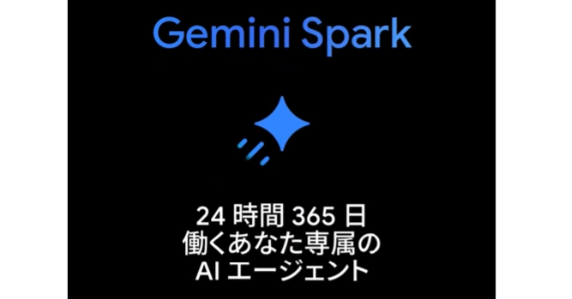
Google has launched Gemini Spark, a personal AI agent, in Japan starting July 16, available to Ultra plan subscribers (¥14,500/month and up) in beta.
The agent runs 24 hours a day in the cloud, automatically handling tasks like email replies, schedule adjustments, and data organization by integrating with Gmail, Google Calendar, Google Docs, and other apps—even when your device is powered off.
The company has signaled that Pro plan members (¥2,900/month) may gain access in the future.
何が起きたか
GoogleはGemini Sparkの日本での提供を7月16日に開始しました。Ultra加入者(月額1万4500円~)向けにβ版として提供され、基盤にはAIモデル「Gemini 3.5」とエージェント開発プラットフォーム「Google Antigravity」を採用しています。
なぜ重要か
Gemini Sparkはメール返信やスケジュール調整などのタスクを24時間体制でバックグラウンド実行し、スマートフォンやPCの電源が切れていてもクラウド上で常時稼働します。Gmail、Googleカレンダー、Google Docsなどと連携し、複数のアプリを行き来せずにテキスト指示だけで作業を完結できるため、事務作業の効率化が見込まれます。
注目点
Gemini担当副社長のジョシュ・ウッドワード氏は、Pro(月額2900円)ユーザーへのアクセス拡大の可能性を示唆しています。同機能は5月の「Google I/O 2026」で米国向けに発表されており、今回の日本リリースは日本語を含む複数言語への対応を伴う初の地域拡大です。
Ask the AI about this article →
Gemini Spark represents Google's entry into the autonomous AI agent market, built on the company's Gemini 3.5 model and Google Antigravity development platform. The service addresses a specific pain point: users often repeat routine administrative tasks across multiple cloud applications. By running 24/7 in the cloud, Spark can execute these workflows asynchronously without requiring the user's device to be active, a technical distinction from earlier assistant models that depend on user-initiated requests.
The Japan launch is strategically significant as the first international expansion beyond the U.S., following the May announcement at Google I/O 2026. The company has carefully segmented access: Ultra tier (highest-paid) gets the beta first, while the public hint that Pro tier members will eventually receive access suggests a deliberate pricing ladder to drive conversions. This tiering aligns with Google's broader Gemini monetization strategy, where each capability roll-out is tied to a specific subscription level.
The integration depth—spanning Gmail, Calendar, Docs, and via custom MCPs, virtually any third-party app—gives Spark a broad utility surface compared to point assistants. Users can define repeatable workflows as "skills" and have the agent re-execute them, reducing friction for knowledge workers who perform similar multi-app orchestrations daily.
For example, today's edition would include:
AI-summarized, only the topics you pick — one digest a day via Email, Slack, or Discord.
Free · takes 30 seconds · unsubscribe anytimeWhat is AIToday? →
Ask AI anything about this article. Q&As are published on this page for other readers too.
CBTS Technology Solutions LLC launched Forge Agents, a platform that turns a plain-language job description in…

Imec CEO Patrick Vandenameele said at SEMICON Taiwan 2026 that the Belgian research center is broadening its c…
Alphabet's AI Overviews now reach over 2.5 billion monthly users through Google Search, and its ad business ge…
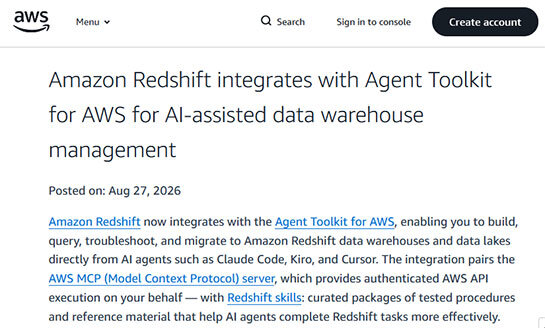
Amazon Web Services (AWS) has integrated its fully managed data warehouse service, Amazon Redshift, with Agent…
Visual Studio Code 1.135 now includes an experimental 'Rubber Duck' feature that lets developers request a sec…
Sonos announced a new app update with generative AI features, a new soundbar called the Beam Ultra, and its se…