What happened
Kimi K3, a Chinese AI model, has prompted concern among Wall Street and U.S. government officials about American competitiveness in AI development. Stratechery's analysis finds the competitive threat is not new, but highlights that frontier labs (like OpenAI and Anthropic) retain a structural advantage despite the capability advances.
Why it matters
The competitive pressure from Chinese models raises questions about U.S. policy direction in AI. According to the coverage, the core vulnerability lies not in raw model capability but in U.S. cybersecurity policy—a gap that frontier labs may struggle to close without government support and policy alignment on how to address Chinese competition.
What to watch
U.S. policy around cybersecurity and how it shapes the competitive landscape. The analysis suggests that solving this problem requires the U.S. to accept the reality of Chinese competition, even if that leaves OpenAI and Anthropic to navigate the challenge themselves.
Ask the AI about this article →
Summaries like this, in your inbox every morning.
The emergence of Kimi K3 has surfaced long-standing concerns about Chinese competition in AI, but the Stratechery analysis suggests this anxiety reflects a shift in perception rather than a new threat. Frontier labs like OpenAI and Anthropic have maintained structural advantages in capability and talent, yet the coverage points to a critical weakness: U.S. cybersecurity policy and how the government and industry coordinate around competitive threats. The analysis frames the problem not as a capability gap but as a policy gap—the U.S. lacks a coherent approach to acknowledging and managing sustained Chinese competition. This gap becomes especially acute because frontier labs may find themselves unable to solve the problem alone; they require government alignment on strategy. The implication is that without a policy shift, even a capable U.S. industry may find its position eroded not by superior Chinese models, but by failures of coordination and foresight at the national level.
For example, today's edition would include:
AI-summarized, only the topics you pick — one digest a day via Email, Slack, or Discord.
Free · 30 seconds with Google · unsubscribe anytimeWhat is AIToday? →
Ask AI anything about this article. Q&As are published on this page for other readers too.
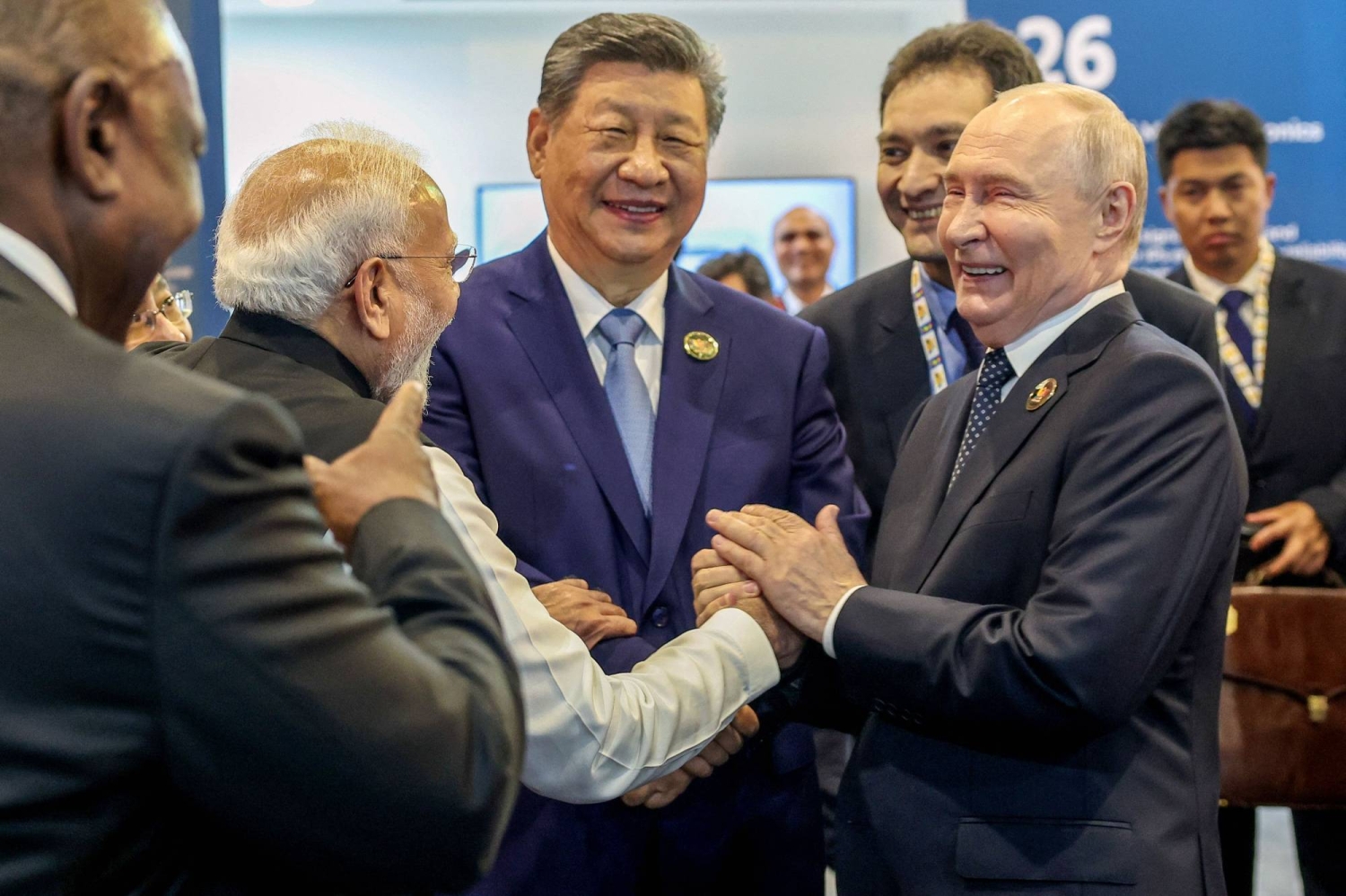
Xi Jinping told the BRICS summit in New Delhi that China will lead a BRICS "community" for open-source AI, sup…
Chinese lab AllSpark released Iris-mini and Iris-pro, search agents with 35 billion and 397 billion parameters…

U.S. agencies on Tuesday accused DeepSeek, Moonshot and four other Chinese AI companies of extracting capabili…
DeepSeek launched V4.1-Flash, a 763B-parameter open-weight model with a causal encoder-decoder architecture

Dynatrace acquired Arize AI, adding AI observability, evaluation and agent monitoring to its application obser…

Y Combinator CEO Garry Tan told CNBC he would do nothing about distillation, and told TechCrunch he wants smal…


