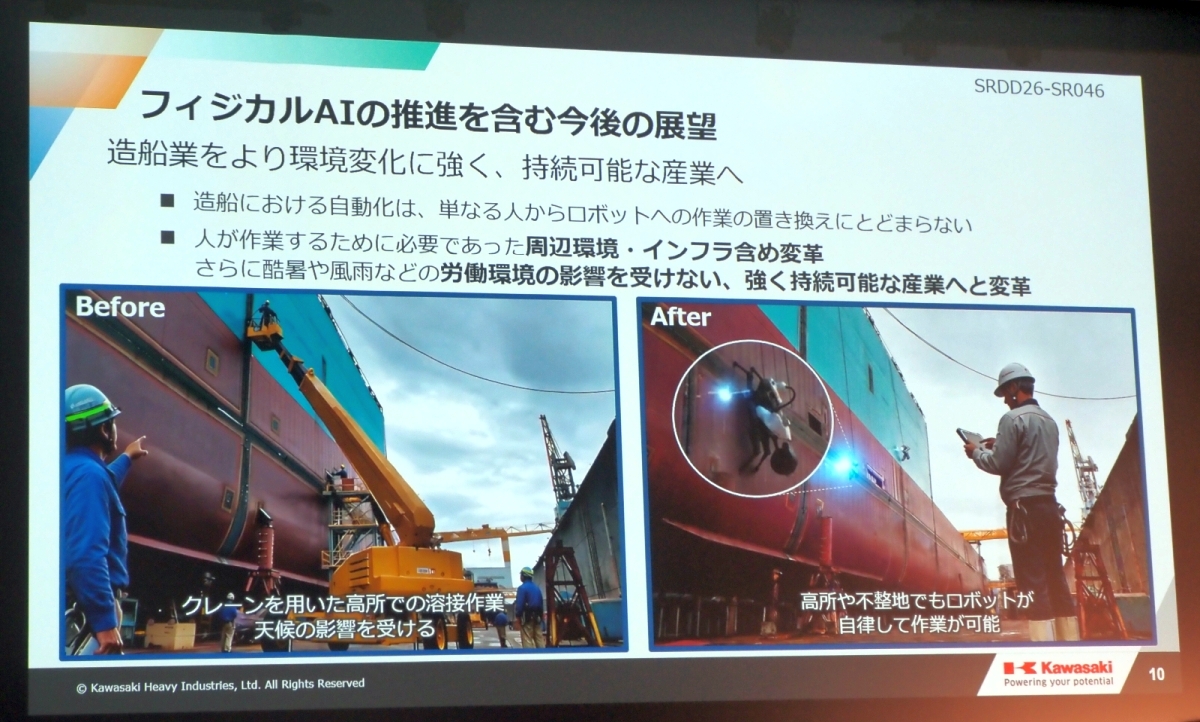
What happened
At an October 6 symposium in Shinagawa, JMU production technology head Masao Yuzaki said shipyard headcount is down 33% from its peak, offset to a 12% decline by added foreign trainees, and presented AI-driven plate-bending and welding robots.
Why it matters
The workforce gap is why JMU is replacing fixed automation with robots that move to the work and adapt to closed compartments and dock areas, a shift the government's 2035 volume target depends on.
WHO IT HITSShipyard production engineers and welding teams, who today handle most of the work in closed hull compartments and dock areas, would see more of that work move to mobile AI robots; shipbuilders planning capacity against the 2035 target are the other group watching this.
Summaries like this, every morning.
The Japanese government's December 2025 shipbuilding revival roadmap sets a target of doubling annual vessel construction from roughly 900万総トン to 1800万総トン by 2035. Against that goal, the industry's workforce is thinning: JMU's Yuzaki said headcount across company and partner-company employees is down 33% from its peak, held to a 12% decline only by adding foreign technical trainees, and the number of workers in their 20s has halved since 2011. That arithmetic is the backdrop for the October 6 symposium in Shinagawa, organized by the National Maritime Research Institute and the Japan Management Association Consultants and tied to the government's BRIDGE program for AI shipbuilding robots.
Shipbuilding resists automation because each vessel is a one-off, and the work environment shifts from flat steel cutting to three-dimensional block assembly and then to the dock. JMU has mechanized since the 1970s with NC cutting and automatic and robot welding, but those systems took hold mainly where conditions were stable. Closed compartments inside hulls and dock work still rely on people. The company's answer is to stop adding robots to fixed equipment and instead develop robots that can travel to the work and adapt to their surroundings.
Among the examples shown were an AI plate-bending robot that generates heating plans and coordinates two robots to bend steel plate, and a small portable welding robot that uses a 3D camera to recognize weld lines and generate NC motion data automatically. JMU is also part of BRIDGE work on AI welding and painting robots for closed compartments such as double-bottom blocks, and it introduced the four-legged ANAGUMA robot from startup ALTs, aimed at reaching varied spots on a shipyard site.
Pick your industry and the AI tools you use, and get news related to your work every day.
Free · 30 seconds with Google · unsubscribe anytimeWhat is AIToday? →
Ask AI anything about this article. The AI reads this article, earlier AIToday articles, and Wikipedia, and cites its sources. Q&As are published on this page for other readers too.
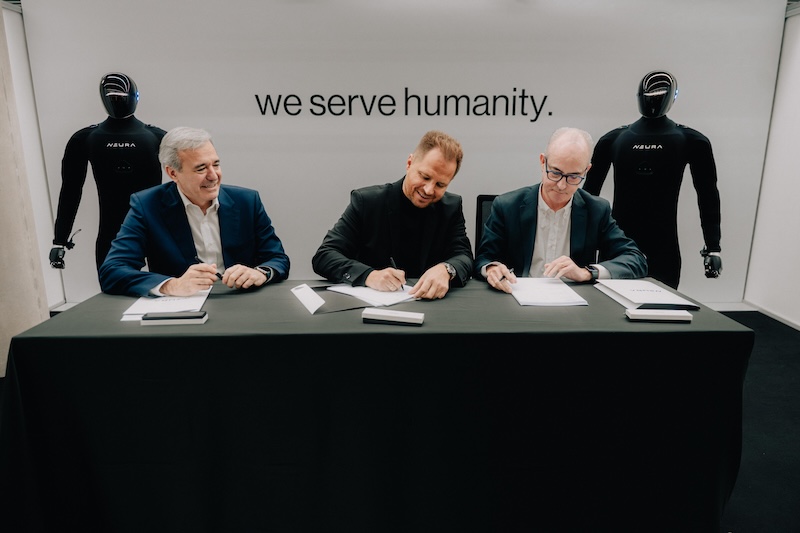
Neura Robotics, the Government of Aragón and Costa Group signed a memorandum of understanding to build Neura G…
Silicon Device will start handling e-con Systems' Darsi Pro series on November 27; it runs NVIDIA Jetson Orin…

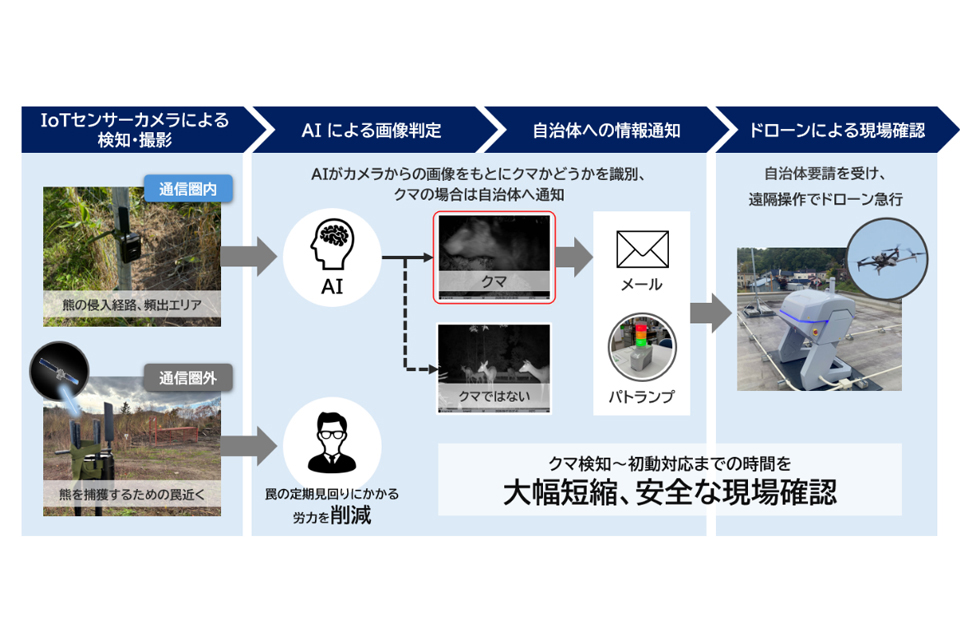
KDDI and KDDI SmartDrone installed 8 IoT sensor cameras in the mountains of Kamisunagawa and Minamifurano, sen…
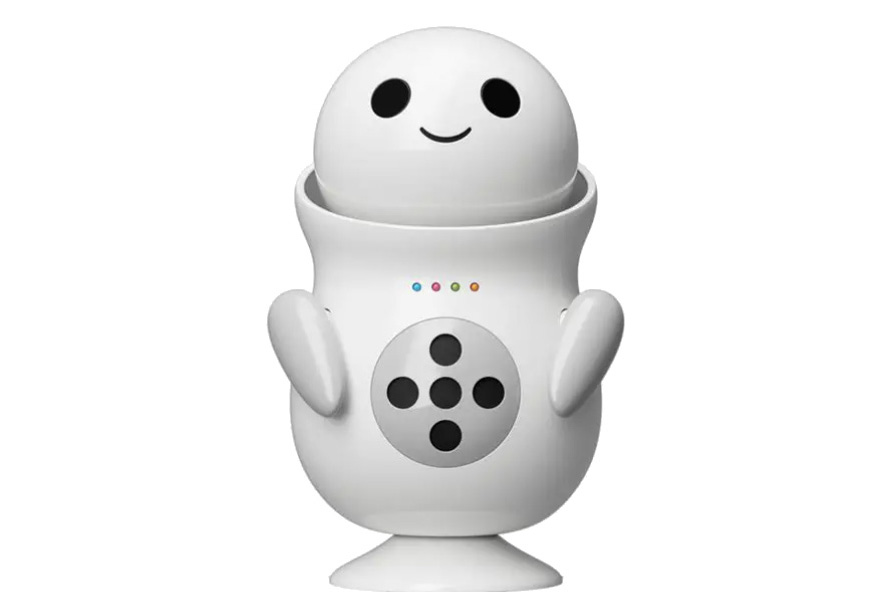
Indy Associates began selling miniMORK AI and started a trial at Haneda Airport Terminal 1 with two units plac…
Nexdata published a guide on egocentric data — first-person camera footage of human work — placing it above si…

Xpeng unveiled humanoids, cars and drones built on a single shared AI brain, a direct challenge to Tesla