AIToday
RoboticsTop Companies' AI MovesAI Business & IndustryTop Companies AI — US (2/2)Published: Aug 14, 2026, 06:30 JST4 min read

Lockheed Martin deploys AI to forecast military supply needs, cut logistics delays

Lockheed Martin deploys AI to forecast military supply needs, cut logistics delays

Key takeaway

  • Lockheed Martin is applying artificial intelligence to military supply chain management, replacing manual forecasting with machine learning models that predict demand spikes and detect inventory anomalies in real time.

  • The company has already launched an AI-powered logistics dashboard for the F-35 program and plans to extend it across other Air Force fleets, addressing the challenge of keeping pace with modern combat operations where speed of decision-making has become critical to mission readiness.

3 Key Points

  1. What happened

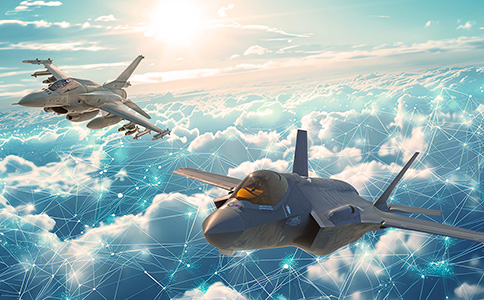
    Lockheed Martin is using machine learning to replace static flight-hour forecasting with dynamic demand prediction that ingests sensor data, operational profiles, and geopolitical risk indicators. The company has already deployed a real-time Logistics Command and Control (LogC2) dashboard for the F-35 program, with extensions underway for the F-22, F-16, and C-130 fleets.

  2. Why it matters

    Military logistics traditionally relied on historic usage tables and reactive supply chains that could not keep pace with modern combat operations. By moving to AI-driven forecasting and anomaly detection, Lockheed Martin enables military planners to spot supply shortages before they occur and optimize replenishment routes—giving decision makers what the company calls a 'decision advantage' in increasingly contested environments.

  3. What to watch

    Lockheed Martin is exploring autonomous logistics capabilities—vision-based robots for warehouse inventory and predictive maintenance AI that can flag component failures up to 72 hours in advance. The company is also partnering with external innovators like Rune Technologies on specialized logistics systems, signaling a collaborative approach to accelerating AI deployment across military sustainment.

In Depth

Read the full story

Lockheed Martin is transforming military sustainment by replacing decades-old logistics methods with machine learning-driven forecasting and real-time command-and-control systems. In a post published August 13, 2026, Vice President Nick Smythe outlined how the company is fusing systems engineering expertise with AI to deliver what it calls a "decision advantage"—the ability to process massive data streams, detect patterns, and recommend actions faster than human analysis alone.

Traditional military logistics relied on historic flight-hour tables and static usage metrics that ignore real-time consumption, leading to chronic under-resourcing and reactive supply chains unable to keep pace with modern combat tempo. Lockheed Martin's modern solution deploys machine learning models that ingest three layers of data: consumption telemetry from sensors embedded on airframes and subsystems that report component engagement and degradation trends; operational profiles capturing mission-specific factors like high-G maneuvers and environmental exposures; and strategic forecasts integrating geopolitical risk indicators and projected sortie rates. By combining these inputs, the model produces a "decision advantage horizon" that tells logisticians where demand will spike in advance, enabling a proactive rather than reactive pipeline. The model continuously retrains as new telemetry arrives, ensuring forecasts evolve with the operational environment.

To translate these forecasts into tactical action, Lockheed Martin built a web-based Logistics Command and Control (LogC2) dashboard that stitches together sensor streams, forecast outputs, and contract execution data into a single view. Key AI functions include unsupervised learning that flags unexpected consumption spikes before shortages materialize, reinforcement learning agents that suggest optimal stock replenishment routes balancing lead time and cost, and scenario-based models allowing planners to test the impact of surge events or emerging threats on spare availability. The dashboard is already live for the F-35 program, providing a 360-degree view of parts health and actionable logistics orders, with extensions underway for the F-22, F-16, and C-130 fleets.

Looking ahead, Lockheed Martin is piloting autonomous logistics capabilities: vision-based AI robots patrol supply warehouses performing real-time inventory counts and damage detection, predictive maintenance AI analyzes engine vibration and fuel-flow data to flag failures up to 72 hours before they occur, and digital twin simulations allow rapid testing of new repair processes and upgraded software before field deployment. The company also emphasized collaboration over isolation, citing exploratory work with Rune Technologies on integrating an Adaptive Logistics Intelligent Decision System (ALIDS). Throughout, Smythe stressed that "AI does not replace the warfighter; it protects and empowers them," noting that the technology automates routine tasks to free service members for mission-critical work while maintaining human authority over final decisions through "human in the loop" validation at every tier.

Context & Analysis

Lockheed Martin's shift toward AI-driven sustainment reflects a fundamental change in how military logistics must operate. The article identifies decision-making speed as the decisive advantage in modern contested environments, moving away from 20th-century static forecasting methods that left supply chains perpetually behind operational demand. The company's approach layers multiple AI functions—demand forecasting that ingests sensor telemetry and geopolitical risk signals, real-time anomaly detection to flag unexpected consumption spikes before shortages materialize, and prescriptive recommendations for optimal replenishment routes. By deploying these capabilities first on the F-35 program and then extending to legacy fleets like the F-22, F-16, and C-130, Lockheed Martin is creating a common operational picture across the Air Force's mixed platform environment.

The company also signals a collaborative posture toward AI innovation, partnering with specialized vendors rather than building everything in-house. This mirrors a broader industry recognition that no single prime contractor can monopolize emerging AI expertise; the value lies in integration and interoperability. Critically, the article emphasizes that human warfighters remain in control—automation frees them from routine diagnostics and logistical tasks to focus on mission-critical work—and that Lockheed Martin applies the same disciplined testing, certification, and lifecycle governance to AI systems as it does to weapons platforms, embedding "human in the loop" validation at every decision tier.

FAQ

Which aircraft programs are using Lockheed Martin's AI logistics dashboard today?
The dashboard is already live for the F-35 program. Extensions are underway for the F-22, F-16, and C-130 fleets.
How far in advance can Lockheed Martin's predictive maintenance AI forecast component failures?
Deep-learning models can predict component failure up to 72 hours before it occurs by analyzing engine vibration, temperature, and fuel-flow data.
Is Lockheed Martin building all AI capabilities internally?
No. The company partners with external innovators when they bring complementary technology; recent exploratory work with Rune Technologies on integrating an Adaptive Logistics Intelligent Decision System illustrates this approach of codeveloping joint solutions.
Top Companies AI — US (2/2)Read Original Article

Get the latest Robotics news every morning

AI-summarized, only the topics you pick — one digest a day via Email, Slack, or Discord.

Free · takes 30 seconds · unsubscribe anytime

Ask AI

Ask AI anything about this article. Q&As are published on this page for other readers too.

Related Articles

Next articleHitachi and SZTAKI combine generative AI with optimization for automated production-line planning

The AI news that matters, in one minute each morning.

Sign up free