What happened
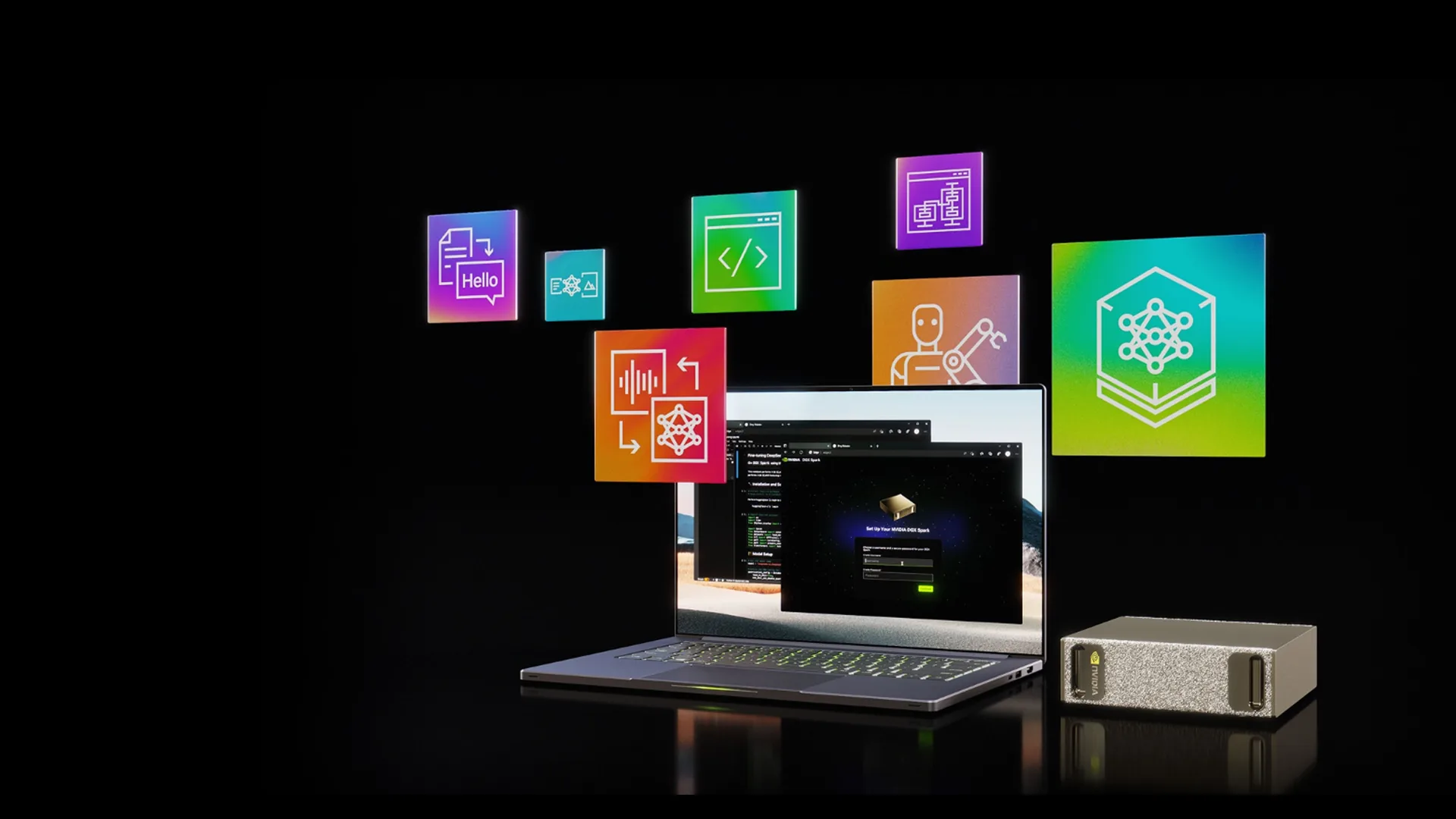
NVIDIA published DIN Deploy, open-source C++ samples that combine ONNX Runtime with the TensorRT RTX execution provider, with support for Windows and Linux.
Why it matters
Developers get a shared code path with vendor-specific CUDA code only in optional accelerated paths, so the same samples can run across systems that support the required tensor APIs.
What to watch
The samples are only as portable as the execution providers that support ONNX Runtime's tensor APIs. Watch the DGX Spark results, where whisper-large-v3-turbo ran 58.5x real time on GPU versus 3.8x on CPU.
WHO IT HITSDevelopers building native, hardware-accelerated applications in C++ — particularly those targeting Windows and Linux — can use the samples as a starting point for local AI features without a model-specific runtime.
Summaries like this, in your inbox every morning.
DIN Deploy is aimed at a gap NVIDIA describes in its own framing: adding AI models to local applications needs a portable model format, a reliable runtime, and acceleration that works across target systems. The collection addresses that by splitting each sample into a Python exporter that converts a model checkpoint into an ONNX artifact and a native C++ CLI built on ONNX Runtime.
The repository covers several task types at once — automatic speech recognition, interactive masking for images and video, and prompt-driven image generation. Performance numbers measured on DGX Spark show GPU acceleration far ahead of CPU for these workloads, with openai/whisper-large-v3-turbo at 58.5x real time on GPU versus 3.8x on CPU, and facebook/sam2.1-hiera-base-plus at 38.3 FPS on GPU versus 0.5 FPS on CPU.
How useful the samples prove in practice is likely to hinge on whether execution providers support the required ONNX Runtime tensor APIs, since that is the condition NVIDIA sets for the shared code to run. Developers on Windows and Linux, including Arm64 variants, can start from the repository's CMake presets, which download ONNX Runtime and TensorRT RTX by default.
Pick your industry and the AI tools you use, and get news related to your work every day.
Free · 30 seconds with Google · unsubscribe anytimeWhat is AIToday? →
Ask AI anything about this article. The AI reads this article, earlier AIToday articles, and Wikipedia, and cites its sources. Q&As are published on this page for other readers too.
Applied Materials reported record revenue for its fiscal third quarter on Aug

Eli Lilly's Brian Lewis detailed LillyPod at CoreWeave's Fully Connected 2026, an Nvidia DGX SuperPOD B300 sys…
On Micron's fiscal Q4 2026 earnings call, CEO Sanjay Mehrotra said humanoid robots are expected to need memory…

Marvell Technology trades at 25.1 times sales versus 3.0 times for the S&P 500, with 79% of fiscal Q2 2027 rev…
Aparna Nair, IBM's chief talent, leadership & culture officer, told CNBC Make It that entry-level workers shou…

Intel's stock is up 34.3% over the past 30 days and 205.3% year to date, with a 1 year total shareholder retur…