What happened
On Micron's fiscal Q4 2026 earnings call, CEO Sanjay Mehrotra said humanoid robots are expected to need memory and storage comparable to autonomous vehicles — over 200 gigabytes of memory and multiple terabytes of storage. Several physical AI customers are already sampling Micron's next-generation products.
Why it matters
If physical AI demand materializes, humanoid robots could become a significant driver of Micron's memory and storage sales by the end of this decade, extending a growth cycle already fueled by data centers. This is likely years away, but Micron is increasing investments and sampling products with customers.
What to watch
The opportunity hinges on whether humanoid robot production scales as Tesla, which shut down its Model S and Model X lines to ramp up Optimus, plans. Micron guided Q1 fiscal 2027 revenue to $60 billion–$63 billion, a 339% increase from Q1 2026 at the midpoint.
WHO IT HITSThis matters to investors holding Micron or other memory-chip stocks, as it points to a potential long-term demand source beyond data centers. It also signals to procurement teams at robotics and autonomous vehicle companies that high-bandwidth memory supply may become more competitive.
Summaries like this, in your inbox every morning.
Micron has been one of the best-performing stocks in the S&P 500 this year, rising more than 265%, largely because it is the only major U.S.-based manufacturer of high-bandwidth memory needed for AI. That data-center demand already shows up in its fiscal Q4 2026 results: revenue hit $54.23 billion, up 379% from a year ago, with net income of $37.7 billion. All four business units grew sharply, led by Core Data Center revenue at $18.0 billion, up 1,041% from $1.58 billion in Q4 2025.
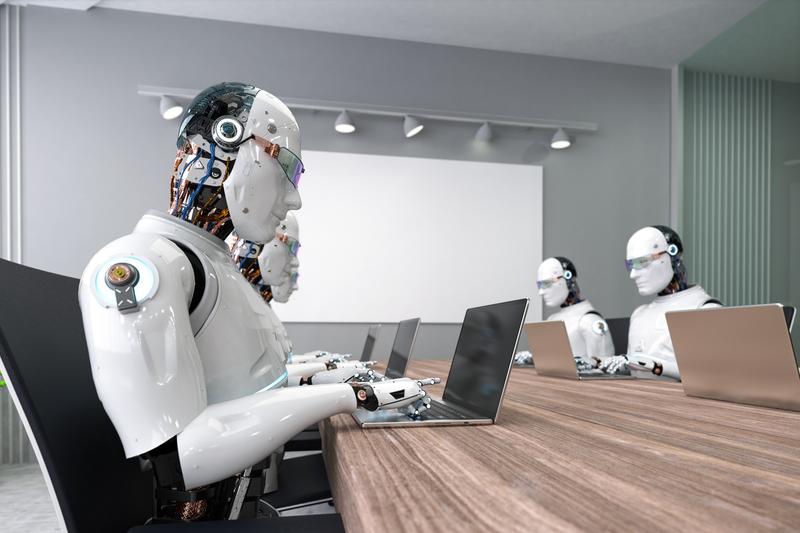
Now CEO Sanjay Mehrotra is pointing to a second potential growth leg: physical AI. He cited autonomous vehicles as the benchmark, noting they require more than 200 gigabytes of memory and multiple terabytes of storage, and said humanoid robots should have comparable needs. Analyst Shay Boloor of Futurum Equities described adding 200 gigabytes of DRAM to humanoid robots as "effectively putting server-level memory into millions of machines outside the data center." Tesla's plans for its Optimus robots, including shutting down Model S and Model X lines to ramp up production, suggest this market may not be far off.
The stakes for Micron hinge on whether humanoid robot production actually scales and whether memory content per unit rises as Mehrotra anticipates. If it does, Micron's growth window could extend well beyond the current AI infrastructure build-out. But that outcome is uncertain, and the timeline — by the end of this decade, according to Mehrotra — leaves room for both technical and market delays. For now, the immediate driver remains data centers, as reflected in the company's strong Q1 fiscal 2027 guidance of $60 billion to $63 billion.
Pick your industry and the AI tools you use, and get news related to your work every day.
Free · 30 seconds with Google · unsubscribe anytimeWhat is AIToday? →
Ask AI anything about this article. The AI reads this article, earlier AIToday articles, and Wikipedia, and cites its sources. Q&As are published on this page for other readers too.
OpenAI confirmed it dismissed three safety researchers for violating policies on accessing and handling sensit…
Anthropic PBC reportedly aims to begin marketing its IPO the week of Nov
Anthropic published best practices for human-AI agent teams, based on an interview with Slack CPO Jamie DeLang…

OpenAI's August 26 postmortem says its internal cybersecurity evaluation gave a research model "ExploitGym" ta…

Anthropic said it made the web service claude.ai and its desktop app about 3 times faster in 2 weeks, and that…

On October 1, OpenAI updated ChatGPT's release notes with shopping features — a 'try on' button on product car…