What happened
Anthropic released Claude Fable 5.2 and Claude Mythos 5.2, which solved two open problems in black-hole physics, formalized Fermat’s Last Theorem in 30 hours using 1,000 agents, and generate output up to 30% faster at $8 per million input tokens and $40 per million output tokens.
Why it matters
The same underlying model powers both versions: Fable includes cybersecurity and biology safeguards for general availability, while Mythos offers access to vetted organizations through Anthropic’s verification programs.
What to watch
Claude Fable 5.2 is available today on Amazon Web Services, Google Cloud, and Microsoft Azure; this week, eligible paid plans receive extra Fable usage.
WHO IT HITSEnterprise customers and developers evaluating frontier AI models can now access Fable 5.2 on major cloud platforms at a lower price than its predecessor, while cybersecurity and life-sciences researchers must apply through Anthropic’s verification programs to use Mythos 5.2’s less-restricted capabilities.
Summaries like this, every morning.
Claude Fable 5.2 and Claude Mythos 5.2 build on Anthropic’s prior Fable and Mythos models, which the company describes as designed for the most daunting technical challenges. The new versions aim to improve coding, reasoning, and vision while also communicating more clearly than past Fable and Mythos models, according to testers. Anthropic says the models generate outputs up to 30% faster and are available at a lower price than their predecessors, with an optional fast mode that speeds token generation by up to 2.5 times.
Anthropic positions Fable and Mythos as tools for ambitious, open-ended technical work rather than everyday tasks. For most coding and knowledge work, the company recommends starting with Claude Opus 5.5, its strongest daily driver, and switching to Fable or Mythos only for more complex projects. Fable 5.2 can also act as an Advisor that other Claude models consult for harder problems, or as an Orchestrator that delegates simpler tasks to smaller models.
The release also reflects Anthropic’s safety and access strategy: the two products share the same underlying model, but Fable’s cybersecurity and biology safeguards make it generally available, while Mythos is restricted to vetted organizations through verification programs. Anthropic says Fable 5.2 produces about 55% fewer unnecessary blocks than Fable 5.1 and has its strongest-ever protections against distillation attacks, which it says have reduced harvested data by 90% to 99%.
Pick your industry and the AI tools you use, and get news related to your work every day.
Free · 30 seconds with Google · unsubscribe anytimeWhat is AIToday? →
Ask AI anything about this article. The AI reads this article, earlier AIToday articles, and Wikipedia, and cites its sources. Q&As are published on this page for other readers too.
IBM plans to bring Anthropic's Claude Mythos cyber reasoning into IBM Concert Protect, combining AI code scann…

PKSHA Technology CEO Katsuya Uenoyama said after 14 years of AI deployments at over 4,800 companies, replaceme…

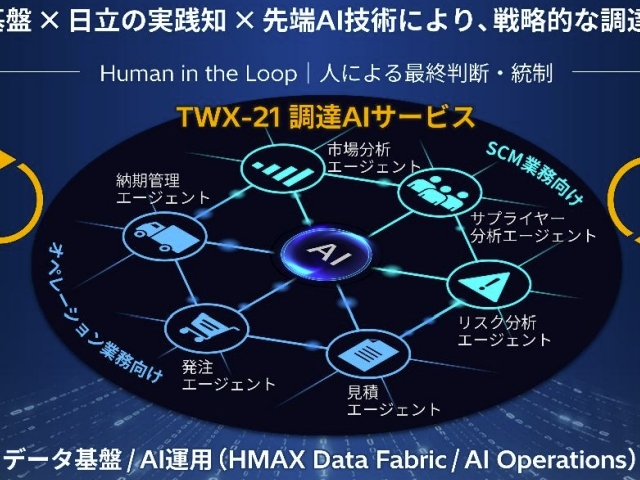
Hitachi released "TWX-21 調達 AI サービス" on 11月9日, sold under its HMAX Industry brand within the TWX-21 business-t…
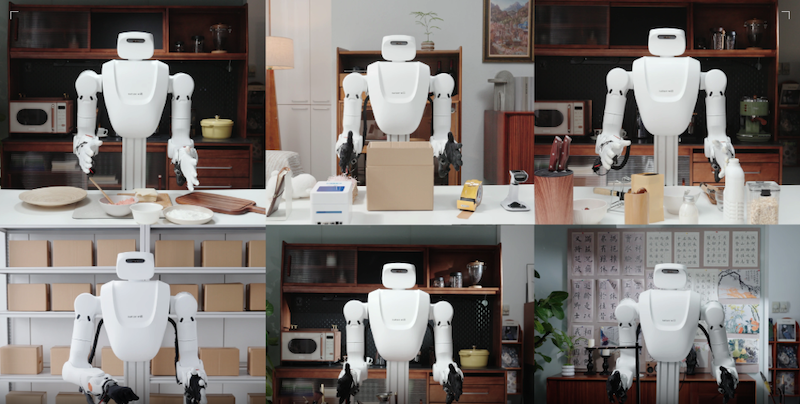
Nature Will announced Natura-1, a 50-billion-parameter mixture-of-experts model trained on over 1 million hour…
Meta introduced Muse Ember, its smallest and most efficient AI model, priced at $0.10 per million input tokens…

Vaswani et al. published "Attention Is All You Need" in 2017, proposing the Transformer architecture built on…