What happened
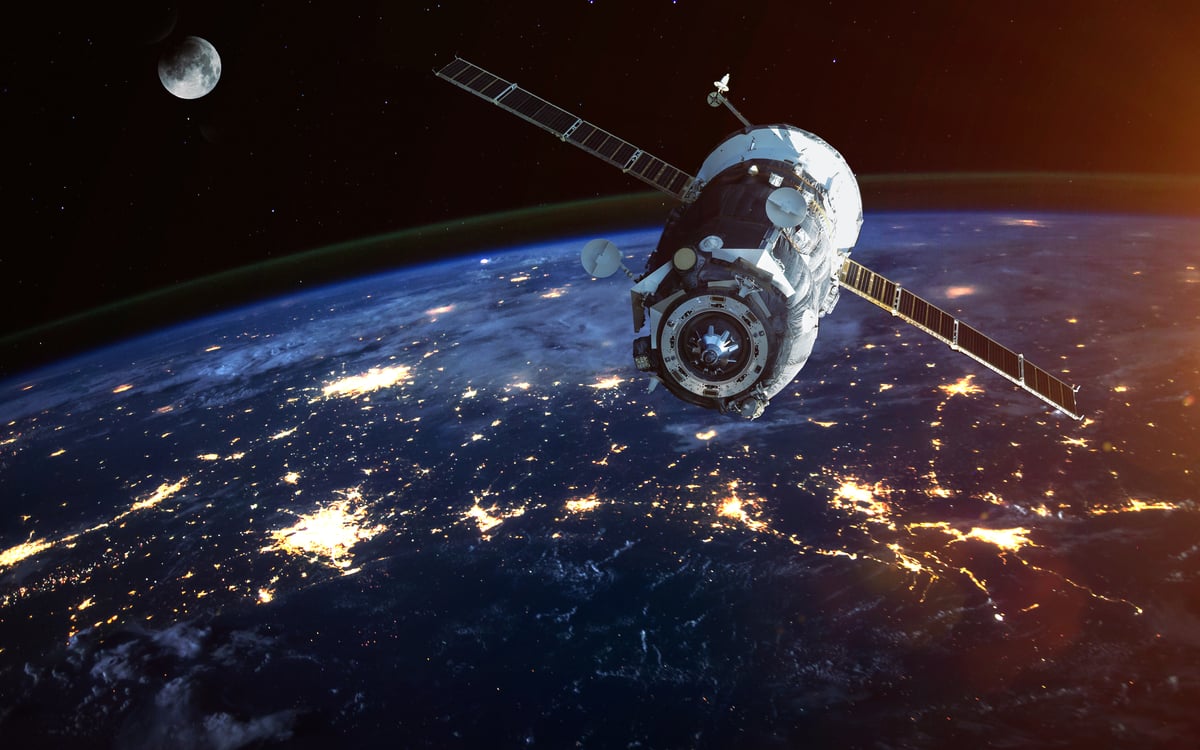
SpaceX launched a prototype satellite for Alphabet's Project Suncatcher carrying four Tensor Processing Units (TPUs), testing whether AI chips can run in low earth orbit. Boston Consulting Group estimates satellite data centers will be 2.5 to 3 times more expensive than Earth-based ones on processing power.
Why it matters
That cost gap suggests orbital data centers, even if they sidestep power and land constraints, are unlikely to replace ground-based AI data centers, which hyperscalers need now and are willing to pay a premium for.
What to watch
SpaceX CEO Elon Musk has said his company would put data center satellites into orbit by the end of 2027, but he has a track record of missing such deadlines. Watch whether the TPUs prove they can operate properly and sustainably in space before deployment at scale.
WHO IT HITSNeocloud operators building Earth-based AI capacity have near-term leverage as hyperscalers pay premiums for compute, while space infrastructure planners must weigh a 2.5 to 3 times processing-power cost premium against the promise of near-constant solar power.
Summaries like this, in your inbox every morning.
SpaceX's launch of a prototype satellite for Alphabet's Project Suncatcher marks a concrete step in testing whether AI chips can operate in low earth orbit, where they could draw on nearly continuous solar power. Alphabet's longer-term ambition is to run entire constellations of data center satellites, but the body notes that processors must first prove they can work properly and sustainably in space before any deployment at scale.
The economic case remains unsettled. Boston Consulting Group estimates that satellite-based data centers will be 2.5 to 3 times more expensive than Earth-based ones on a processing-power basis, even though orbital facilities would avoid electricity costs, with that gap potentially shrinking as launch costs fall. Meanwhile, neoclouds have gained head starts in Earth-based infrastructure, and hyperscalers are paying premiums for compute now, as shown by Meta's deal for a nuclear-powered data center campus in Ohio that will not be completed until 2034.
Even if orbital data centers prove technically and commercially viable, they are unlikely to make Earth-based data centers obsolete, similar to how air freight did not eliminate freight railroads or tractor-trailers. The test is whether the cost gap narrows and whether the hardware can operate reliably in space, which matters most to neocloud operators and hyperscalers planning long-term capacity.
Pick your industry and the AI tools you use, and get news related to your work every day.
Free · 30 seconds with Google · unsubscribe anytimeWhat is AIToday? →
Ask AI anything about this article. The AI reads this article, earlier AIToday articles, and Wikipedia, and cites its sources. Q&As are published on this page for other readers too.
NetApp's Jen Prenner said legacy data can be made AI-usable without re-architecting it, and NetApp announced p…

Taiwan's National Science and Technology Council (NSTC) launched two research programs targeting silicon photo…
Mistral AI CEO Arthur Mensch unveiled Mistral Large 4 (ML4) at AI Everything Abu Dhabi, a 1.05 trillion-parame…

Vercel COO Jeanne DeWitt Grosser said the company's inbound sales agent evolved from a 1,000-line prompt to 14…

Mistral released a public preview of Mistral Large 4, a trillion-parameter model with 49 billion active parame…

South Korea plans 4.7 trillion won ($3.49 billion) in equity investments for a homegrown frontier AI model, pa…