What happened
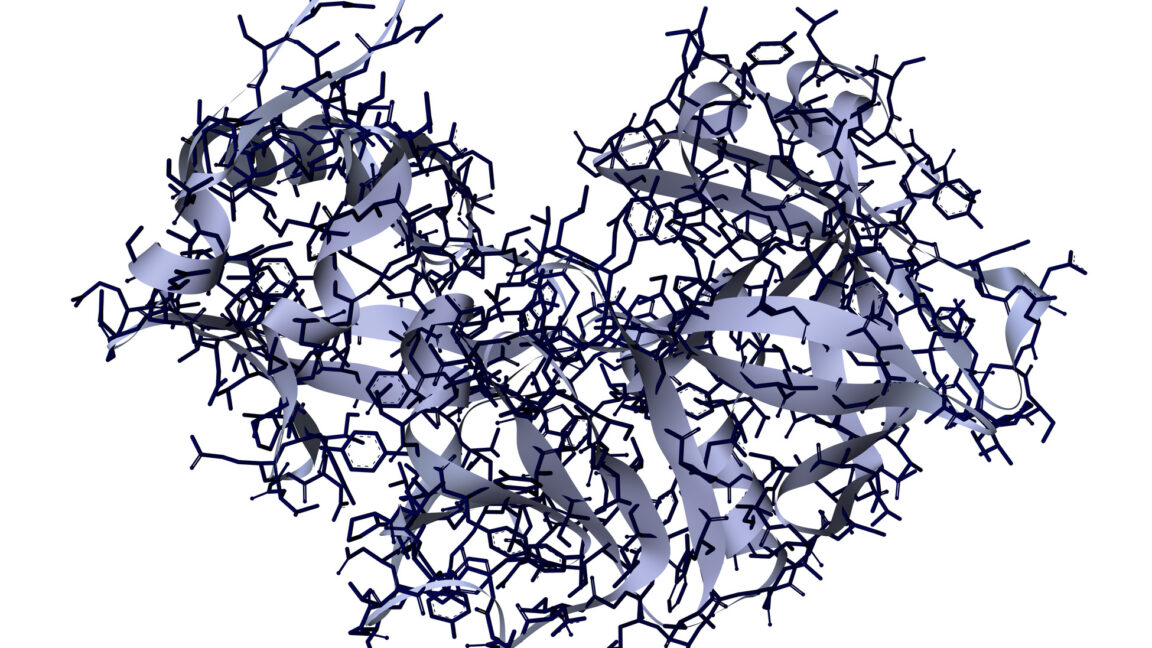
Using RFdiffusion2 to design backbones and ProteinMPNN to fill in amino acids, David Baker's lab rebuilt two proteases; 35 of 38 water-guided zinc designs showed catalytic activity, and one tuned version sped cleavage 109-fold.
Why it matters
The tools matched physical structure but not catalytic power — most designs were far less active than the natural enzymes they were based on, suggesting AI protein design is stronger on shape than on activity.
WHO IT HITSThis matters most to biotech and pharma researchers exploring protein-based therapeutics, and to computational protein designers at drug-discovery companies, who may gain a template for building custom enzymes — though the activity gap between designed and evolved enzymes suggests near-term outputs will need mutation-based tuning.
Summaries like this, in your inbox every morning.
The work, published in Nature, sits at the intersection of two trends: AI protein design tools maturing fast, and the long-standing challenge of engineering enzymes. The body notes that protease design is a tough test because peptide bonds have a half-life of several hundred years and require a precise arrangement of amino acids to break. Baker's lab started from known proteases — a zinc protease from crayfish and a cysteine protease from yeast — and kept only their catalytic cores, then used RFdiffusion2 and ProteinMPNN to build entirely new proteins around them. This mimics evolution but compresses it into a design cycle. The results show both promise and limitation: high structural success but low catalytic activity, which random mutation could partly rescue. The therapeutic angle is real but distant, since delivering proteins to the right place inside cells remains a major obstacle. The authors themselves frame the work as a demonstration of what the tools can and cannot yet do, with the gap between structure and activity as the central open problem.
Pick your industry and the AI tools you use, and get news related to your work every day.
Free · 30 seconds with Google · unsubscribe anytimeWhat is AIToday? →
Ask AI anything about this article. The AI reads this article, earlier AIToday articles, and Wikipedia, and cites its sources. Q&As are published on this page for other readers too.
Leash Bio's Ian Quigley teased an AI playground for agents to do verifiable scientific reasoning, discovering…
MIT's Neil Thompson and colleagues tested OpenAI models o1 through GPT-5.5 on theory problems from papers post…
Victoria Song fed her Twin Health digital twin metabolic data for 100 days, and her follow-up labs showed a ni…
On the third-quarter earnings call, CEO Steve Hemsley said AI-enabled chart summarization now covers over 40%…
UnitedHealth Group is expanding agentic AI across healthcare operations, as reported by The National CIO Revie…
Centene CEO Sarah London told the Fortune Most Powerful Women Summit that most health care AI spending is goin…