What happened
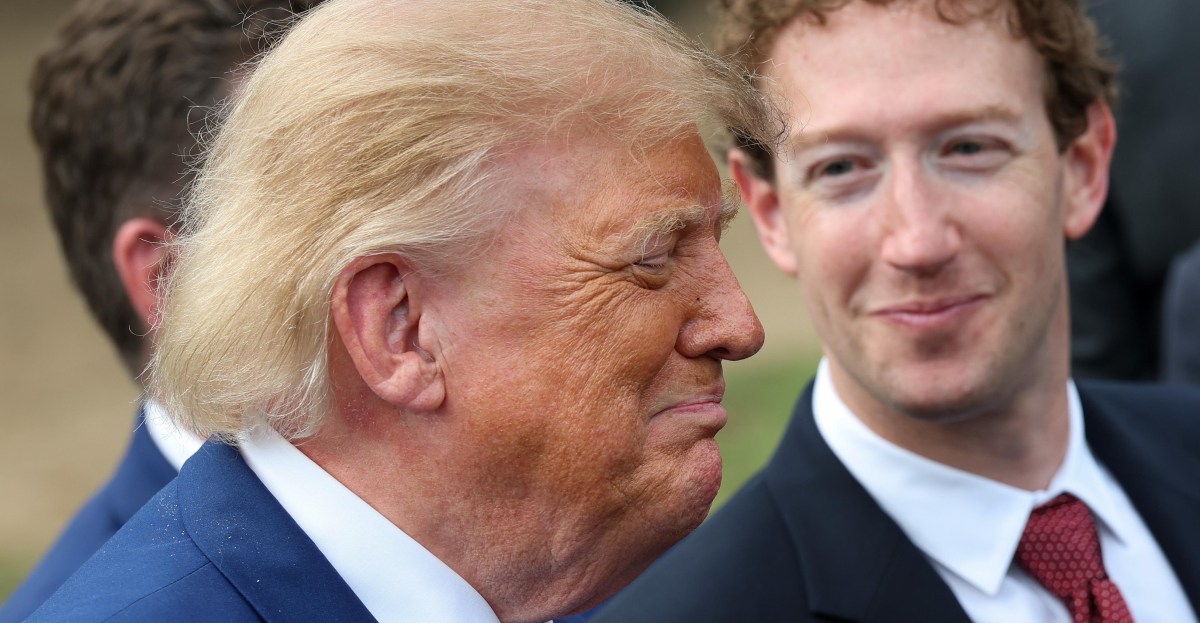
Trump brushed off concerns that Washington isn't enforcing enough AI guardrails, saying US companies are "dominating China," and pointed to the "morally binding" Joint Commitment on Frontier Responsibilities signed by six tech leaders.
Why it matters
The pledge is self-policing with seemingly no ramifications for violating it, so the safety guardrails are only as strong as the companies' own commitment, the article suggests.
What to watch
The test is whether this "morally binding" accord produces actual enforcement, since the article notes it has seemingly no ramifications for violations.
WHO IT HITSThis lands on enterprise legal and compliance teams that rely on federal AI rules to set their own risk controls, and on policymakers weighing whether voluntary pledges are enough.
Summaries like this, in your inbox every morning.
The announcement followed a Tuesday meal Trump hosted with Big Tech leaders, after which he took journalist questions on his AI plans. Rather than ushering in federal AI regulations, he described the arrangement as "the smartest people in the world watching over each other" — a phrase that places the burden on the companies themselves.
The six signees gave press commentary at Trump's behest. Meta's Mark Zuckerberg called it "the White House accord on developing this technology safely" and "a meaningful step forward." OpenAI's Greg Brockman framed the accords as a way to move forward safely under Trump's leadership, while Nvidia's Jensen Huang described the moment as the largest industrial revolution in history and said there is no conflict between innovation, technology, and safety. Google's Sundar Pichai said the President asked the industry to step up and that it wants to put out products safely.
Elon Musk emphasized an "age of abundance" with universal high income, and when a journalist raised the employment concern, he replied that jobs will change and roles will evolve. Dario Amodei of Anthropic said AI has incredible benefits but also very real risks, and that the mechanism for addressing those risks is still under discussion. The stakes appear to hinge on whether a pledge with no stated ramifications can substitute for the binding rules the article says it replaces — a question likely to matter most to compliance teams and legislators watching how the signees behave.
Pick your industry and the AI tools you use, and get news related to your work every day.
Free · 30 seconds with Google · unsubscribe anytimeWhat is AIToday? →
Ask AI anything about this article. The AI reads this article, earlier AIToday articles, and Wikipedia, and cites its sources. Q&As are published on this page for other readers too.
Cammarata reinterprets InceptionV1's cat-car neuron as a V-shape detector, not two unrelated concepts

A Zenn contributor sorted AI use into three modes — AI as an assistant, AI running alongside people, and AI th…

A developer released agent-guardrails, a one-script Python standard-library plugin that guards Bash, Write, Ed…
A Qiita article compared automated red-teaming methods for LLM apps — GCG, PAIR, and TAP — using mock implemen…

Taiwan is considering much stricter export controls on AI chip sales to China, part of a greater alignment wit…

In a webinar hosted by French Mathematical Society president Isabelle Gallagher, Fields Medal winner Hugo Dumi…

