What happened
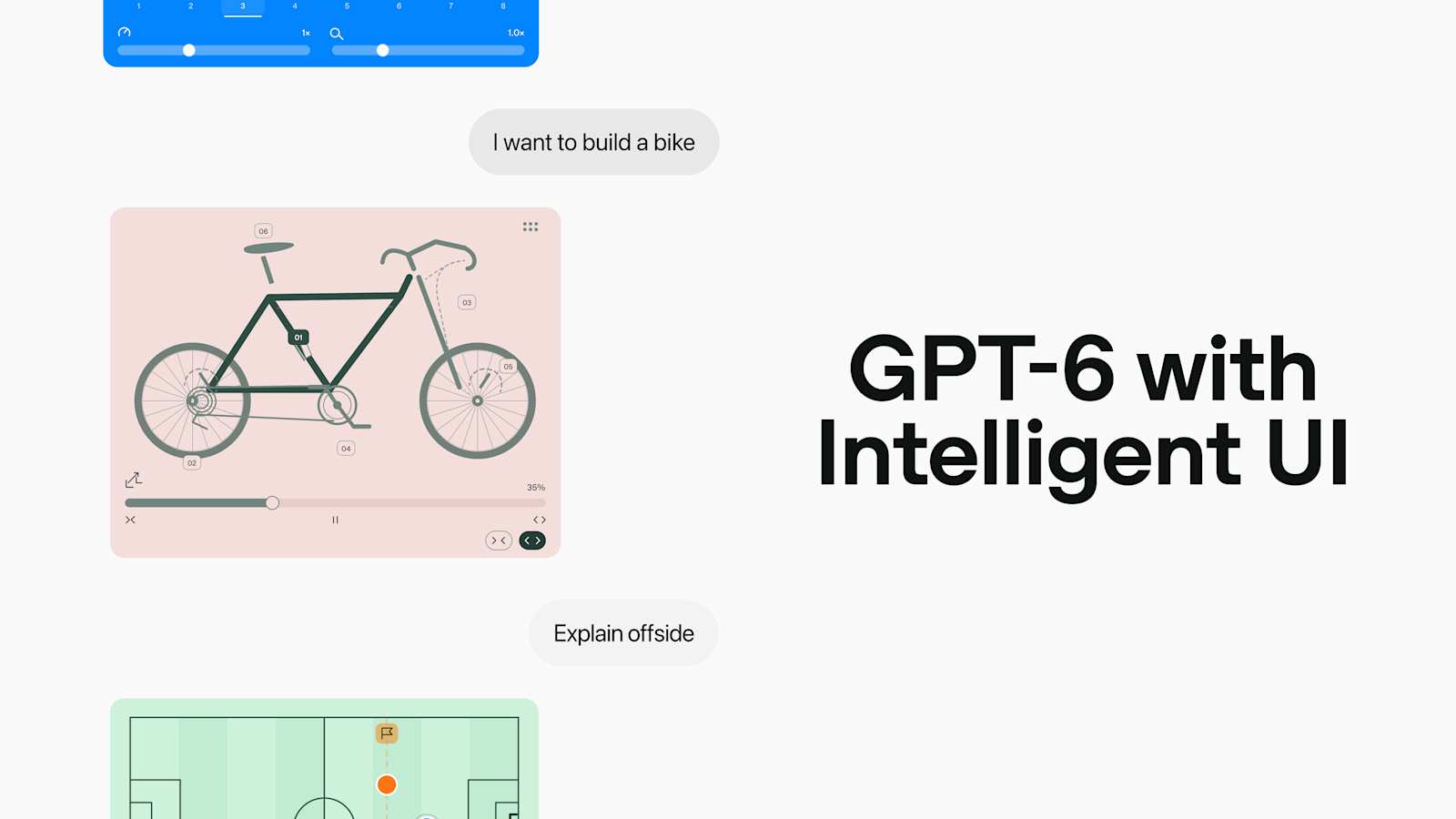
OpenAI is rolling out GPT-6 in ChatGPT with Intelligent UI, which answers using text, visuals, and interactive elements like charts and buttons. It starts with Plus, Pro, Business, and Enterprise tiers, and reaches Free and Go tiers tomorrow.
Why it matters
ChatGPT can now build a tool or interactive answer on the spot, instead of fitting every reply into one conversational format, which OpenAI says marks a significant shift in how people interact with ChatGPT.
What to watch
Enterprise availability depends on workplace admin settings, so the timeline for those users hinges on their organizations. GPT-6 Instant also starts answering 44% sooner, on average, than GPT-5.6 Instant when web search is needed.
WHO IT HITSEnterprise IT and workplace admins who control ChatGPT deployment will need to check their admin settings before GPT-6 reaches their users, while individual paid and free ChatGPT users get it automatically.
Summaries like this, every morning.
OpenAI introduced the first GPT-6 models for paid customers last month, and this release widens that next generation of intelligence to the broader ChatGPT audience. The centerpiece is Intelligent UI, which OpenAI describes as a capability trained into GPT-6: the model composes responses from text, visuals, and interactive elements, choosing the mix based on the question. Under the hood, OpenAI built a library of native, streamable components and a compiler that renders the interface as the model generates it, so the interface can appear progressively rather than waiting for a complete response.
The company frames this as a shift away from fixed conversational formatting: instead of people adapting to software, its stated goal is software that adapts to people. Alongside design, OpenAI says GPT-6 can begin answering while it continues to think, and it reports that GPT-6 Instant starts answering 44% sooner, on average, than GPT-5.6 Instant when web search is needed. OpenAI also says GPT-6 builds on safety advances from Astra, with stronger resistance in adversarial testing to attempts to bypass its safety training, particularly attacks that adapt across multiple turns.
Whether Intelligent UI lands as a genuine change in daily use may hinge on how well the model exercises design judgment, which OpenAI itself says still needs work, and on how quickly enterprise admins enable it. The clearest near-term test is the staggered rollout across paid, then free, tiers.
Pick your industry and the AI tools you use, and get news related to your work every day.
Free · 30 seconds with Google · unsubscribe anytimeWhat is AIToday? →
Ask AI anything about this article. The AI reads this article, earlier AIToday articles, and Wikipedia, and cites its sources. Q&As are published on this page for other readers too.
METR released Time Horizon 1.1, expanding its benchmark from 170 to 228 tasks and scoring judgment-heavy work…

Google search VP Robby Stein confirmed on X that the redesigned desktop page at Google.com is now official aft…

Home Depot says its Magic Apron AI assistant now fields millions of questions per month and is trained on prod…

Danaher and Microsoft are partnering on an AI platform for scientific instruments, combining Danaher's instrum…

Yamada Hikaru of Toyota's advanced product development division completed a "meeting quality evaluation prompt…

The article on Anthropic's 320兆円 listing flags three structural risks: fixed mega-payments to Amazon and Googl…