What happened
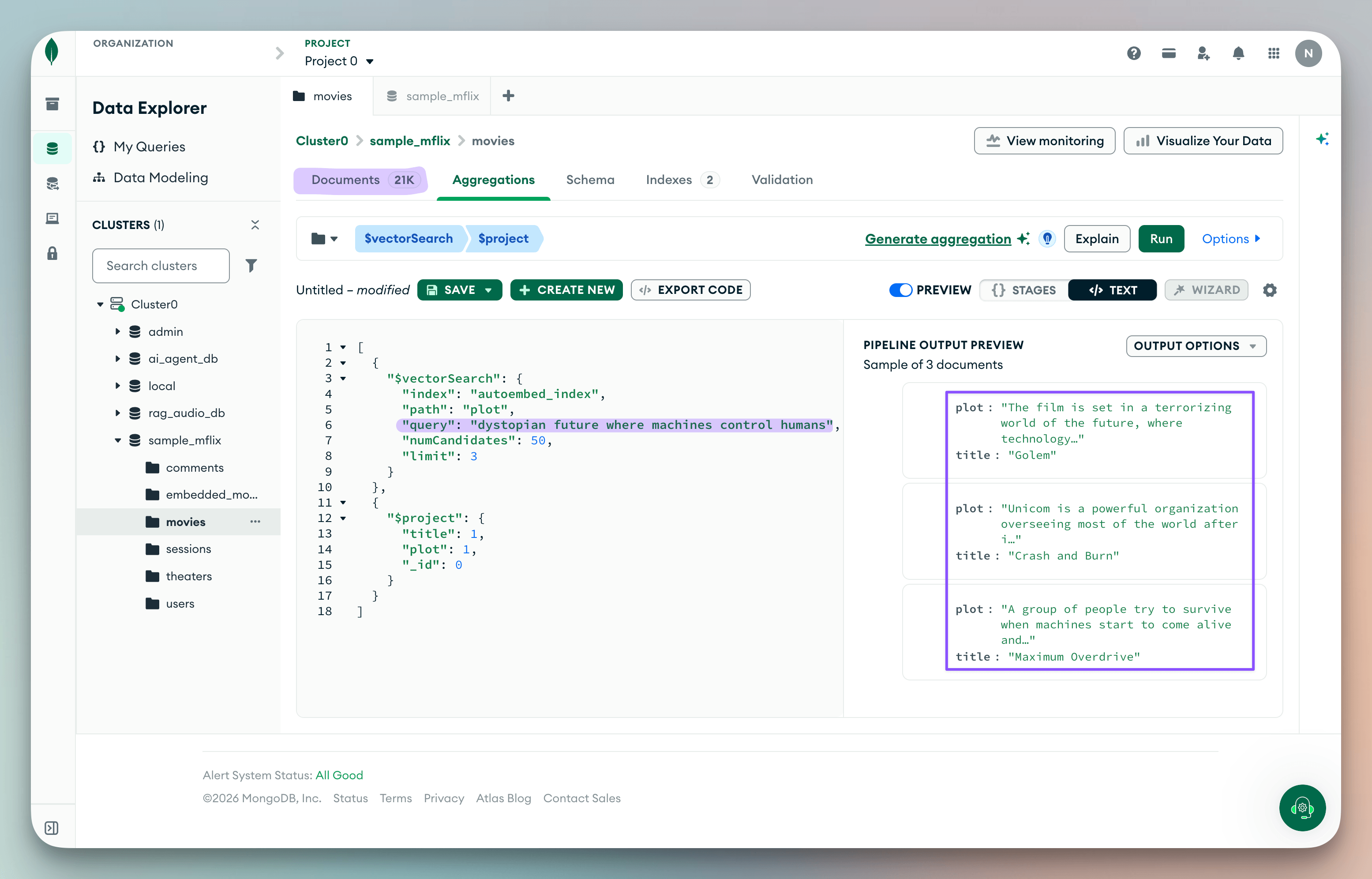
MongoDB Atlas introduced auto-embedding powered by Voyage AI, which automatically generates and maintains vectors inside the database without requiring a separate embedding service or external sync layer. A test query against 21,000 movie plots returned semantically relevant results without manual embedding code.
Why it matters
Teams typically maintain separate embedding services, vector stores, and sync logic to keep search results current as data changes—a setup that often degrades in ways that are hard to debug. Auto-embedding keeps vectors updated automatically when documents change, so search quality stays current without the operational overhead.
What to watch
The feature is available now on MongoDB Atlas; users can enable it by selecting "Automated Embedding" during vector search index creation and specifying a Voyage AI model, with no code changes required to the application.
Summaries like this, in your inbox every morning.
Semantic search adoption has been slowed by infrastructure friction: teams must integrate an external embedding API, maintain a separate vector store, write sync logic to keep vectors fresh as the underlying data evolves, and then debug why search quality degrades when that sync layer falls behind. MongoDB's auto-embedding directly addresses this operational pain. By embedding vectors inside the database itself and tying them to a specific text field, the system becomes aware of data mutations and re-embeds automatically—eliminating the glue code and separate tooling that most teams never revisit. The move simplifies the architecture to a single index configuration step, collapsing what used to require three separate components (embedding service, vector store, sync layer) into one.
This also surfaces a practical truth: embedding is not something that should happen once and be cached forever. Because the embedding model itself can improve, and because production data evolves, the question of when and how to keep embeddings fresh becomes a system design problem, not a one-time batch job. By making re-embedding automatic and tied to document mutations, MongoDB makes freshness the default behavior rather than something teams have to patch on top of an external architecture.
For example, today's edition would include:
AI-summarized, only the topics you pick: one digest a day via Email, LINE, or Slack.
Free · 30 seconds with Google · unsubscribe anytimeWhat is AIToday? →
Ask AI anything about this article. The AI reads this article, earlier AIToday articles, and Wikipedia, and cites its sources. Q&As are published on this page for other readers too.
Modulate raised $25 million, led by Future Ventures with returning investors Hyperplane and Lakestar, bringing…

Instinct, officially Spear Street Technology Inc., announced a $1 billion Series C joined by Sequoia Capital…

At Okta's Oktane event, Charlotte Wylie, Okta's senior vice president and deputy chief security officer, said…

On theCUBE Pod, Dave Vellante said CoreWeave disclosed that 70% of its revenue came from its top three custome…

Google Cloud revenue hit $24.77 billion, up 82%
MGX, an Abu Dhabi-backed technology investor, is looking for data center assets in the Asia Pacific