
What happened
TechCrunch Disrupt 2026 is splitting its AI programming into two stages this year—the traditional AI Stage and a brand-new Real World AI Stage focused on autonomous hardware, robotics, and the intersection of digital and physical systems. The event runs October 13–15 at San Francisco's Moscone West, drawing more than 10,000 startup, tech, and VC leaders.
Why it matters
As AI moves beyond software into physical deployments—autonomous vehicles, defense systems, industrial robots, and even de-extinction technology—the stakes of deployment failures shift fundamentally. Sessions address how founders build safety cultures, validate systems for high-stakes environments, and navigate the prototype-to-production gap where most deep tech startups fail.
What to watch
Early-bird tickets (through August 7, 11:59 p.m. PT) receive an extra $100 discount. Featured speakers include Nate Michael (CTO, Shield AI), Ben Lamm (CEO, Colossal Biosciences), Dr. Ali Agha (CEO and founder, FieldAI), and founders from MBRYONICS, Bedrock Robotics, and Foxglove discussing robotics scaling, edge AI, and space hardware.
Summaries like this, in your inbox every morning.
TechCrunch Disrupt's decision to split AI programming into two stages reflects a fundamental shift in how the industry understands artificial intelligence. The original single AI Stage covered software and business model disruption; the new Real World AI Stage recognizes that AI is now embedded in hardware and physical systems where failures carry tangible, often irreversible consequences. This bifurcation mirrors the maturing of AI from a purely digital phenomenon to a technology that touches autonomous vehicles, defense platforms, manufacturing, and even biological systems.
The Real World AI Stage speakers—including Shield AI's focus on deployment safety, Colossal Biosciences' work on de-extinction, and FieldAI's edge AI solutions—represent an industrial and institutional adoption phase. The themes echo challenges founders in deep tech (hardware + software + real-world deployment) consistently report: the difficulty of validating systems where "failure is not an option," the gap between a working prototype and a manufacturably scaled product, and the need to design for environments where traditional cloud infrastructure is unavailable. These sessions suggest TechCrunch is positioning itself to serve not just software founders but the emerging generation of hardware entrepreneurs who must integrate AI into systems where physics, supply chains, and regulatory frameworks are as critical as algorithms.
Pick your industry and the AI tools you use, and get news related to your work every day.
Free · 30 seconds with Google · unsubscribe anytimeWhat is AIToday? →
Ask AI anything about this article. The AI reads this article, earlier AIToday articles, and Wikipedia, and cites its sources. Q&As are published on this page for other readers too.
In Q2, billionaires or their funds sold six 'Magnificent Seven' AI stocks
Nvidia was rising early Friday, even as the wider chip sector kept falling, Barron's reported
ElevenLabs completed a $300 million employee tender at a $22 billion valuation, and co-founder Mati Staniszews…

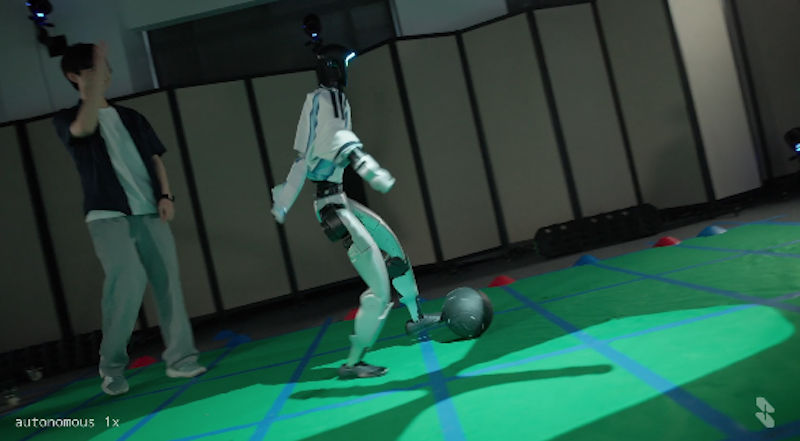
Skild AI used Nvidia Isaac Sim to give its S1 model one objective — score a goal — and let it compete against…
On October 15, OpenAI announced the Rosalind Academic Plan, giving approved US university labs free access to…

JR Central announced the S0系 on October 16, its first full model change since the N700S, with commercial servi…