What happened
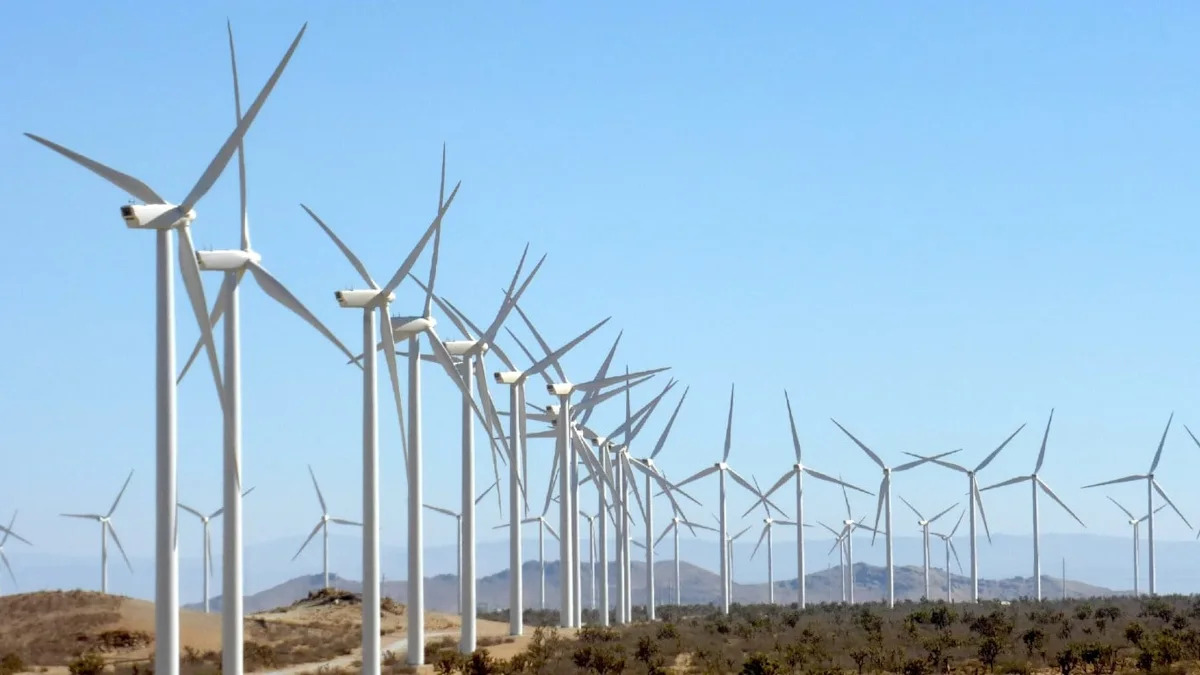
GE Vernova CEO Scott Strazik told analysts the company expects to be "mostly sold out through 2030", with 2031 slots already filling, after Q2 orders rose 88% organically and its backlog closed at $176 billion.
Why it matters
That "mostly sold out" admission and the order surge signal the turbine maker is negotiating from strength with hyperscalers whose demand it cannot speed up fast enough, so its pricing power looks set to hold.
What to watch
Strazik's "mostly sold out" claim rests on capacity, not chips — output must scale from 20 GW in Q3 2026 to 30 GW in 2030 to keep the backlog converting. Watch the guide to $200 billion in 2027.
WHO IT HITSHyperscalers and data center developers now face a turbine supplier that is largely booked through 2030, which may push their project timelines out and strengthen GE Vernova's hand on pricing. Utilities and independent power producers buying gas equipment are likely to see the same squeeze.
Summaries like this, in your inbox every morning.
GE Vernova's story is no longer about demand arriving — it is about whether the company can physically build fast enough to meet it. Management signed 20 GW of gas contracts in the second quarter alone and points to at least 125 GW of gas equipment under contract by the end of 2026, while annual turbine output is scheduled to climb from 20 GW in Q3 2026 to 24 GW in 2028 and 30 GW in 2030. The gap between what customers want and what factories can ship is what allows Scott Strazik to describe the order book as essentially closed through the end of the decade.
The electrification business has become a second engine behind power. Q2 electrification orders grew 66% organically at a book-to-bill of 1.7x, and data center orders passed $5 billion year-to-date, more than double all of 2025. Strazik also flagged that the roughly $300 million per gigawatt of data-center scope today could grow to two to three times that as solid-state transformers and medium-voltage UPS blocks commercialize — a reminder that the revenue per project is not fixed.
The cash picture is what changed the shareholder story. Q2 free cash flow of $5.1 billion exceeded all of 2025, and management raised its 2026 free cash flow guidance to $11.5 billion to $12.5 billion from a prior range of $6.5 billion to $7.5 billion. That revision, paired with a doubled dividend and a $10 billion buyback authorization, suggests the bottleneck is currently working in GE Vernova's favor. Whether that holds depends on execution at the factory level — the "mostly sold out" framing is a demand statement, and the test is whether output schedules can keep the backlog converting on time, especially for hyperscalers whose data-center buildouts are waiting on turbines.
For example, today's edition would include:
AI-summarized, only the topics you pick — one digest a day via Email, LINE, or Slack.
Free · 30 seconds with Google · unsubscribe anytimeWhat is AIToday? →
Ask AI anything about this article. Q&As are published on this page for other readers too.
Anthropic released Claude Opus 5.5 today and cut its price 20%, with input at $4 per million tokens and output…

Firecrawl announced it has raised $75 million in a Series B round led by Smash Ventures, with participation fr…
ASRock is shifting its business focus toward AI
Anthropic and OpenAI, which spent early September warning that model capabilities are outrunning the safeguard…

Jessica Wachter of Wharton and co-authors estimate hyperscaler spending will reach nearly 1.1兆ドル by 2027, and…

OpenAI released GPT-6 Sol and GPT-6 Luna on September 22, trained the same way as its top-tier GPT-6 Astra, an…