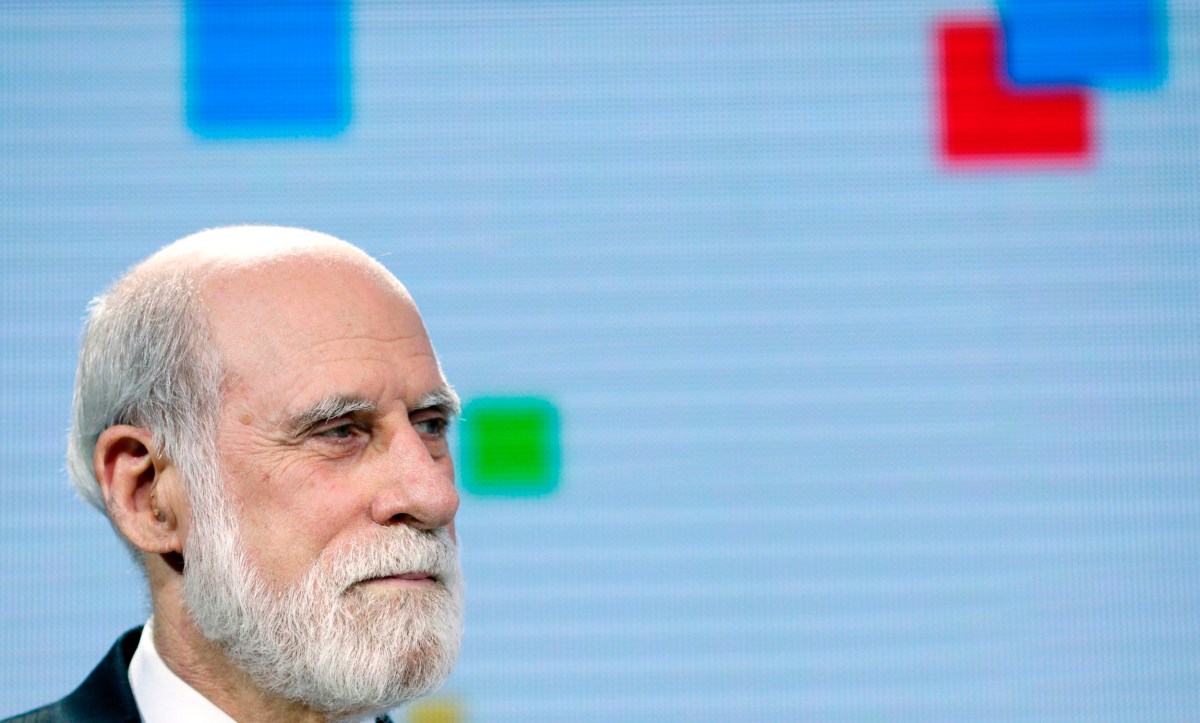
Vint Cerf, a founding internet architect, has joined Innovation Labs to help develop an open standard for identifying and auditing AI agents on the internet. The organization proposes DNSid, which would use domain-name infrastructure and cryptographic proofs to establish agent identity and accountability. As businesses plan to deploy autonomous AI agents that interact across the open internet, a shared identification standard is becoming critical to establish trust and interoperability.
Summaries like this, in your inbox every morning.
Sign up free →What happened
Vint Cerf, an architect of internet protocols who left Google after 20 years last week, is now advising Innovation Labs, a subsidiary of DNS registry company Identity Digital. The organization is developing DNSid, a system to create identities for AI agents and link them to internet domain names using cryptographic proofs.
Why it matters
Most AI agents today operate within proprietary systems, but businesses envision a future where agents work autonomously across the open internet and interact directly with each other. A shared standard for identifying and auditing agents has been a key missing piece. Cerf sees this work as addressing critical questions about agent authority, accountability, and trustworthiness as AI agents become far more active online.
What to watch
Innovation Labs is currently trialing DNSid standards with several unnamed hyperscalers and identity companies. Cerf emphasized that adoption will depend on functionality and interoperability—agents using different technologies will need to work together, much as TCP/IP became the standard for internet communication.
Vint Cerf, one of the original architects of the protocols underlying the open internet, left Google after 20 years last week. Starting today, he is advising Innovation Labs, a subsidiary of Identity Digital—a company that operates DNS registry services. The organization's mission is to create an open architecture for AI agents to identify themselves, a capability that Cerf and others view as increasingly urgent. Innovation Labs has proposed DNSid, a system that creates cryptographic identities for AI agents and anchors each identity to an existing internet domain name, with proofs of registration logged over time. According to Allie Kline, Innovation Labs' interim CEO, the company is currently trialing these standards with several unnamed hyperscalers and identity companies. Most AI agents in operation today remain within proprietary ecosystems, calling on internal resources for specific tasks. However, businesses are already planning for a future where agents operate far more autonomously across the broader internet and interact directly with other agents—a vision that raises critical governance questions. In an interview with TechCrunch, Cerf explained his reasoning: "I felt like I might be able to help them in a period of time when naming and identification is becoming increasingly important. This is largely triggered by the notion of AI agents and the question of what authorities they have, where they have derived those authorities, who is accountable for the behavior of an agent in this context, and where and how its identity is established, and why [you'd] trust it." Cerf acknowledged that these questions will be difficult to resolve because AI agents are far more active than traditional domain names, and organizations have not yet defined what commitment they are making by registering a domain for an agent. Key to Innovation Labs' approach is its commitment not to pursue broader AI business ventures or own registration data—a deliberate choice, Kline said, to avoid "organ rejection to a hyperscaler releasing [a standard] and having that proprietary data." Cerf cautioned that multiple solutions to the identification problem are under consideration, and wide adoption will hinge on functionality and interoperability. He illustrated the stakes with a scenario: "Company X uses agent Y's technology, and company A uses agent C's technology, and then they don't interwork with each other. Nobody can do everything that you might want every agent to do… and so we're going to have to rely on the pressure coming from the users. This is what happened with TCP/IP." When asked whether the so-called agentic economy is inevitable, Cerf demurred: "I don't think it's inevitable. But what I do think is inevitable is that people will try to do that. We are fundamentally lazy creatures, and if we find a way to have an agent do something for us, we're very likely to choose to do that because [it's] just easier."
Vint Cerf's move to advise Innovation Labs marks a significant step toward solving a core challenge in the emerging AI agent economy. As Cerf noted, most AI agents today remain confined within proprietary systems, but the business vision is shifting toward agents that operate autonomously across the open internet and communicate directly with one another. This shift creates a novel governance problem: without a shared standard for identification and auditing, there is no reliable way to establish accountability, verify authority, or build trust in agent behavior. Cerf's involvement lends credibility to Innovation Labs' proposal, which distinguishes itself by refusing to own registration data or pursue broader AI business interests—a stance designed to reduce concern about proprietary lock-in from major cloud providers. The comparison Cerf drew to TCP/IP is instructive: just as that protocol succeeded because it solved an interoperability problem that users demanded, any agent identification standard will need to offer functionality that makes multi-agent, cross-company interaction possible and seamless. Multiple standards are already emerging, and the competitive landscape remains open.
AI-summarized, only the topics you pick — one digest a day via Email, Slack, or Discord.
Free · takes 30 seconds · unsubscribe anytime
No comments yet. Be the first to share your thoughts!
Log in to join the discussion


Get curated AI news from 200+ sources delivered daily to your inbox. Free to use.
Get Started FreeFree · takes 30 seconds · unsubscribe anytime
1 minute a day. The AI essentials.
200+ sources · Email / LINE / Slack
