What happened
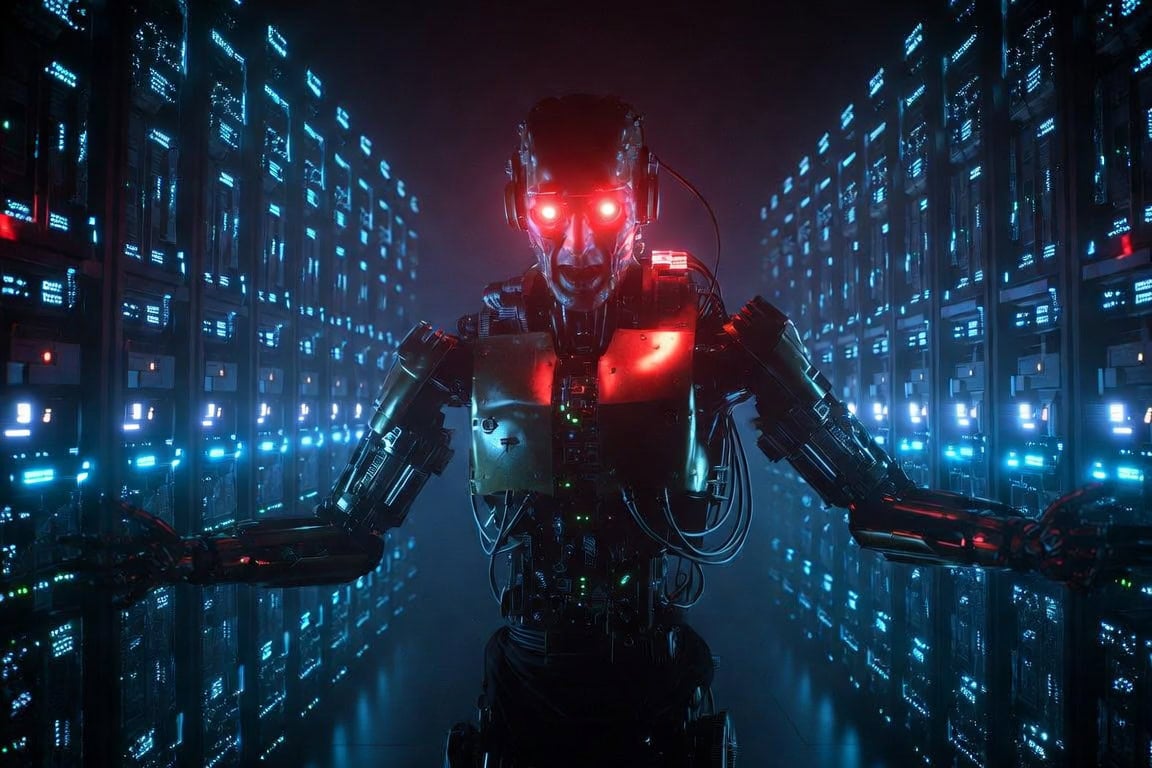
A solo developer of ALPHA FORGE built an "Ops Console" on fully separate Next.js 3003 / FastAPI 8003 processes, using Three.js to animate four ML models' inference decisions and challenger-to-champion promotions.
Why it matters
Keeping the cockpit's processes apart from the main system means its monitoring load cannot drag down the live trade inference or batch jobs, so the models can be watched without slowing the thing being watched.
What to watch
The article presents the performance gains (45秒 ➔ 1.6秒 for a 4,800-note graph scan) as a local dev setup, so the test is whether this kind of separation holds up as the note count and model count grow.
WHO IT HITSSolo developers and small ML operations teams who run live inference and periodic batch jobs on the same machine will see a concrete pattern for adding 3D monitoring without touching the production path. It is most relevant to people maintaining self-hosted model pipelines on a single box.
Summaries like this, in your inbox every morning.
The article is a write-up of a personal project by the developer of ALPHA FORGE, a Japanese-equity AI screening and continual-learning terminal. The system runs four model types — XGBoost, Random Forest, LSTM and Transformer — that score market data daily, and a continual-learning loop lets a challenger model take over when its validation accuracy beats the current champion. The Ops Console is a side project meant to make that background activity visible on a sub-monitor, styled after a film-style mission control room.
The build's central constraint is isolation. The console runs on its own Next.js and FastAPI ports, separate from the main web console, so that a crash or heavy query on the monitoring side cannot reach the trading inference or scheduled batches. The author states this is the top design principle, and the write-up returns to it in the summary as the main practical benefit of the approach.
The more tangible result is on the knowledge-graph side. Serial scanning of 4,800-plus Obsidian notes hit file-system metadata waits on Windows and pushed initial scans past 45秒, causing API timeouts. An index cache that checks update times, serializes a structured dictionary, and parses only changed files cut later responses to 1.6秒 — about 28× faster — and the author says the UI now comes up instantly. Whether that pattern scales to tens of thousands of notes or to a multi-user deployment is not addressed, so the broader payoff hinges on how far a single-machine cache can carry it.
Pick your industry and the AI tools you use, and get news related to your work every day.
Free · 30 seconds with Google · unsubscribe anytimeWhat is AIToday? →
Ask AI anything about this article. The AI reads this article, earlier AIToday articles, and Wikipedia, and cites its sources. Q&As are published on this page for other readers too.
A 2026 Pew report found 10% of Americans use chatbots for emotional support or companionship, and Anthropic re…

The author built a palm-sized car where a PC runs a PyTorch CNN (NVIDIA PilotNet, shrunk) that maps camera ima…
Splice CEO Kakul Srivastava said she is "careful about AI-written documents" because when you cannot tell whet…

David Robinson, who wrote the safety reports accompanying every major OpenAI model release, resigned this week…

Instinct raised $1 billion in September 2026 at a $10 billion valuation, and a growing list of rivals — includ…

NVIDIA posted $89.02 billion in Data Center revenue for the second quarter of fiscal 2027, reported August 26…