What happened
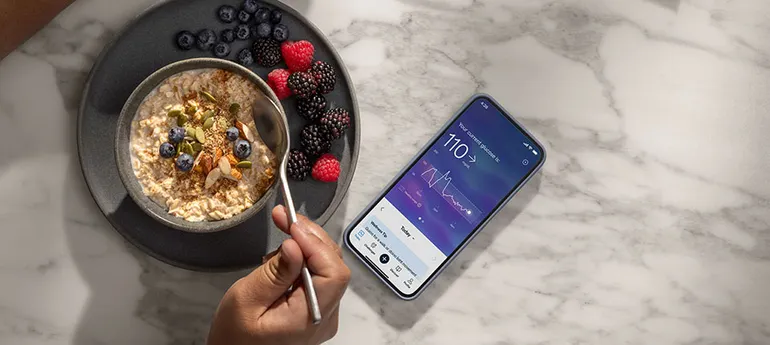
Abbott and Google announced a multiyear partnership to integrate Abbott's Lingo glucose sensor with Google's AI and Health app, beginning with Lingo integrations into Google Health later this year. The companies plan to launch a large metabolic health study combining continuous glucose, wearable, laboratory, and survey data.
Why it matters
The partnership makes glucose insights more accessible and actionable for people managing metabolic health. Google's AI-powered health coach—available to Google Health premium subscribers—will use the integrated data to provide personalized recommendations based on how daily habits like diet and exercise affect blood sugar levels. Abbott's Lingo sensor, an over-the-counter device that debuted in the U.S. in 2024, reaches adults not taking insulin who want to understand their metabolic patterns.
What to watch
Results from the planned metabolic health study, which will integrate data across glucose readings, wearables, labs, and surveys. These findings are expected to inform more personalized guidance and help both companies improve their products. Abbott did not disclose the study enrollment size.
Summaries like this, in your inbox every morning.
The partnership reflects a broader convergence of consumer health monitoring and AI-driven personalization. Google's Health app, built on its 2021 acquisition of Fitbit for $2.1 billion, has positioned the company to integrate wearable and health data at scale. By connecting Abbott's glucose sensor to this ecosystem, the companies can offer users a more complete picture of metabolic health—linking continuous glucose readings to activity, sleep, and other behavioral data. The planned large-scale metabolic health study underscores the strategic value both companies see in real-world evidence: Abbott gains validation and product improvement insights for Lingo, while Google obtains training data and health outcomes that can refine its AI coaching capabilities.
This move arrives as competitors pursue similar integrations. Dexcom, Abbott's rival in continuous glucose monitoring, is participating in a Food and Drug Administration pilot program to test an AI-enabled glucose health program designed to help users improve glycemic control and lower blood sugar levels. The trend suggests that standalone glucose sensors are increasingly becoming entry points for broader digital health platforms, where AI recommendations and personalized insights drive engagement and retention among users managing metabolic conditions.
Pick your industry and the AI tools you use, and get news related to your work every day.
Free · 30 seconds with Google · unsubscribe anytimeWhat is AIToday? →
Ask AI anything about this article. The AI reads this article, earlier AIToday articles, and Wikipedia, and cites its sources. Q&As are published on this page for other readers too.
Chunghwa Telecom president Rong-shy Lin said the shift from conversational AI to autonomous AI agents is resha…

Apple and Meta said they would jointly release a new open-weight AI model designed to run on high-end Macs, ai…

A writer and entrepreneur opened his daily to-do list and found 156 items, and concluded that an AI assistant…

A Zenn contributor sorted AI use into three modes — AI as an assistant, AI running alongside people, and AI th…

A non-engineer operator says one person ships four smartphone apps on Google Play, three on the App Store, wit…
The walkthrough points the CLI at a local mock via the ANTHROPIC_BASE_URL environment variable

