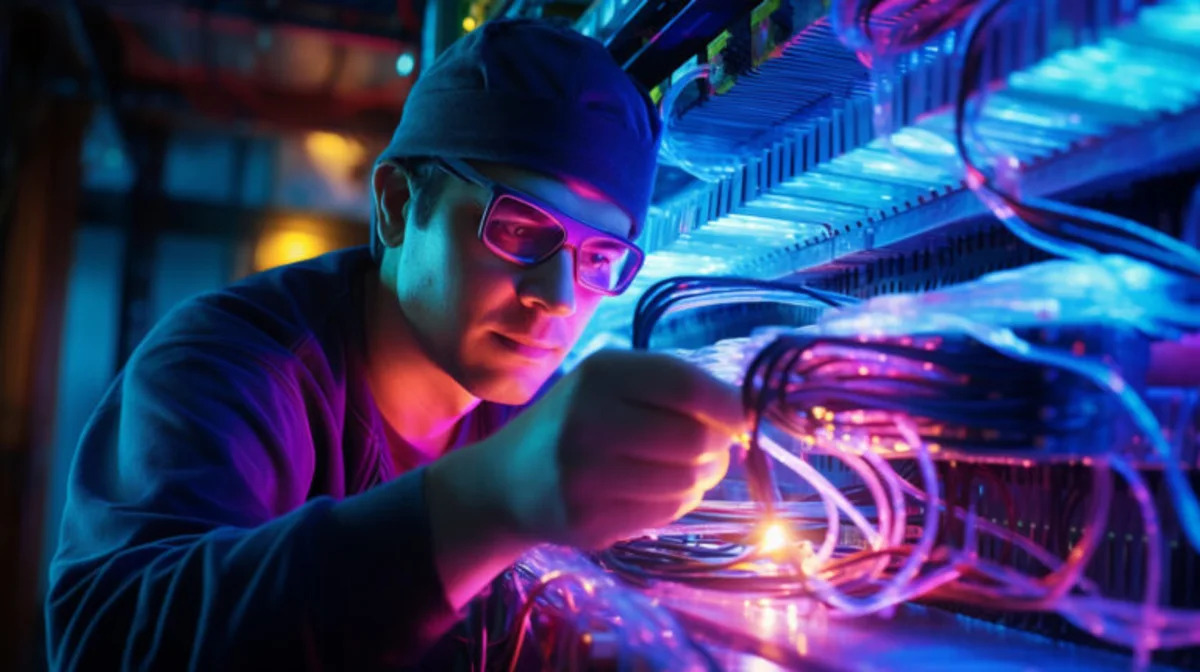
Corning Incorporated rose sharply in Q2 2026 on surging demand for fiber and optical components used in AI infrastructure, gaining 162.77% over 52 weeks. The company benefits from the need for advanced optical connections in each new generation of AI chip technology, with Carillon Eagle Growth & Income Fund expecting market growth across Corning's key products over the next three to five years.
Summaries like this, in your inbox every morning.
Sign up free →What happened
Corning Incorporated (GLW) closed at $146.65 per share on July 24, 2026, gaining 162.77% over the past 52 weeks. Carillon Eagle Growth & Income Fund highlighted the company in its Q2 2026 investor letter, citing strong demand for advanced fiber and optical connections used in AI chip technology.
Why it matters
The semiconductor index surged 87.8% in Q2 2026 as investors favored optically-intensive infrastructure plays. Corning's optical communications business stands to benefit from the infrastructure buildout required by each new generation of AI chips—a structural tailwind the fund expects to persist for the next three to five years.
What to watch
Corning's one-month return was -43.06% as of late July 2026, signaling volatility even within the rally. The fund holds 91 hedge fund portfolios at the end of Q1 2026 (up from 85 in the prior quarter), suggesting growing institutional interest, though the letter notes other AI stocks may offer greater upside and lower downside risk.
Corning Incorporated (NYSE:GLW) rose prominently during Q2 2026, a period dominated by a sharp rally in AI-related stocks. While the S&P 500 gained 15.2% and the semiconductor index surged 87.8%, optical and semiconductor companies saw outsized gains, in contrast to earlier AI rallies driven primarily by megacaps and strong earnings. Corning closed at $146.65 per share on July 24, 2026, representing a 52-week gain of 162.77%, though the stock pulled back -43.06% over the prior month, underscoring the rally's fragility. The company operates across optical communications, display, specialty materials, automotive, and life sciences businesses, with a market capitalization of $126.21 billion(約20兆円) and a 52-week trading range between $54.89 and $271.78.
Carillon Eagle Growth & Income Fund, which released its Q2 2026 investor letter, highlighted Corning as a core holding, noting that "the need for advanced fiber and optical connections in AI chip technology has increased with each new generation." The fund expects Corning to capture market growth across several key products over the next three to five years as AI infrastructure demands evolve. This thesis reflects a structural shift: unlike software and services stocks, which declined in Q2 2026 as investors questioned AI disruption risks, companies supplying the physical infrastructure—fiber optics, advanced materials, and optical components—benefit from accelerating capital expenditure. Despite the bullish outlook, the fund acknowledges that certain AI stocks may offer greater upside potential and carry less downside risk, signaling caution about Corning's valuation or near-term volatility. Institutional support for the thesis grew modestly, with hedge fund holdings rising from 85 portfolios at the end of Q4 2025 to 91 by the end of Q1 2026, suggesting measured confidence in the long-term demand case even as short-term trading volatility remains pronounced.
Corning's strong performance in Q2 2026 reflects the broader surge in optically-intensive infrastructure plays during a period when the semiconductor index surged 87.8%. Unlike earlier AI rallies dominated by megacap companies and strong earnings growth, Q2 2026 saw smaller technology stocks rise 200% to 300%, making the advance more fragile—a pattern that likely applies to Corning's 162.77% 52-week gain. The company's optical communications business aligns with a structural need: as each new generation of AI chips demands more advanced fiber and optical connections, Corning's revenue streams across multiple divisions (optical communications, display, specialty materials, automotive, and life sciences) position it to capture growth over the next three to five years. However, the one-month return of -43.06% signals volatility and pullback risk even within a secular uptrend, consistent with the broader market concern that smaller technology stocks driving the Q2 rally may lack the stability of established megacaps. Despite this, rising hedge fund ownership—from 85 portfolios to 91 between Q4 and Q1 2026—suggests institutional confidence in the long-term thesis.
AI-summarized, only the topics you pick — one digest a day via Email, Slack, or Discord.
Free · takes 30 seconds · unsubscribe anytime
No comments yet. Be the first to share your thoughts!
Log in to join the discussion


Get curated AI news from 200+ sources delivered daily to your inbox. Free to use.
Get Started FreeFree · takes 30 seconds · unsubscribe anytime
