What happened
After GPT-Live (gpt-live-1) GA'd on September 10, 2026, the Kikuren developer swapped out gpt-realtime-2.1, and the AI stopped halting every time the user said 'uh-huh,' so the workaround code became unnecessary.
Why it matters
This reading is inferred, as the body reports the author's impression rather than a formal finding.
What to watch
The upside rests on one session of testing, and the prompt rules still had to stay as they were, so whether the gains hold across other voices and scenes is likely to depend on more sessions. Watch whether turn-splitting thresholds tuned on one person's logs transfer.
WHO IT HITSBuilders and product owners of Japanese-language voice AI that role-plays a conversation partner — for practice, training, or evaluation — face a near-rewrite to adopt GPT-Live, since turn detection, transcription, and speech events are no longer provided by the API and must be rebuilt.
Summaries like this, in your inbox every morning.
Kikuren is a practice app where a manager speaks as the manager and an AI plays a subordinate with a concern. The design goal was unusual: the AI should not answer the moment the user goes quiet. Instead, it should say more when the user nods and waits, and less when rushed. That made the backchannel problem central, because under gpt-realtime-2.1 every 'uh-huh' from the user cut the AI off, turning the exchange into a strict turn-taking loop.
The article traces two other problems from that era: the AI would reveal a deeper confession instead of continuing after an interruption, and noise alone could make the AI speak with nobody talking. Both were handled with workarounds — truncating conversation history server-side on each interruption, and waiting for transcription before sending response.create. After switching, the author removed both and rechecked continuation after an interruption, reaction to noise, and interruption during thinking, in a setting with music playing nearby and the AI's voice potentially looping back into the mic. No problems appeared, though only one session was checked.
The migration was closer to a rebuild. Turn detection settings, transcription settings, and speech start/end events are gone, so speaking indicators and turn boundaries had to be reconstructed from audio amplitude and fragment timing. The author tuned a 3,000 ms gap threshold, then added a lower bound requiring a 900 ms silence with overlapping speech, based on 12 sessions of logs. Both values came from one person's small sample, so they are expected to shift for other voices. The prompt rules were expected to shrink but did not; removing them all made the AI sound too polished, and the author could not justify removing any single rule. The remaining open issue is that the AI still discloses too much when the user listens poorly or only nods, which the author does not expect a model swap alone to solve. The practical payoff for similar teams will hinge on whether the backchannel fix holds for other voices and scenarios, and on whether the rebuild cost is worth it.
Pick your industry and the AI tools you use, and get news related to your work every day.
Free · 30 seconds with Google · unsubscribe anytimeWhat is AIToday? →
Ask AI anything about this article. The AI reads this article, earlier AIToday articles, and Wikipedia, and cites its sources. Q&As are published on this page for other readers too.
Circlia started a proof-of-concept for TASTE SIGNAL: visitors to Holland Village Cafe FUKUOKA taste cookies an…

In a webinar hosted by French Mathematical Society president Isabelle Gallagher, Fields Medal winner Hugo Dumi…

NVIDIA released Nemotron 3.5 Super VL, an open-weight model with 120 billion parameters that handles text, ima…
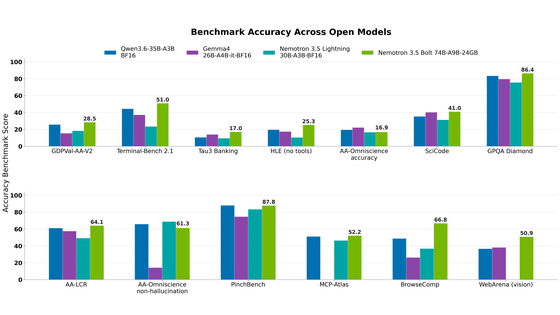
NVIDIA released Nemotron 3.5 Bolt 74B-A9B 24GB, an AI model for local agents that hits over 80 tokens per seco…
NVIDIA published a blog post titled "AI Security Is an Engineering Problem - How to Solve It at Every Layer of…

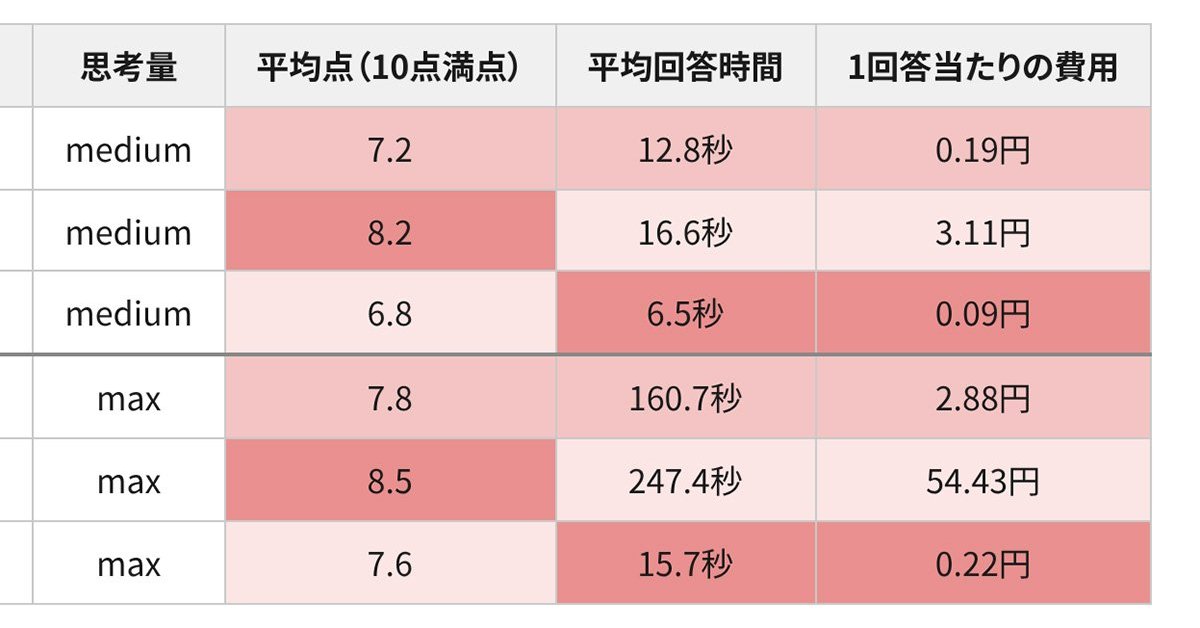
In the test, Haiku 5.5 on medium setting averaged scores close to Sonnet 5.5 on routine documents at about 1/1…