
Researchers have shown that large language models can improve their code generation ability by simply fine-tuning on their own raw outputs—a technique called simple self-distillation that requires no external verifier or teacher model.
Testing on Qwen3-30B-Instruct boosted performance from 42.4% to 55.3% pass@1 on LiveCodeBench v6, with the largest improvements on harder problems.
The method works by reshaping how the model distributes probability across tokens, suppressing distracting options where precision matters while preserving useful variety where exploration helps.
What happened
Researchers demonstrated that large language models can improve at code generation by fine-tuning on their own raw outputs—without external verifiers, teacher models, or reinforcement learning. The method, called simple self-distillation (SSD), improved Qwen3-30B-Instruct from 42.4% to 55.3% pass@1 on LiveCodeBench v6, with the largest gains on harder problems. The technique generalizes across Qwen and Llama models at 4B, 8B, and 30B scale, including both instruct and thinking variants.
Why it matters
Code generation is a practical tool programmers are already adopting from LLMs, but the outputs are often difficult to understand and work with. SSD offers a low-friction way to improve model performance without requiring expensive external components—just the model's own outputs and standard fine-tuning. This addresses a real friction point for developers relying on AI-generated code.
What to watch
The paper reveals that SSD works by reshaping how the model distributes probability across tokens: it suppresses distracting alternatives where accuracy is critical while preserving useful diversity where exploration helps. This mechanism suggests SSD represents a new direction for post-training improvements in code generation, complementary to other enhancement methods.
Ask the AI about this article →
The research addresses a practical bottleneck in how developers use AI-generated code. While LLM-based code generation tools are increasingly adopted, programmers struggle with understanding and working with the outputs. Simple self-distillation sidesteps the need for costly external infrastructure—no separate verifier to check correctness, no teacher model to learn from, and no reinforcement learning pipeline—making it an accessible improvement path.
The mechanism underlying the gain is instructive. Rather than broadly improving all token predictions, SSD works surgically: it suppresses what the authors call "distractor tails" in the token distribution where precision is essential (typically in harder problems), while preserving the diversity the model needs to explore alternative solution paths when the problem is less constrained. This precision-exploration trade-off explains why the method concentrates gains on harder problems—exactly where correct code matters most. The fact that the improvement generalizes across different model families (Qwen and Llama) and scales (4B to 30B parameters) suggests this is a fundamental pattern in how LLMs learn to generate code, not an artifact of a specific architecture or training regime.
For example, today's edition would include:
AI-summarized, only the topics you pick — one digest a day via Email, Slack, or Discord.
Free · takes 30 seconds · unsubscribe anytimeWhat is AIToday? →
Ask AI anything about this article. Q&As are published on this page for other readers too.
Israeli startup DataAgent Ltd

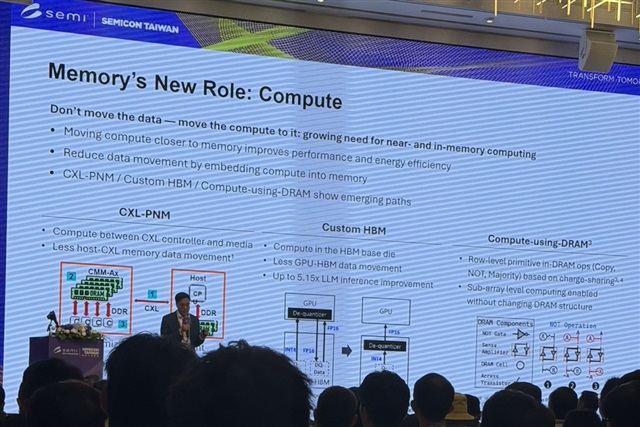
SK Hynix presented a custom HBM concept at SEMICON Taiwan 2026, where compute functions are placed in the base…
Nvidia reported earnings that were both remarkable and boring, reflecting its focus on avoiding a consolidated…

Anthropic has agreed to a $35bn cloud-computing contract with Lambda, a Nvidia-backed cloud provider

The Supreme Court of Japan has included about ¥60 million in its fiscal 2027 budget request for AI-related exp…

The Consumer Affairs Agency said Tuesday it will use generative AI to analyze about 900,000 annual consultatio…