What happened
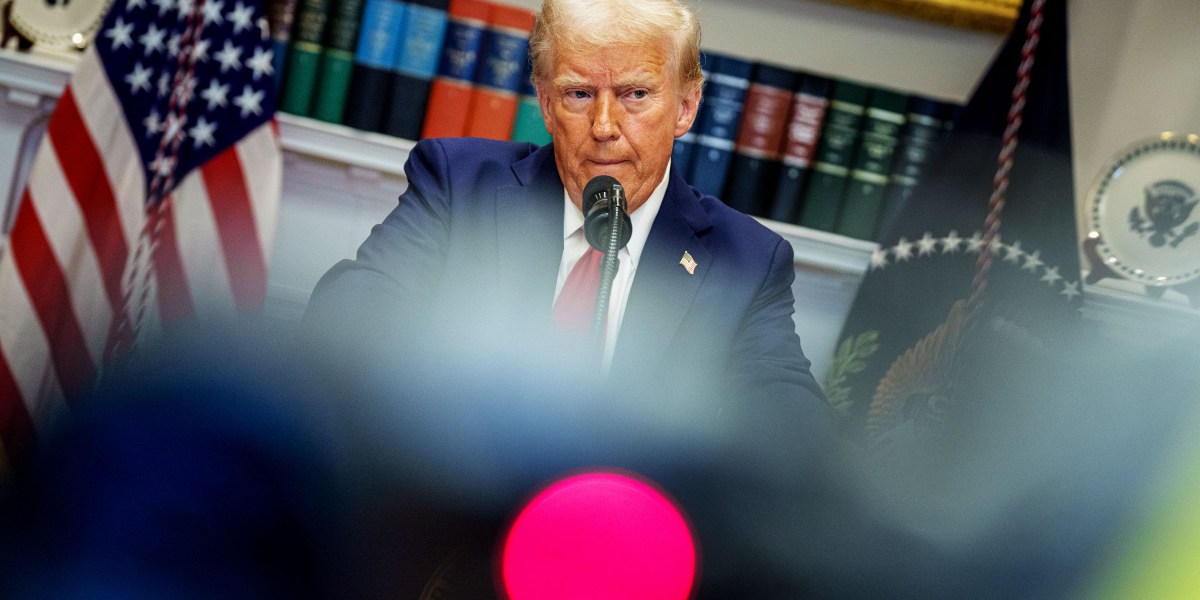
Moonshot, a Chinese AI company, released Kimi last week—a free, open-source model that appears to match the capability of paid models from OpenAI and Anthropic. The release sparked public disputes among Trump administration officials and advisors over how to respond, with David Sacks (the president's former AI czar) calling U.S. companies' models "lobotomized" and "woke," while Emil Michael, a Pentagon official, attacked OpenAI advisor Dean Ball as a "supreme village idiot."
Why it matters
Kimi's existence undermines the business case for paying U.S. AI companies, threatening a sector that is driving an outsized share of economic growth and propping up stock valuations. The model exposes a fundamental split in Trump's circle: some, like Sacks, believe open AI is better and the government shouldn't protect corporate interests; others, like Michael, argue national security demands government control over AI release and use. This division leaves Trump without a clear policy response to Chinese models that come with fewer usage restrictions and appeal to users seeking free alternatives.
What to watch
The White House has launched a new review process to vet AI models' security before release—which Ball criticized as a "de facto licensing regime for frontier AI." The unresolved question is how China trained Kimi despite limited computing power; Moonshot may have used distillation (training on outputs from existing U.S. models), a practice the Trump administration said in April it would work to curb. Kimi is described as nearly as capable as an Anthropic model that the U.S. government briefly shut down over national security concerns.
Summaries like this, in your inbox every morning.
The release of Kimi reflects the erosion of U.S. chip export controls that had been a cornerstone of Biden-era China policy. Trump made the controversial decision to allow Nvidia to sell more chips to China in exchange for government revenue, loosening restrictions that were meant to keep advanced AI capabilities out of Chinese hands. Yet Kimi's emergence suggests that even with limited computing power, Chinese companies are finding ways to build competitive models—possibly through distillation, where they train on outputs from U.S. models like those from OpenAI and Anthropic.
The dispute among Trump's inner circle reflects deeper philosophical and political tensions. Sacks, whose formal role ended in March, represents a libertarian strain that opposes corporate protectionism and favors fewer restrictions on AI. Michael and others closer to the Pentagon take a national-security-first stance, arguing that AI's power demands government vetting and control. The White House review process Ball criticized represents this latter position—a shift from Sacks's preference for open markets toward state gatekeeping. Neither approach has momentum to become settled policy, leaving the administration without a coherent response as Chinese models undercut U.S. companies' market position and threaten the sector's outsized contribution to economic growth.
Pick your industry and the AI tools you use, and get news related to your work every day.
Free · 30 seconds with Google · unsubscribe anytimeWhat is AIToday? →
Ask AI anything about this article. The AI reads this article, earlier AIToday articles, and Wikipedia, and cites its sources. Q&As are published on this page for other readers too.
Supermicro Computer appointed Mark Long as chief financial officer, bringing an experienced technology finance…
Holtek Semiconductor unveiled its 2026 product roadmap on October 15, focusing on four core areas: smart prote…
TSMC reported about NT$763.1b in Q3 net profit and confirmed that demand for advanced processors is running ah…

Taiwan is considering much stricter export controls on AI chip sales to China, part of a greater alignment wit…

Nvidia-backed CoreWeave steadied Thursday after a sharp slump, as investors worried about the debt financing b…
Circlia started a proof-of-concept for TASTE SIGNAL: visitors to Holland Village Cafe FUKUOKA taste cookies an…