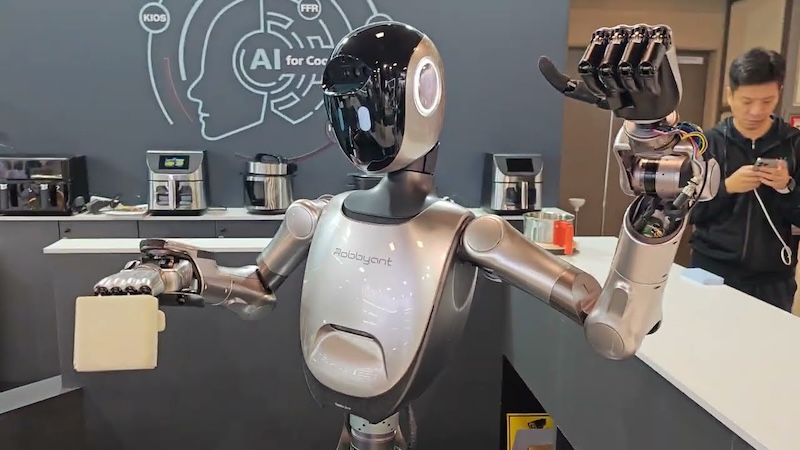
What happened
Robbyant, an embodied AI company within Ant Group, released LingBot-Depth 2.0, a spatial perception model trained on 150 million samples that ranks in the top 12 out of 16 depth completion benchmarks. The new model cuts depth error in half compared to its predecessor (reducing RMSE from 0.132 to 0.062) in demanding indoor scenarios, and handles transparent and reflective surfaces that traditionally defeat depth cameras. The release also introduces LingBot-Vision, a visual foundation model trained on 160 million images that uses "boundary structure" as its pre-training objective.
Why it matters
Robots need accurate 3D spatial perception to navigate and manipulate objects in the real world. LingBot-Depth 2.0's ability to handle glass, mirrors, and transparent objects—alongside sub-pixel-level boundary localization from LingBot-Vision—addresses a critical bottleneck in embodied AI systems. For developers and robotics companies, this may reduce the need for custom depth-sensing workarounds and enable more reliable autonomous operations in complex indoor environments.
What to watch
Orbbec, a robotics and AI vision provider, has certified LingBot-Depth 2.0 and plans to launch two commercial products by year-end: an SDK for edge deployment with Gemini 330 series cameras, and an integrated all-in-one camera. Robbyant has open-sourced LingBot-Vision weights, signaling an industry collaboration model for robotic vision development.
Summaries like this, in your inbox every morning.
Robbyant's release of LingBot-Depth 2.0 and LingBot-Vision addresses a long-standing challenge in robotics: enabling machines to perceive and navigate complex, real-world environments with the same robustness humans take for granted. The predecessor LingBot-Depth pioneered the Masked Depth Modeling technique to handle transparent and reflective surfaces, but the new version represents a substantial scale-up—trained on 150 million samples rather than its predecessor's lesser volume—allowing it to cut error rates in half for demanding indoor scenarios where depth loss is severe.
The pairing of LingBot-Depth 2.0 with LingBot-Vision reflects a complementary approach: depth sensing needs precise visual boundary information to work reliably, and LingBot-Vision's sub-pixel-level localization and structural understanding provide that foundation. Remarkably, LingBot-Vision achieves this with a training corpus that is an order of magnitude smaller than comparable models, suggesting a more efficient use of data.
The commercial partnership with Orbbec signals that Robbyant views this as infrastructure for the broader robotics and embodied AI ecosystem rather than a proprietary advantage. By open-sourcing LingBot-Vision weights and collaborating on SDK and camera products, the company is positioning itself as a foundational layer for robotics companies, similar to how computer vision libraries became critical utilities. The certification by Orbbec's Depth Vision Laboratory and planned integration into real products by year-end suggest this is moving beyond research into deployable commercial systems.
Pick your industry and the AI tools you use, and get news related to your work every day.
Free · 30 seconds with Google · unsubscribe anytimeWhat is AIToday? →
Ask AI anything about this article. The AI reads this article, earlier AIToday articles, and Wikipedia, and cites its sources. Q&As are published on this page for other readers too.
On October 15, OpenAI announced the Rosalind Academic Plan, giving approved US university labs free access to…
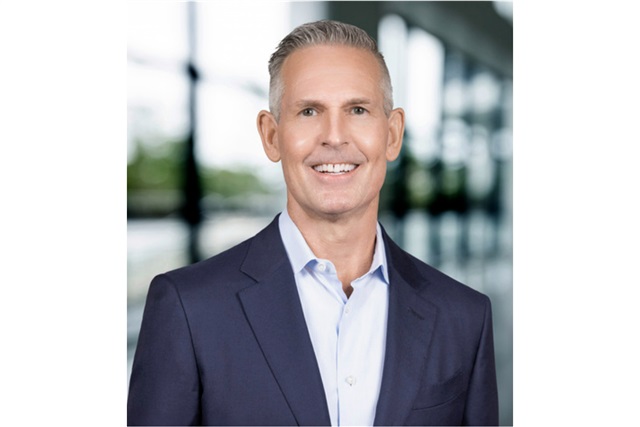
Supermicro Computer appointed Mark Long as chief financial officer, bringing an experienced technology finance…
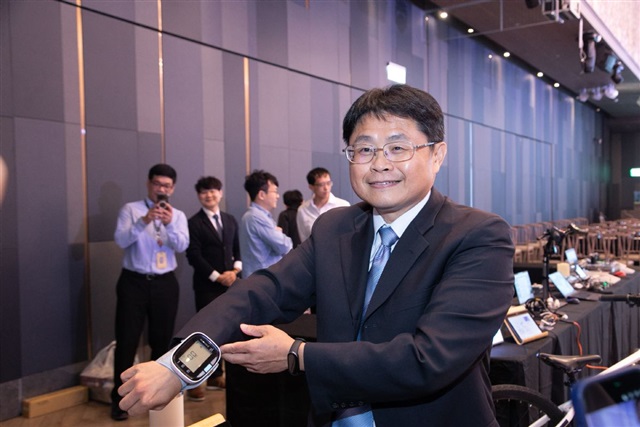
Holtek Semiconductor unveiled its 2026 product roadmap on October 15, focusing on four core areas: smart prote…
TSMC reported about NT$763.1b in Q3 net profit and confirmed that demand for advanced processors is running ah…
Nvidia-backed CoreWeave steadied Thursday after a sharp slump, as investors worried about the debt financing b…
Weathernews said on October 15 it implemented its own AI weather-forecasting model, AI-Nowcast, in its Weather…