What happened
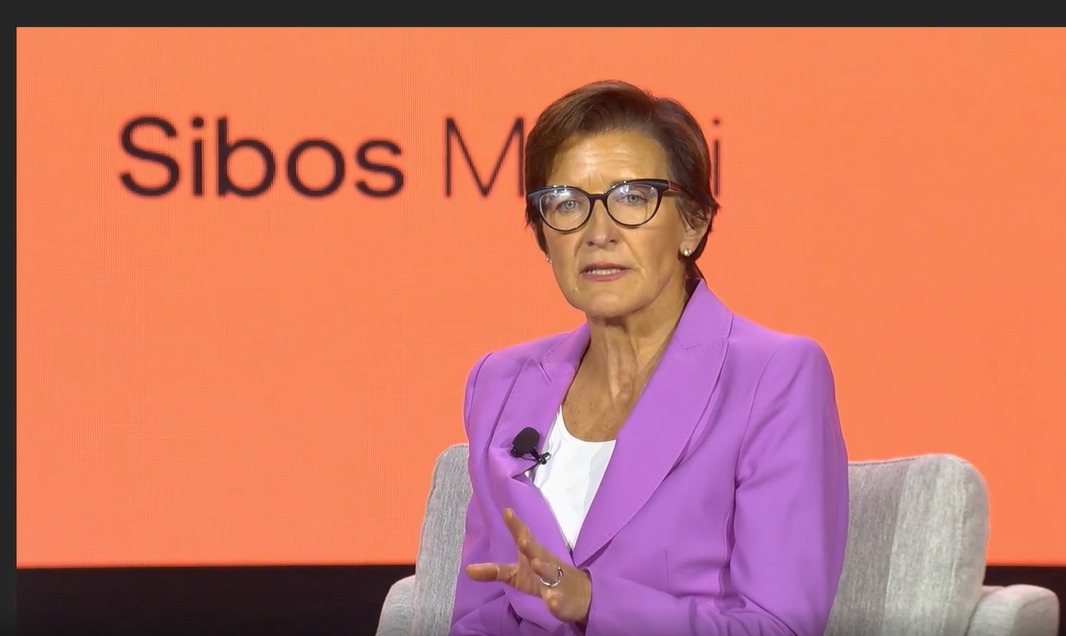
At Sibos 2026 in Miami, Citi CEO Jane Fraser said agents should not move from giving information to acting autonomously until their identity, authentication, and oversight are assured. Citi already routes every agent through a control layer called ARC.
Why it matters
Fraser's stance means the bank's AI agents would stay under human-set checks before they can act on their own, a condition she tied to keeping trust in a system where Citi moves roughly six trillion dollars daily.
What to watch
Fraser called it "very early days" for these controls and said authentication is the issue that "keeps us all up at night," so the test is whether agent identity can be verified across the bank and other parties in a transaction.
WHO IT HITSThis lands on bank compliance and risk officers, who would need to verify that an AI agent is truly acting for a customer before letting it move money or execute transactions. It also matters to infrastructure and operations teams at financial firms weighing similar agent controls.
Summaries like this, in your inbox every morning.
Fraser's remarks at Sibos 2026 came as financial firms weigh how far to let AI agents go beyond giving information and into executing actions. She drew the line at identity, authentication, and oversight: without a way to confirm an agent is acting for a person, and for the bank and counterparties to confirm the transaction is legitimate, she is confident she won't have "wild agents without the right controls in place." Citi's answer so far is ARC, a layer every agent must pass through, though Fraser described the controls as "very early days."
The control question extends to how supervision itself might work. Fraser sketched a reversal of the usual ratio, where rather than one manager overseeing nine employees, a single agent could face nine oversight mechanisms, many run by other agents. She also tied the push to Citi's own scale, noting the bank moves roughly six trillion dollars daily, and to rising transaction volumes and client demand for round-the-clock, instant, safe service, citing Citi Token Services' digital deposit solutions as an example. The IMF's Dan Katz, speaking at the same event, put cyber risk at the top of the list, saying AI is speeding up how vulnerabilities are found and potentially exploited.
Fraser framed the whole effort against the tech axiom of moving fast and breaking things. "If you move fast and break things, we are failing in our mandate," she said, warning that breaking trust would be "a huge problem for the macro, for the markets, for everywhere." The outcome for Citi and its peers likely hinges on whether agent identity can be verified across institutions, not just inside one bank, and whether the oversight layer keeps pace as volumes rise.
Pick your industry and the AI tools you use, and get news related to your work every day.
Free · 30 seconds with Google · unsubscribe anytimeWhat is AIToday? →
Ask AI anything about this article. The AI reads this article, earlier AIToday articles, and Wikipedia, and cites its sources. Q&As are published on this page for other readers too.
Circlia started a proof-of-concept for TASTE SIGNAL: visitors to Holland Village Cafe FUKUOKA taste cookies an…

In a webinar hosted by French Mathematical Society president Isabelle Gallagher, Fields Medal winner Hugo Dumi…

NVIDIA released Nemotron 3.5 Super VL, an open-weight model with 120 billion parameters that handles text, ima…
NVIDIA released Nemotron 3.5 Bolt 74B-A9B 24GB, an AI model for local agents that hits over 80 tokens per seco…
Anthropic said on October 15 it has started giving METR's six staff company devices, office space and access t…
NVIDIA published a blog post titled "AI Security Is an Engineering Problem - How to Solve It at Every Layer of…


