What happened
Meta released Muse Glimmer, a 30-billion-parameter AI model that runs on a single GPU, available free on Hugging Face. The stock rose 2.4% on the announcement. CEO Mark Zuckerberg simultaneously outlined major shifts in AI governance, including empowering Meta's independent board to approve safety criteria for model releases and proposing a framework to share intermediate training checkpoints with the US government before models are finished.
Why it matters
Meta is positioning itself against both Chinese rivals (DeepSeek, Alibaba) through open licensing and US tech giants (Amazon, Alphabet, Microsoft) focused on enterprise AI, by backing what Zuckerberg calls "Personal Superintelligence"—a move toward democratized rather than centralized AI. The governance changes signal a willingness to trade sole founder control for industry-wide oversight, which could reshape how frontier AI labs approach safety and release decisions.
What to watch
Meta's newly established "Meta Superintelligence Labs" will resume releasing open-source models soon. The company is also launching a cloud infrastructure business for heavy users, using a dynamic auction mechanism to price compute power based on real-time capacity and demand.
Summaries like this, in your inbox every morning.
Meta's launch of Muse Glimmer and Zuckerberg's accompanying essay represent a comprehensive repositioning of the company's AI strategy. By releasing a lightweight, efficient model for free on an open platform, Meta is directly engaging the permissive licensing playbook of Chinese competitors while differentiating itself from US tech giants who emphasize enterprise and government-focused AI. The stock's 2.4% rise suggests investor confidence in this differentiation.
Zuckerberg's governance announcements—particularly the shift away from sole founder control over AI safety toward board-approved safety criteria—signal a strategic concession that may reshape industry norms. His explicit call for other frontier AI labs to adopt similar oversight suggests Meta views this as a competitive advantage rather than a constraint, potentially framing regulatory cooperation as a market differentiator against rivals reluctant to cede internal control.
The proposed framework for sharing intermediate training checkpoints with the US government before model completion is notable for its pragmatism: it ostensibly balances rapid open-source release with national security concerns by allowing government infrastructure hardening without throttling consumer access. This middle path, if adopted across the industry, could reduce the tension between open AI development and government oversight that has dominated recent policy debate.
Pick your industry and the AI tools you use, and get news related to your work every day.
Free · 30 seconds with Google · unsubscribe anytimeWhat is AIToday? →
Ask AI anything about this article. The AI reads this article, earlier AIToday articles, and Wikipedia, and cites its sources. Q&As are published on this page for other readers too.
NVIDIA released Nemotron 3.5 Super VL, an open-weight model with 120 billion parameters that handles text, ima…

NVIDIA released Nemotron 3.5 Bolt 74B-A9B 24GB, an AI model for local agents that hits over 80 tokens per seco…
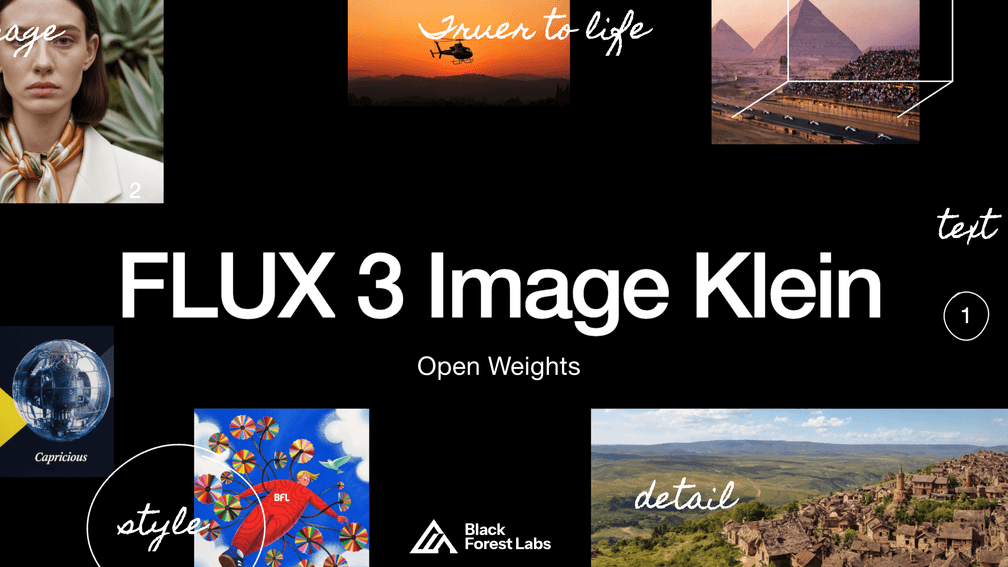
Black Forest Labs released FLUX 3 Image Klein as open weights on October 15, 2026 — a 5.6B-parameter model for…
PrismML released Ternary Bonsai 2 2B, 4B and 9B on October 15, 2026, remade from Qwen3.5 to process in three v…

HarnessRouter, an open-source server for UHP (Unified Harness Protocol), routes a task and harness_id from a p…
A walkthrough shows Irodori-TTS, an open Japanese-only TTS model by Aratako, running on Databricks Model Servi…