What happened
Thore Graepel, a former DeepMind researcher who worked on AlphaGo, founded Metis Reasoning and presented a white paper at Nvidia's GTC Berlin proposing an explicit knowledge ledger that checks each reasoning step against evidence. The paper describes only a research program, with no working system, benchmarks, or comparisons with current reasoning models.
Why it matters
Metis argues that more data and compute won't fix models that fabricate answers and lock knowledge inside their weights — the paper says this is why AI has had so little economic impact — and that fields like medicine, finance and robotics need AI verifiable from the ground up, though the approach remains untested.
WHO IT HITSCompanies weighing AI agents in regulated, hard-to-reverse domains such as medicine, finance and chip design are the audience Metis's pitch targets, though the approach has no working system or benchmarks yet. Robotics developers are also in scope, since Metis says the step-by-step design could favor smaller models on edge devices and in robots.
Summaries like this, every morning.
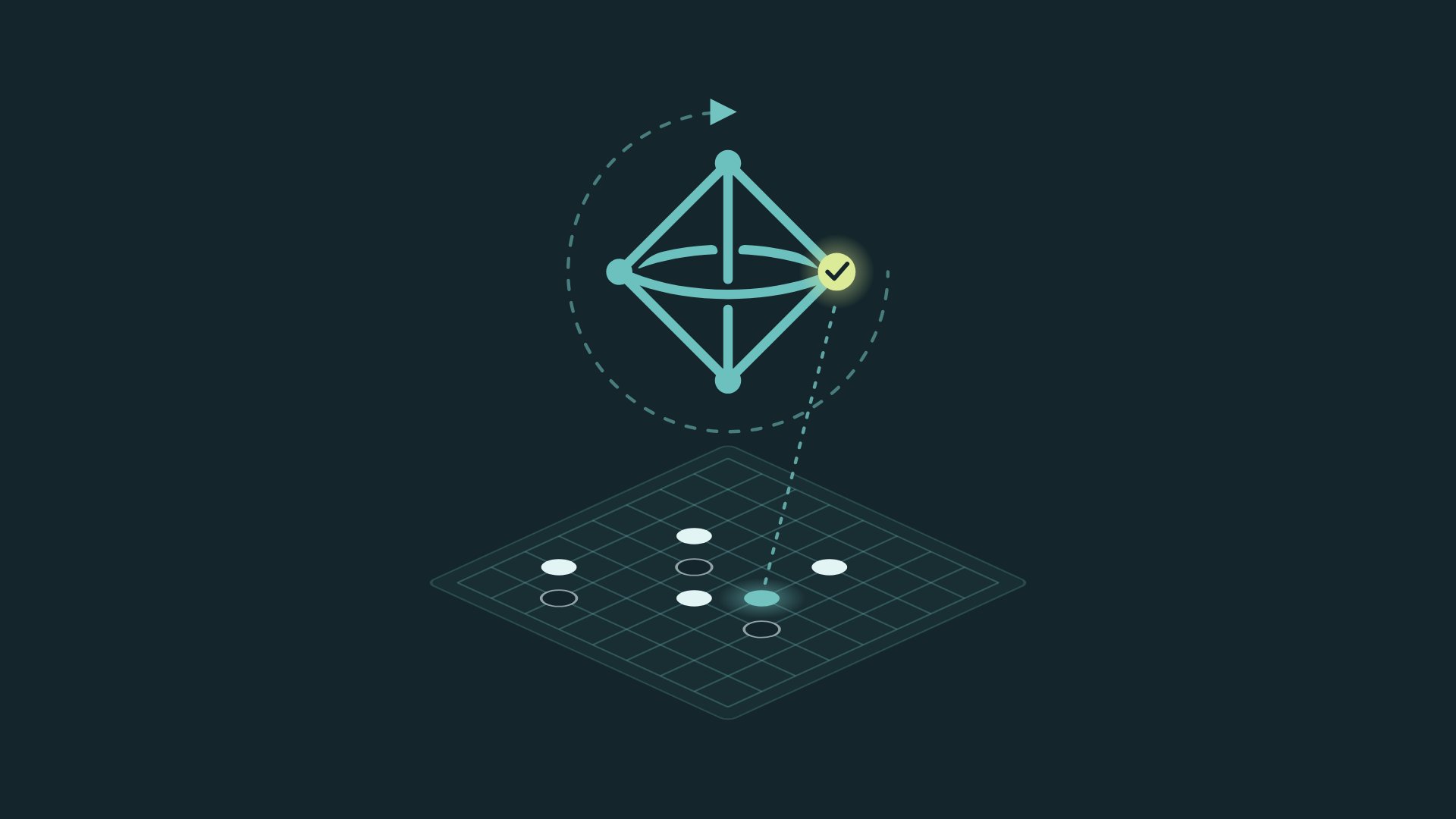
Metis Reasoning's premise is that today's language models amount to just AlphaGo's prediction network — the part that suggested possible moves — without the systematic search that found Move 37, a move the network would have given a human player roughly a one-in-ten-thousand chance of making. In Metis's design, an explicit knowledge ledger plays the role of the game board, recording what is known, how confident the system is, and which questions remain open. A separate module checks new entries against calculations, formal proofs, or empirical evidence, and when an assumption falls away, every conclusion that depended on it gets re-evaluated. As in AlphaGo, two neural networks suggest and evaluate moves, trained on logged prior investigations but unable to override the verification rules.
The paper's argument for why this matters is that hallucinations come from the training process itself: models learn to produce plausible text rather than true text, and even the chains of thought in today's reasoning models often fail to show how an answer was actually reached. The team acknowledges the real world, unlike Go, provides only partial information, that evidence can be expensive to obtain, and that some questions simply have no answer. The biggest open question is how a verified knowledge ledger would take shape in messy domains beyond textbook examples, given that symbolic AI systems once failed precisely because all their knowledge had to be entered by hand.
Graepel's move fits a wider pattern: he is the latest architect of DeepMind's best-known breakthroughs to build outside Google. Former colleague David Silver founded Ineffable Intelligence and closed the largest seed round of any European startup, and Tim Rocktäschel co-founded Recursive, now valued at $4.65 billion. According to the Financial Times, DeepMind dissolved the team behind AlphaFold, and Nobel laureate John Jumper left for Anthropic with two colleagues. CNBC traces the talent drain partly to limited internal access to Google's TPU chips and bureaucracy, while DeepMind itself is losing its independence and founder Demis Hassabis has stepped back from day-to-day operations.
Pick your industry and the AI tools you use, and get news related to your work every day.
Free · 30 seconds with Google · unsubscribe anytimeWhat is AIToday? →
Ask AI anything about this article. The AI reads this article, earlier AIToday articles, and Wikipedia, and cites its sources. Q&As are published on this page for other readers too.
A New Yorker report by Sam Kriss says Maple, a Vermont monastery led by Soryu Forall, targets burned-out AI pr…

An Nvidia research team says feeding models entire novels is often expensive overkill; in many tests, periodic…

Positron's Cameron McCaskill said about two-thirds of AI infrastructure workloads are now inference versus one…

After a reader comment, the Search Console-based service 検索カルテ began attaching explicit start and end dates (f…

The writer told Muse only their height and that they wanted slim, cropped tops, then let it browse ZOZOTOWN in…

A practitioner customizing an agent called Muse had other models review documents and design proposals, found…