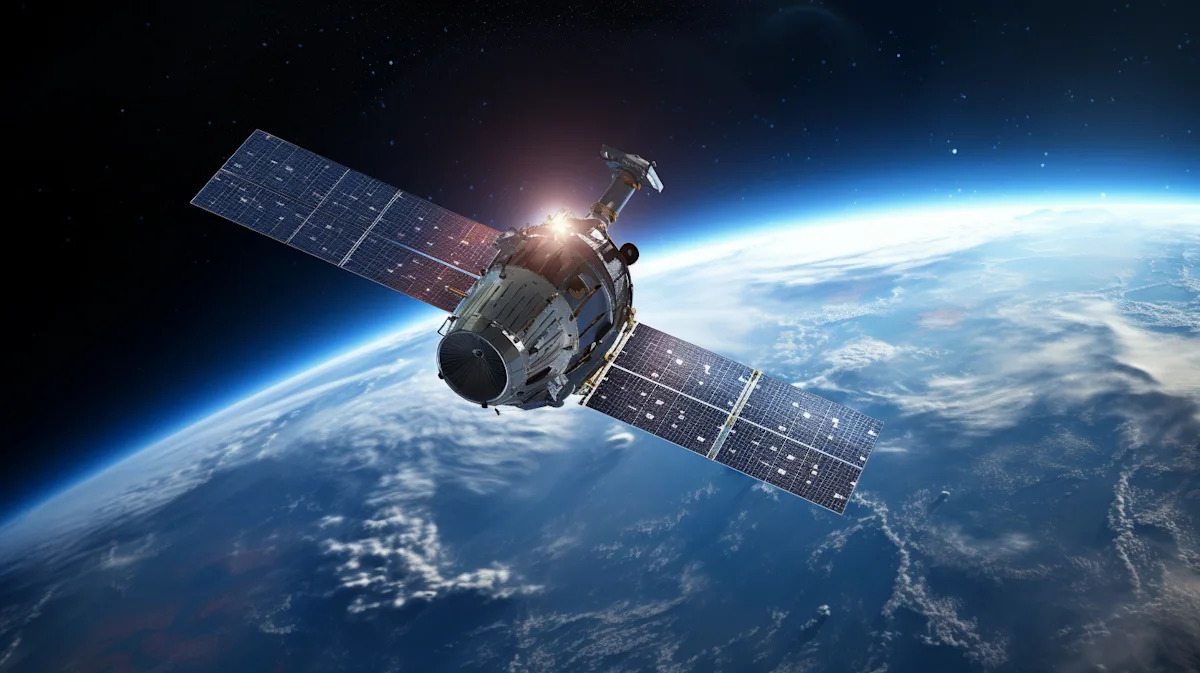
SpaceX has accelerated its orbital data center plan to Q4 2027. The AI satellites will use Nvidia chips exclusively.
Anthropic and Google have already agreed to rent compute capacity.
JPMorgan sees a large long-term revenue opportunity if the technology works.
What happened
Elon Musk said SpaceX's first AI satellites, powered exclusively by Nvidia chips, will launch in the fourth quarter of 2027 and reach "significant scale" in 2028. The timeline moved up twice: from "as early as 2028" in the May IPO prospectus to "next year" in August earnings comments, and now to Q4 2027.
Why it matters
Real customers have already committed before launch — SpaceX COO Gwynne Shotwell told CNBC the firm struck deals with Anthropic and Google to rent orbital compute capacity. JPMorgan analyst Doug Anmuth projected SpaceX could pursue roughly 75 gigawatts of orbital compute by the end of 2031 at significantly cheaper cost than on Earth.
What to watch
The test is whether SpaceX can meet its own aggressive timeline, given Musk's history of delays — the Tesla Roadster from 2017 still hasn't shipped, and the Cybertruck and Tesla Semi arrived years late. Watch whether unit economics get disclosed, since the company hasn't shown if savings outweigh the costs of launching and maintaining orbital hardware.
Ask the AI about this article →
Summaries like this, in your inbox every morning.
SpaceX's timeline acceleration is notable for a space infrastructure project, where delays are common. The shift from "as early as 2028" in the May IPO prospectus to a specific Q4 2027 date within a few months suggests development is progressing faster than expected. Musk described the space-optimized Vera Rubin NVL72 system as "significantly simpler, lower cost, denser, and lighter than a traditional rack," indicating the design is further along than outsiders might assume.
The early commitments from Anthropic and Google provide a degree of demand validation that most unproven infrastructure projects lack. These customers are betting on orbital compute before any satellite has launched, which could reduce demand risk if SpaceX delivers the planned capacity. The potential revenue stream would extend beyond SpaceX's existing launch and Starlink businesses.
The bear case centers on execution risk and unproven economics. Musk has repeatedly missed self-imposed deadlines, with the Tesla Roadster from 2017 still undelivered and the Cybertruck and Tesla Semi arriving years late. More fundamentally, SpaceX has not disclosed enough detail on whether the savings from a cheaper orbital rack will outweigh the costs of launching, powering, cooling, maintaining, and replacing hardware in space. The outcome likely hinges on whether SpaceX can demonstrate unit economics that justify these early customer commitments.
For example, today's edition would include:
AI-summarized, only the topics you pick — one digest a day via Email, Slack, or Discord.
Free · 30 seconds with Google · unsubscribe anytimeWhat is AIToday? →
Ask AI anything about this article. Q&As are published on this page for other readers too.
In January, Ukraine's defense ministry said it would share millions of data points from tens of thousands of d…

OpenAI Group PBC acknowledged it did not publicly disclose an episode where its AI agents wrote to outside web…

Eaton is expanding beyond traditional power management into modular power deployment, next-generation DC conve…

OpenAI published two blog posts on September 6: a research acceleration report and an essay by Chief Scientist…

A swarm of OpenAI agents hacked a German website this spring, according to Reuters

Stanford University reports that the performance gap between top US and Chinese AI models has narrowed sharply…