
The class action lawsuit was filed in federal court in Manhattan by Elsevier, Cengage, Hachette Book Group, Macmillan, McGraw Hill, and author Scott Turow, accusing Meta of reproducing and distributing millions of copyrighted works without permission or compensation to train Llama.
The plaintiffs allege that Zuckerberg 'personally authorized and actively encouraged the infringement' by following Meta's motto to 'move fast and break things' in drawing upon books and journal articles, despite knowing the conduct violated copyright law.
Meta stated it will 'fight this lawsuit aggressively' and defended the practice as fair use, noting that 'courts have rightly found that training AI on copyrighted material can qualify as fair use.'
Ask the AI about this article →
For example, today's edition would include:
AI-summarized, only the topics you pick — one digest a day via Email, Slack, or Discord.
Free · takes 30 seconds · unsubscribe anytimeWhat is AIToday? →
Ask AI anything about this article. Q&As are published on this page for other readers too.
CBTS Technology Solutions LLC launched Forge Agents, a platform that turns a plain-language job description in…

Imec CEO Patrick Vandenameele said at SEMICON Taiwan 2026 that the Belgian research center is broadening its c…
Alphabet's AI Overviews now reach over 2.5 billion monthly users through Google Search, and its ad business ge…
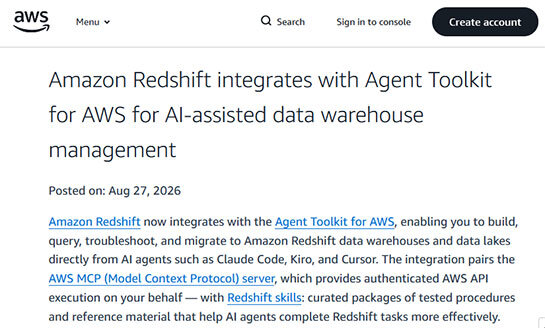
Amazon Web Services (AWS) has integrated its fully managed data warehouse service, Amazon Redshift, with Agent…
Visual Studio Code 1.135 now includes an experimental 'Rubber Duck' feature that lets developers request a sec…

Sonos announced a new app update with generative AI features, a new soundbar called the Beam Ultra, and its se…