What happened
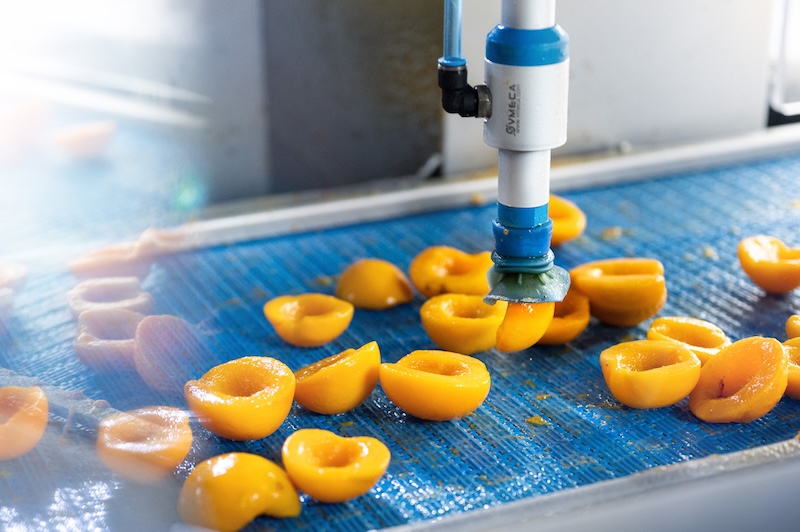
At Agrophoenix's Greek plant, eight Stäubli SCARA robots run QING's AI- and vision-based STAQ system, grading 15 tons of peaches per hour — about 100,000 peaches, or 200,000 halves.
Why it matters
The two-season effort hinged not on AI or software but on the gripper material that touches slippery peeled peaches, showing that food-grade handling, not the algorithms, slowed the system down.
WHO IT HITSFood-processing plant managers and quality-control teams at fruit canners and packers may see that AI vision plus washdown-capable robots can replace manual peach grading at high speed. Robot and gripper suppliers in food handling will face pressure to prove hygienic compliance and gripper reliability, not just AI accuracy.
Summaries like this, in your inbox every morning.
Agrophoenix was founded in 2018 in Greece's Imathia region with the stated aim of differentiating itself from standard fruit-processing models. That ambition shows in its production choices: a new line for fruit balls in pouches, and aseptic diced fruit packed in 200-liter bins usable year-round for cup products. The peach-grading line was built with a specific goal — removing fruit with pit fragments. After washing, steam-peeling, cutting into halves, and depitting, the fruit is pre-inspected by a vision system, mainly for color, before reaching the eight conveyors.
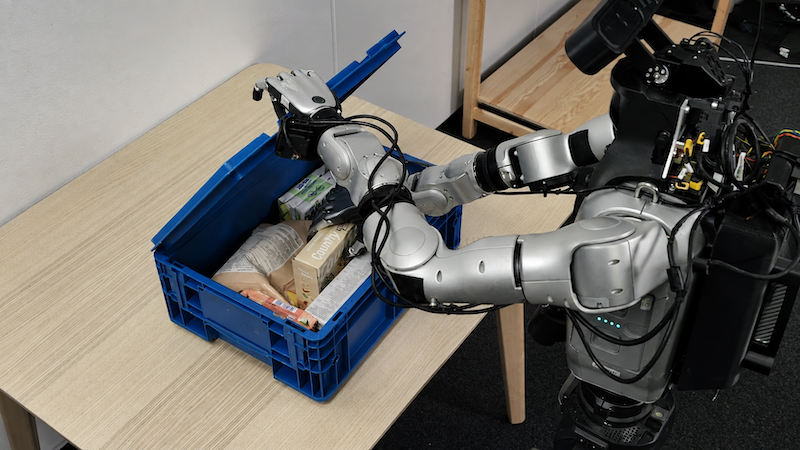
QING, a Dutch startup based in Arnhem, developed the STAQ framework — See, Think, Act — for the food industry. QING's commercial director Will Uijting says the same software and functions work across products like meat and biscuits, with grippers and algorithms adapted per product. The robots are Stäubli TS2-80 units in the HE version, which have washdown capabilities: protected joints, corrosion-resistant materials, and inner pressure that keeps vapor, steam, or water out during cleaning. The cells require frequent cleaning — every four hours the lines stop for 20 minutes for automatic CIP-like cleaning, and each Sunday a more intense cleaning with food-grade detergent takes place.
This is not a laboratory demonstration but a completed first harvest season, which suggests the approach is moving from pilot to routine production. The next engineering target is harder: an automated system to remove pit fragments from peach halves, before or after sorting, that Ioannidis describes as the next big thing.
Pick your industry and the AI tools you use, and get news related to your work every day.
Free · 30 seconds with Google · unsubscribe anytimeWhat is AIToday? →
Ask AI anything about this article. The AI reads this article, earlier AIToday articles, and Wikipedia, and cites its sources. Q&As are published on this page for other readers too.
Danaher announced the launch of its first AI powered autonomous laboratory aimed at life sciences research acc…

In a SoftBank dialogue, AI governance chief Tadashi Iida and expert Kyoko Yoshinaga said firms must justify hu…
Renesas has developed its first low-voltage GaN power semiconductor, working with EPC and drawing on its own d…
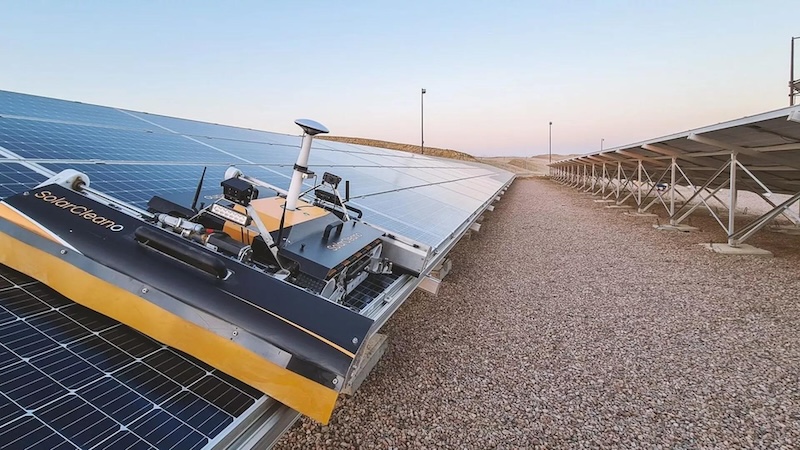
The European TALOS project wrapped up three years of testing autonomous robots and AI at solar sites in Spain…
Robbyant, Ant Group's embodied AI company, and the Arab Federation for Digital Economy signed a Memorandum of…

Odyssey announced Odyssey-3, a world model that has shown it can control robots and humanoids, drive vehicles…