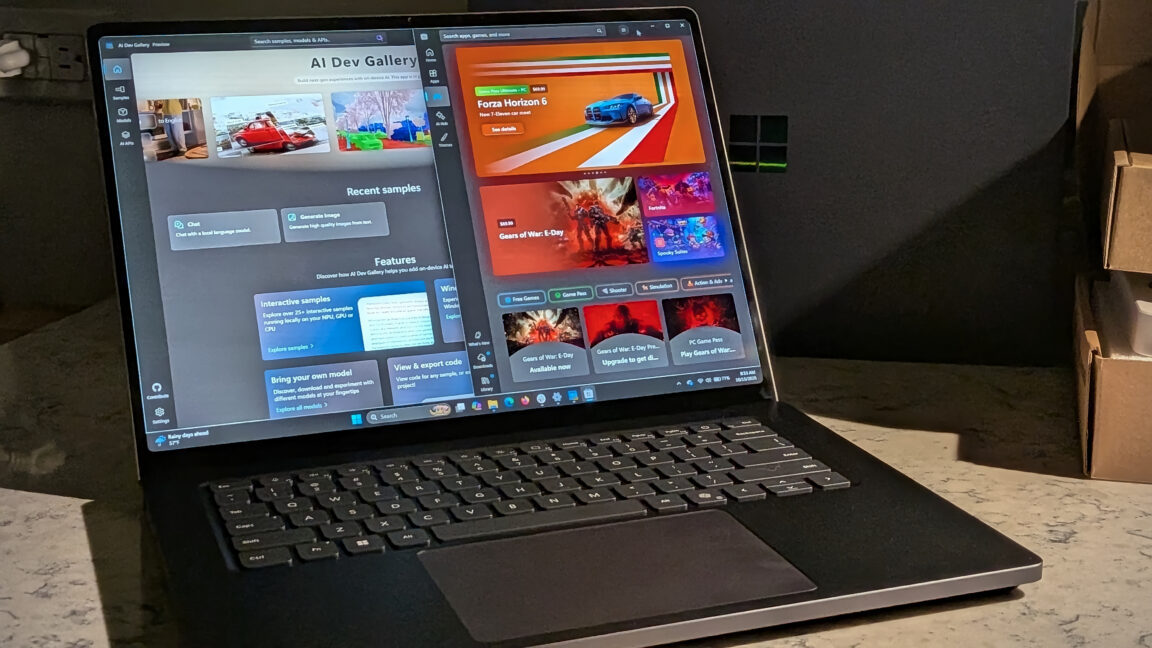
Alibaba has released an open-source AI model optimized for laptops, signaling that competition in artificial intelligence is shifting away from cloud-based systems toward local, on-device AI that users can run on their own hardware.
This move comes just days before Meta is expected to announce a similar initiative, suggesting that open-source AI is now matching or outpacing Silicon Valley's proprietary frontier labs on the newest battleground: consumer devices.
What happened
Alibaba has released an open-source AI model designed to run directly on laptops, just ahead of a similar move by Meta. The release underscores a shift in competition toward on-device AI that users can download and run on their own hardware.
Why it matters
Open-source models are no longer just cheaper alternatives to proprietary AI from Silicon Valley labs — they are now leading the race on the newest competitive frontier: AI that runs locally on consumer devices rather than relying on cloud servers. This means faster inference, greater privacy, and reduced dependence on big tech platforms' servers.
What to watch
The timing and capabilities of both Alibaba's and Meta's laptop-optimized models will likely shape how quickly businesses and consumers adopt on-device AI, and whether open-source or proprietary solutions dominate the personal-computer AI space.
Ask the AI about this article →
The competitive landscape for artificial intelligence has fundamentally shifted. What was once positioned as a lower-cost, secondary option — open-source AI — is now leading the charge on the industry's latest frontier: running models directly on consumer laptops and personal devices. Alibaba's announcement, timed just before Meta's expected unveiling of its own laptop-optimized model, reflects a broader recognition among major players that on-device AI execution represents the next critical battleground.
This shift matters because it breaks the traditional paradigm in which sophisticated AI computation required access to cloud infrastructure controlled by a handful of large companies. By enabling users to download model weights and run inference locally, the open-source approach promises lower latency, better privacy, and reduced operational costs compared to cloud-dependent systems. The race between Alibaba, Meta, and other players to dominate on-device AI suggests that whoever controls this segment may shape how billions of users interact with AI in their everyday workflows.
For example, today's edition would include:
AI-summarized, only the topics you pick — one digest a day via Email, Slack, or Discord.
Free · takes 30 seconds · unsubscribe anytimeWhat is AIToday? →
Ask AI anything about this article. Q&As are published on this page for other readers too.
AI system scaling has pushed interconnect requirements inside data centers from chips and boards up to racks…

Chinese large-model developer Z.ai says it can now support large-scale inference using roughly 100,000 domesti…

Analyst Ming-Chi Kuo says Nvidia has revived the Rubin CPX AI accelerator with a substantially redesigned arch…

Palantir Technologies stock has posted multi-year gains, including an 11x return over 3 years

Apple has escalated its legal battle against OpenAI, claiming in a new court filing that OpenAI is actively de…

Samsung Electronics has locked up as much as 70% of its memory production capacity under long-term supply agre…