What happened
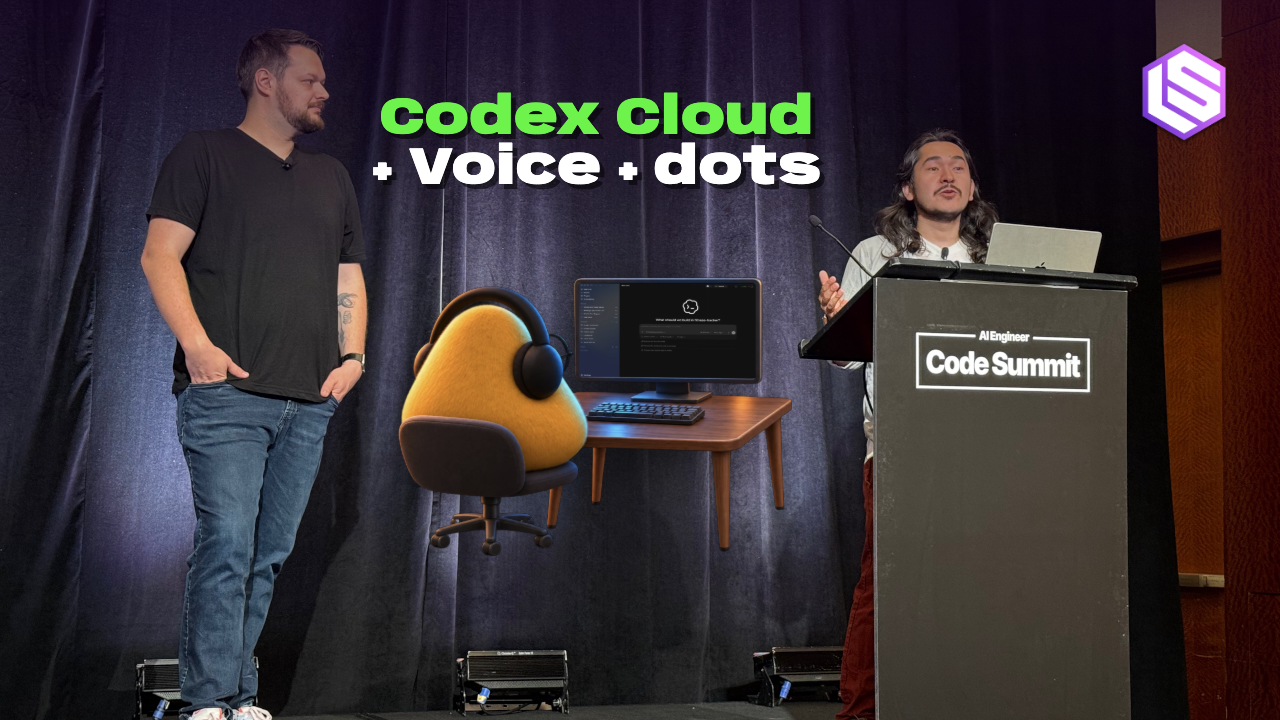
At the AI Engineer Code Summit, OpenAI's Dominik Kundel and Charlie Guo demonstrated asking Codex to push a branch and start a cloud thread, so local and cloud work merge into one executor.
Why it matters
This aims to fix the confusion many developers still feel when moving a Codex task from local to cloud, a handoff Kundel said OpenAI definitely wants to make easier.
Summaries like this, every morning.
The workshop came as coding agents from OpenAI, Anthropic and Google DeepMind have been getting constant product upgrades, but the shift to cloud has not gone smoothly for users of Codex, Claude and Antigravity. Codex itself launched in May 2025 as a cloud-based agent that can work on many tasks in parallel, yet Kundel admitted it took a while for models and harnesses to reach a really engaging experience. That began to change after DevDay in late-September, when a revamped version 2 of Codex Cloud was announced with the promise that you can finally close your laptop and your agents will keep working. The new cloud environments let a team publish a setup once and run multiple tasks in isolated instances, selecting the GitHub repositories to access.
Within that evolution, the workshop positioned voice and dots as complementary interfaces rather than replacements. Guo described voice as a control plane for managing threads and pulling data from other apps, while Kundel said he often talks to his dot on the way to work to start pull requests before reviewing them in the office. Guo also acknowledged that dots feel awkward to Codex power users because they are a new paradigm good at different things. Kundel closed with tips including turning down the effort level and asking agents for help, but his main point was not to get too attached to any current way of working, since things are constantly changing.
Pick your industry and the AI tools you use, and get news related to your work every day.
Free · 30 seconds with Google · unsubscribe anytimeWhat is AIToday? →
Ask AI anything about this article. The AI reads this article, earlier AIToday articles, and Wikipedia, and cites its sources. Q&As are published on this page for other readers too.
Salesforce AI Research released SFR-AutoR&D, agents that form hypotheses, run controlled experiments and keep…
Interactive Brokers launched IBKR Autonomous Trading, which lets eligible clients connect AI platforms to a ri…
KWCH published guidance advising users to keep certain personal information out of AI chatbots to protect thei…
Honeywell Technologies unveiled AI-powered building intelligence, fire and life safety and security upgrades t…

J.P. Morgan Private Bank said it does not currently allow third-party AI agents to access client accounts or a…

Kora Systems, founded by Cyanogen co-founder Kirt McMaster, unveiled a Linux-based AI desktop operating system…