What happened
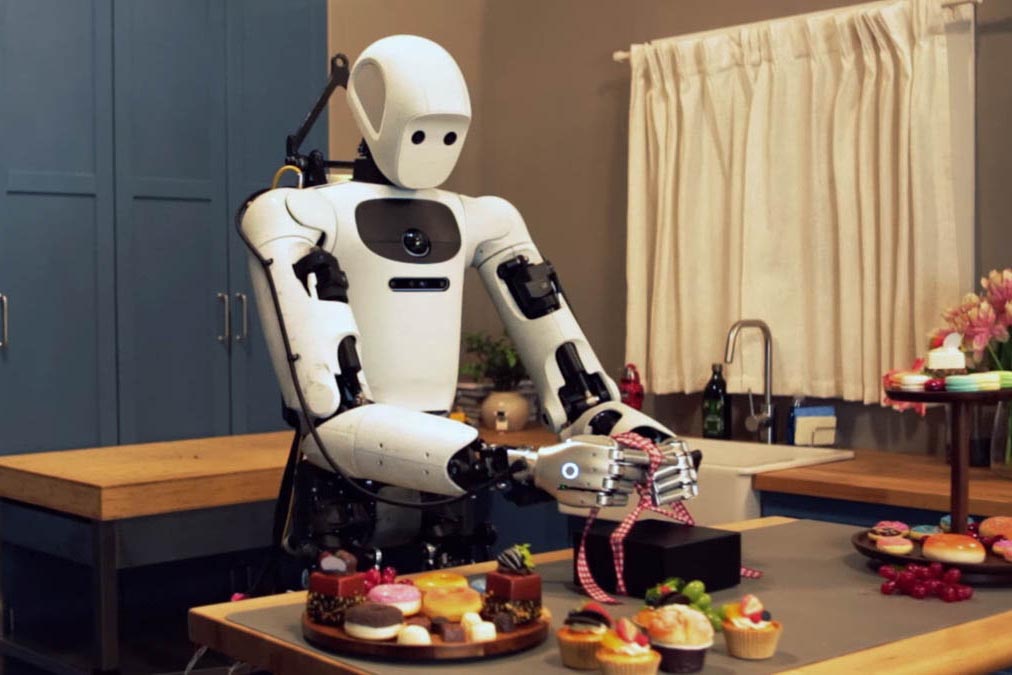
Google DeepMind released Gemini Robotics 2.5, a vision-language-action model tested on over 200 tasks like tying ribbons and using tongs, with success up 30–100% and time down 20–30% versus comparison baselines.
Why it matters
The gains suggest AI models can make robots more reliable and faster at everyday physical work, which could expand where robots are practical to deploy, according to the company's evaluation.
WHO IT HITSRobot developers and manufacturers integrating the model into hardware such as humanoid and dual-arm robots, plus factory operators evaluating automation of repetitive parts handling, stand to benefit from the higher success rates and shorter task times.
Summaries like this, every morning.
The release builds on Google DeepMind's push to tie robot control to the same multimodal foundation models used for language and vision. Gemini Robotics 2.5 is a VLA (Vision-Language-Action) model, meaning it turns camera images and instructions into robot movements. The company says it validated the model across more than 200 tasks, from serving food with tongs to tying gift-box ribbons, with success rates rising 30–100% and task times falling 20–30% against prior comparison baselines.
The model is designed to work across different robot bodies, including Apptronik's Apollo 2 humanoid and the dual-arm Franka Duo. In a real-world trial, Apollo 2 was placed on active Mercedes-Benz production lines in Hungary and Germany, where it picked metal brackets from parts boxes and arranged them on trays in the order needed for each vehicle, reaching a 96% success rate. Google DeepMind says the aim is to hand monotonous, physically demanding parts preparation to robots so workers can focus on complex assembly.
Safety features were also strengthened: the model now guides motions during inference and avoids nearby hazards in real time. Google DeepMind's evaluation found that the share of tasks completed safely rose 33% in environments with obstacles and 43% when people were nearby. Development also drew on Gemini 4 Argon to generate simulations and digital twins from real camera footage, which the company says helps robots adapt to new environments and objects more efficiently.
Pick your industry and the AI tools you use, and get news related to your work every day.
Free · 30 seconds with Google · unsubscribe anytimeWhat is AIToday? →
Ask AI anything about this article. The AI reads this article, earlier AIToday articles, and Wikipedia, and cites its sources. Q&As are published on this page for other readers too.
In Anthropic's IPO roadshow video, co-founder Tom Brown said Claude trains and serves across AWS Trainium, Goo…

UC Berkeley and NVIDIA released open-source tools, including Graph-as-Policy and the VABAR benchmark of six in…
Databricks said Genie One now combines Genie Search across tools like Google Drive, Jira and Confluence, in-co…
Databricks introduced the new Genie, an autonomous AI coworker that stays on the job continuously, tracking pr…
Google DeepMind unveiled AlphaGenome 2, trained on more than 100 million individual cell profiles across 68 ti…
Plurai raised $13 million in seed funding led by Team8, with U&I, Velocity and Mercer participating, to build…