
What happened
A University of Illinois and Cornell University team proposed a Multi-Branch Transformer that splits into parallel branches of sequential blocks and shares key-value representations via a Joint-KV mechanism, cutting KV-cache storage up to 34% and raising decoding throughput up to 51.4% on a single H200 GPU.
Why it matters
This offers a distinct third scaling lever alongside width and depth, and the cache reduction comes from the architecture itself rather than a separate compression step, so it should be straightforward to replicate.
WHO IT HITSLabs running large inference fleets at long context lengths are the most immediate audience, as the throughput and cache savings are measured at long input lengths.
Summaries like this, every morning.
The Multi-Branch Transformer arrives as labs look for ways to serve long-context models without proportional memory growth. Width and depth have long been the two canonical levers for scaling transformers; the paper proposes branching as a distinct third, with its own scaling laws derived across a ladder of model sizes. The Joint-KV mechanism shares key-value representations across branches at each depth, which delivers the cache savings without a separate compression step, keeping the method straightforward to replicate. The reported gains are hardware-grounded, measured on a single H200 GPU at 16K input tokens with 64 concurrent requests, so engineers can benchmark against them directly. The 2-branch Wide-Shallow variant is the strongest performer, requiring a standard transformer to use up to 1.26x as much training compute to match its validation loss.
Pick your industry and the AI tools you use, and get news related to your work every day.
Free · 30 seconds with Google · unsubscribe anytimeWhat is AIToday? →
Ask AI anything about this article. The AI reads this article, earlier AIToday articles, and Wikipedia, and cites its sources. Q&As are published on this page for other readers too.
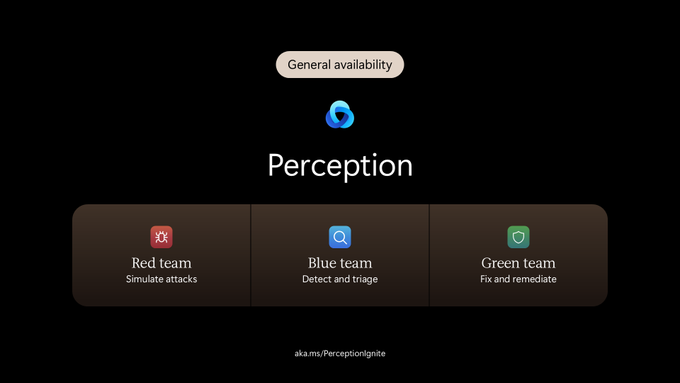
At Microsoft Ignite 2026, Microsoft said Microsoft Perception is now generally available, combining red, blue…
At Microsoft Ignite 2026, Microsoft released a public preview of Windows Server 2028, which adds AI inference…
AUMOVIO chose Databricks Unity Gateway as its single route to LLMs after a cross-functional taskforce picked o…

CADMAGEDDON scores 0.991 on BenchCAD's 64³ voxel IoU over a 1000-part subset, above vendor-reported 0.963, 0.9…
MIT Technology Review's AI Hype Index describes AI spreading everywhere, citing Google's AI Overviews costing…

In an interview after winning the $1 million Berggruen Prize, philosopher Thomas Nagel said it is 'ridiculous'…