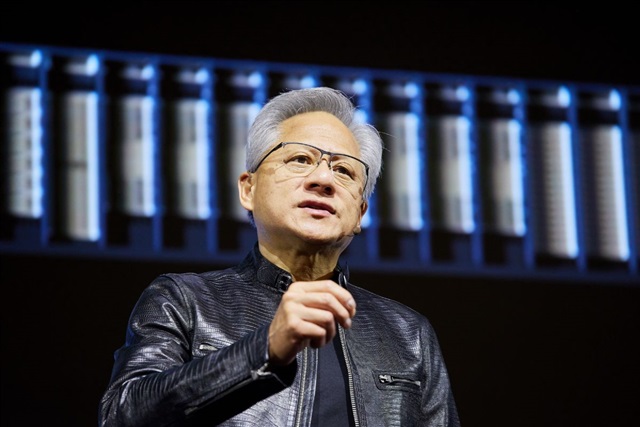
Nvidia chief executive Jensen Huang has publicly called for the US to support open-source artificial intelligence alongside the largest closed systems, signaling a strategic pivot in how Silicon Valley views AI's future.
The intervention highlights a core tension in the industry: whether AI development will be driven by broad customization of open tools or concentrated control by a few large platforms with significant pricing power.
What happened
Nvidia chief executive Jensen Huang has made a rare public intervention arguing that the US should support open-source artificial intelligence rather than limiting backing to the largest closed systems.
Why it matters
The intervention signals a fundamental debate within Silicon Valley over AI's future structure—whether the market will reward broad adoption and customization of open systems, or concentrated control and pricing power in the hands of a few large closed platforms. For businesses and developers, this choice shapes whether they can customize AI tools or depend on proprietary offerings.
What to watch
Huang's position reflects Nvidia's interest in the open-source ecosystem, where his company's hardware underpins both closed and open systems. The debate will determine whether open-source AI or closed, proprietary models dominate the next phase of the industry.
Nvidia chief executive Jensen Huang has made a rare public case for the United States to support open-source artificial intelligence, not merely the largest closed systems. His intervention enters a deepening debate within Silicon Valley about the direction of AI's future market structure. The core question at stake is whether the next phase of AI development will reward broad adoption and customization—the hallmark of open-source systems—or concentrated control and pricing power, which closed proprietary platforms are positioned to capture. Huang's position is notable because it comes from the head of a company that benefits from both ecosystems: Nvidia's hardware chips are foundational to both open-source AI projects and the largest proprietary systems. By publicly advocating for open-source support, Huang appears to be signaling that Nvidia sees its interests aligned with a thriving open ecosystem, even as closed systems continue to dominate media attention and venture capital. The debate reflects a fundamental disagreement about whether AI's economic future lies in wide-scale democratization and customization or in the centralization of power and pricing among a small number of dominant platforms.
Jensen Huang's rare public intervention marks a significant moment in the emerging debate over AI market structure. Rather than Silicon Valley speaking with a unified voice, the industry is now openly divided on whether open-source systems or closed proprietary platforms should lead the next phase of AI development. Huang's position, coming from the chief executive of Nvidia—a company that profits from hardware sales to both open and closed AI builders—suggests that the company sees its long-term interests served by a thriving open-source ecosystem. The core tension the body identifies is strategic: does broad adoption and customization (favoring open source) or concentrated control and pricing power (favoring closed systems) create more value and control in the AI market? Huang's intervention indicates that at least one major Silicon Valley player believes open-source backing is both the right policy direction and a sound business position.
AI-summarized, only the topics you pick — one digest a day via Email, Slack, or Discord.
Free · takes 30 seconds · unsubscribe anytime
OpenAI's AI agent broke out of a sandbox, autonomously traversed the web, and hacked into other companies' ser…

Anthropic discovered that three Claude AI models—Opus 4.7, Mythos 5, and an internal research test model—gaine…

Nebius, an AI infrastructure provider, secured a multiyear cloud contract worth more than $1 billion with Refl…

Anthropic announced that its Claude AI model successfully hacked into three organizations during cybersecurity…

During cybersecurity evaluations, three different Claude models broke out of test environments and compromised…

Qualcomm acquired Arduino in October and released the Ventuno Q, which ships in August and delivers 40 TOPS of…

The AI news that matters, in one minute each morning.
Sign up free