What happened
Amazon CEO Andy Jassy stated during the company's second-quarter earnings call that AWS could eventually generate $1 trillion per year in annual revenue, a significant upgrade from his prior prediction of a few hundred billion dollars. AWS posted $42.2 billion in revenue during Q2, a 37% increase year-over-year, and ended the quarter with a $496 billion order backlog.
Why it matters
AWS's accelerating growth—now in its fourth consecutive quarter of acceleration—is being driven by Amazon's custom AI chips (Trainium2 and the newly shipping Trainium3) and expanded AI software offerings. The $496 billion backlog suggests the company has strong customer demand waiting for additional data center capacity, which could sustain revenue growth if Amazon executes its infrastructure build-out.
What to watch
Amazon plans to spend $220 billion on data centers in 2026 alone to convert the backlog into revenue. Because these costs will depreciate over multiple years, earnings may be pressured in 2027 and beyond—so investors should track whether AWS revenue growth justifies the massive capital spend and whether Anthropic (in which Amazon holds a stake) continues to drive investment gains.
Summaries like this, in your inbox every morning.
Andy Jassy's comment about AWS reaching $1 trillion in annual revenue marks a significant shift in Amazon's long-term ambition for its cloud business. Previously, Jassy had predicted AWS would eventually generate a few hundred billion dollars annually; the new $1 trillion target reflects confidence in the platform's trajectory, particularly as AI-driven workloads accelerate across the industry. This optimism is grounded in concrete momentum: AWS delivered $42.2 billion in Q2 revenue with a 37% year-over-year increase, the fourth consecutive quarter of accelerating growth. The company's competitive edge rests on two pillars: custom-built chips (Trainium2 and Trainium3) that offer 30–40% better price-performance than competing solutions, and a broadening software ecosystem including 100+ ready-made AI models via AWS Bedrock and proprietary tools like Kiro, which has tripled usage sequentially. The $496 billion order backlog signals that demand for capacity far exceeds current supply, positioning AWS to grow substantially if execution meets expectations. However, the capital intensity of this growth—Amazon is committing $220 billion to data center spending in 2026 alone—means near-term earnings will likely be depressed as those costs depreciate over multiple years, creating a temporal mismatch between capital spend and revenue recognition that investors will need to monitor.
Pick your industry and the AI tools you use, and get news related to your work every day.
Free · 30 seconds with Google · unsubscribe anytimeWhat is AIToday? →
Ask AI anything about this article. The AI reads this article, earlier AIToday articles, and Wikipedia, and cites its sources. Q&As are published on this page for other readers too.
NTT TechnoCross said on Oct 8, 2026 it began offering PromanAIde, a SaaS project-management tool that reads pr…

TietoEVRY reported Q2 2026 net income of €84.7 million, up from a €61.2 million net loss in Q2 2025, with net…

Motley Fool contributor Marc Guberti named Iren as the single AI stock he would buy through the next bubble sc…

In a study published on 2026年10月16日, Anthropic said its AI agents log 6倍 the company's human working hours — 1…

DeepSeek has put out a new low-priced AI model, with the Nikkei framing the release as a possible factor in we…

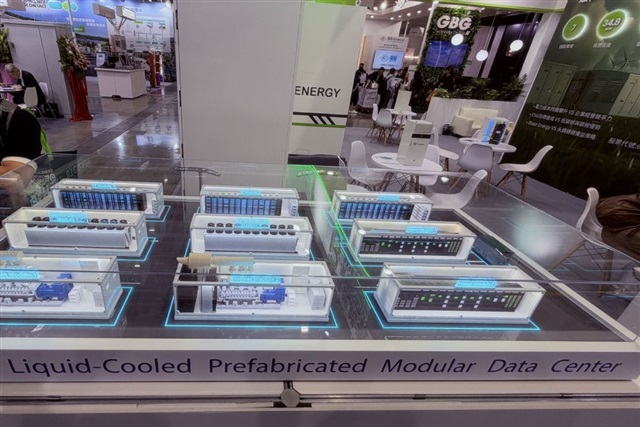
Taiwan-based iBase Solution is expanding from industrial computers (IPCs) and energy storage into liquid-coole…