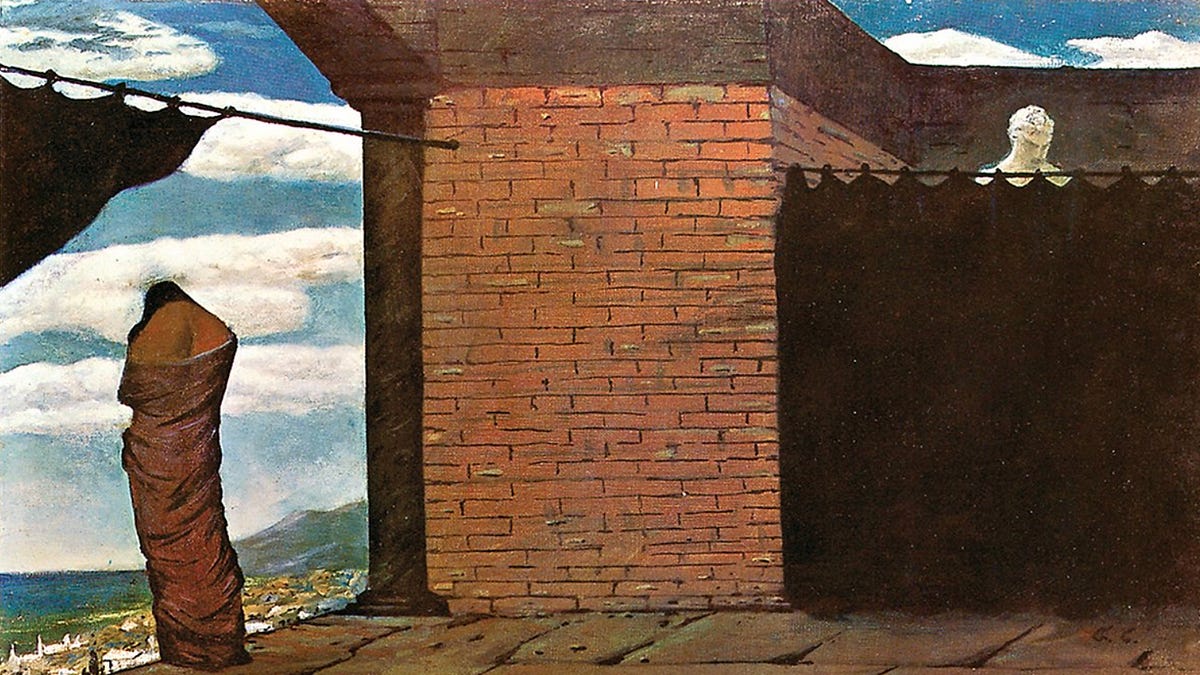
George Orwell's 1946 essay "The Prevention of Literature" prophesied machines that generate formulaic stories with no human input, a vision remarkably close to today's AI writing. However, Orwell attributed literature's decline to totalitarianism, whereas the essay argues the real culprit is market-driven demand for derivative content and audiences' inability or unwillingness to distinguish genuine insight from its illusion. The mechanization of writing emerged not from state suppression but from voluntary consumption, making it potentially harder to reverse than any top-down ban.
Summaries like this, in your inbox every morning.
Sign up free →What happened
An essay examining George Orwell's 1946 prediction of automated, formulaic writing reveals he accurately imagined stories produced by machinery with "no human intervention," yet misdiagnosed the cause of literature's decline. Orwell blamed totalitarianism; the essay argues the real driver is market forces and audience demand for derivative work.
Why it matters
Orwell identified two threats to literature—totalitarianism and "monopoly and bureaucracy"—but focused on the first, assuming readers would resist mass-produced slop without state coercion. In reality, people are consuming formulaic content voluntarily, suggesting that mechanical writing emerges not from oppression but from economic incentives and audiences' acceptance of surface profundity over substance.
What to watch
The essay draws a parallel between Orwell's 1946 vision of "prefabricated phrases" and modern LLM-generated text, arguing that AI did not invent derivative writing—it simply reduced the production cost to near zero. The darker implication: diffuse market and technological forces may be harder to reverse than an explicit state ban on books.
In his 1946 essay "The Prevention of Literature," George Orwell attempted to imagine what people would read in a future where literature was dying. He arrived at a strange vision: an automaton that produces stories on demand, with no human intervention. "It would probably not be beyond human ingenuity to write books by machinery," he wrote. The books would emerge from a "conveyor-belt process that reduces human initiative to the minimum," each one "no more an individual product than a Ford car at the end of the assembly line"—soulless contraptions of prefabricated phrases, with "imagination—even consciousness, so far as possible—eliminated."
Orwell was not describing a distant science-fiction scenario. He observed this mechanizing process already underway in his own time: in Disney films, made by essentially a factory process with teams of artists subordinating individual style; in radio features written by "tired hacks" to whom subject and treatment were dictated, then chopped into shape by producers and censors; in government-commissioned pamphlets; and most strikingly, in the production of stories for cheap magazines. Papers like *The Writer* advertised Literary Schools offering ready-made plots at a few shillings, some supplying opening and closing sentences for each chapter, others furnishing "algebraical formulas" to construct plots, still others providing "packs of cards marked with characters and situations, which have only to be shuffled and dealt in order to produce ingenious stories automatically."
The essay argues this vision is remarkably prophetic—not because AI invented the problem, but because it accelerated an existing one. AI did not invent derivative, formulaic garbage; that industry was running strong decades before transformers. LLMs simply dropped the marginal cost of production to zero. The article draws a parallel to media critic B.R. Myers's 2001 essay, which documented the consumption side of the same problem: prose that performs difficulty without requiring concentration, sounds literary despite lacking substance, and can be skimmed without loss because there is nothing to lose. Myers found that "the illusion of insight can be manufactured separately from insight itself, and that a large audience, including sophisticated critics, cannot tell the difference or maybe doesn't care." What made surface-level profundity popular with critics in the 1990s, the essay suggests, is exactly what makes LLM writing popular today.
Yet Orwell's prescience fails on causation. He attributed literature's decline to the rise of totalitarianism and the collapse of liberalism. "If the liberal culture that we have lived in since the Renaissance actually comes to an end, the literary art will perish with it," he wrote. In the totalitarian future, "the surviving literature of the past" would "have to be suppressed or at least elaborately rewritten." But this prediction did not materialize. No dictator has successfully suppressed the literature of the past; books have never been so easily available, freely downloadable even from sketchy Russian websites. As Rage Against the Machine said: "They don't gotta burn the books they just remove 'em." Turns out they don't even need to do that.
The strange thing, the essay notes, is that Orwell had identified the correct answer at first. In the essay's second paragraph, he named two enemies of intellectual liberty: "its theoretical enemies, the apologists of totalitarianism, and its immediate, practical enemies, monopoly and bureaucracy." That second category included press lords, film magnates, and the hack work every writer must do to survive—what Orwell called "vague economic forces" eating away at the artist's independence and livelihood. But then he set those practical enemies aside to concentrate on the ideological-totalitarian threat, foremost on his mind at the time. The mechanizing pull of the market, which Orwell treated as a nuisance in the foreground of a much larger catastrophe, turned out to be the real catastrophe.
He assumed that mass-produced slop would stem from banned alternatives, that readers would have to be driven to the conveyor belt at gunpoint. But people are skipping to it on their own. In one respect, what we have now is darker than Orwell imagined. The decline of literature did not require a Big Brother to imprison authors. A regime that suppresses books at least believes in their power; the censor's attention is a form of tribute. But today it is not a dictator but broad social and technological forces driving people toward slop. That diffuse transformation may be even harder to reverse than a top-down ban. Orwell thought the death of democracy would kill reading. It turns out the death of reading may be killing democracy.
Orwell's 1946 essay identified a genuine threat: the mechanization of creative work. What makes his prediction striking is how accurately he imagined the mechanism—stories produced with minimal human intervention, assembled from prefabricated components. Yet the essay argues his diagnosis of the cause was incomplete. Orwell set aside his own observation that "monopoly and bureaucracy" posed an "immediate, practical" threat to intellectual liberty, choosing instead to focus on the ideological danger of totalitarianism, which preoccupied him at the time. He assumed that mass-produced slop would be imposed on readers as a substitute for suppressed alternatives, that the conveyor belt required state coercion.
The essay's central claim is that this assumption proved wrong. Literature's decline has not stemmed from a dictator banning books—in fact, the classics are now more accessible than ever, freely available online. Instead, the real mechanizing force has been the market itself: economic incentives to produce cheap, formulaic content, combined with audience demand for prose that sounds profound without requiring deep engagement. Orwell observed this process already at work in 1946—Literary Schools offering ready-made plots, cards with pre-written plot points to shuffle and deal—but treated it as a sideshow to the ideological threat. The market-driven production of derivative work turned out to be the main event.
This reframing carries a darker implication than Orwell imagined. A state that bans books at least acknowledges their power; censorship is a form of tribute. But when broad social and technological forces drive people toward slop voluntarily, when the decline is diffuse rather than top-down, reversal becomes far more difficult. The essay suggests that the death of reading may be killing democracy—a reversal of Orwell's own fear that the death of democracy would kill reading.
AI-summarized, only the topics you pick — one digest a day via Email, Slack, or Discord.
Free · takes 30 seconds · unsubscribe anytime
No comments yet. Be the first to share your thoughts!
Log in to join the discussion


Get curated AI news from 200+ sources delivered daily to your inbox. Free to use.
Get Started FreeFree · takes 30 seconds · unsubscribe anytime
